
Our 2014 Bridger Family Gathering
Our annual Bridger Family Gathering was more than special in 2014 because there were about 75 of us (the number of people attending changed slightly from day to day) who visited the homes, churches, castles, and towns where our Bridger ancestors lived in England. We were blessed with fantastic weather – no rain and mild temps.
“A good time was had by all” is an understatement. The trip was expertly planned by our President Jean Tomes and the BFA Board of Directors. And our personal guides for the week were David & Tricia Carrington, residents of England, who were SO gracious and informative. They did a fantastic job of planning and being our guides for the time we were in England. We traveled by Applegate Coach to our daily destinations and so we were able to visit with our cousins while in transit each day. As you can see from the map below, we traveled to a lot of locations in southeast England!
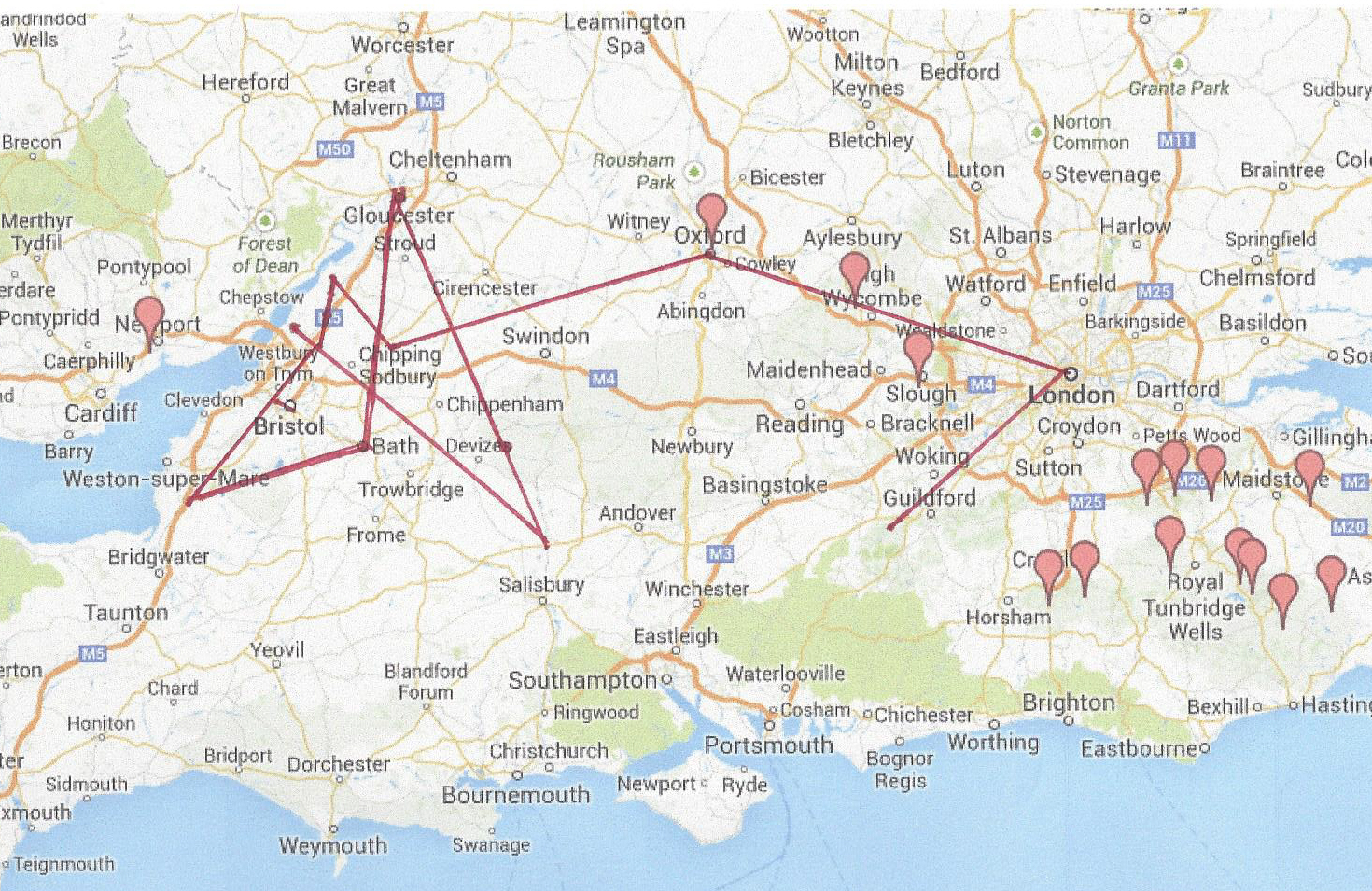
Day 1 — Saturday, September 6 — Oxford, Cotswalds
The coach picked us all up from either Heathrow Airport or our London hotels on Sept. 6. We headed for Oxford University. Our tour guides told us that Oxford is actually 38 different colleges. The 38 colleges are self-governing and financially independent institutions, which are related to the central University in a federal system. There are also six permanent private halls, which were founded by different Christian denominations and which still retain their Christian character. The different roles of the colleges and the University have evolved over time. Magdalen College’s charter was dated 12 Jun 1458. It had a President and Scholars (i.e. Fellows) who studied theology and philosophy.
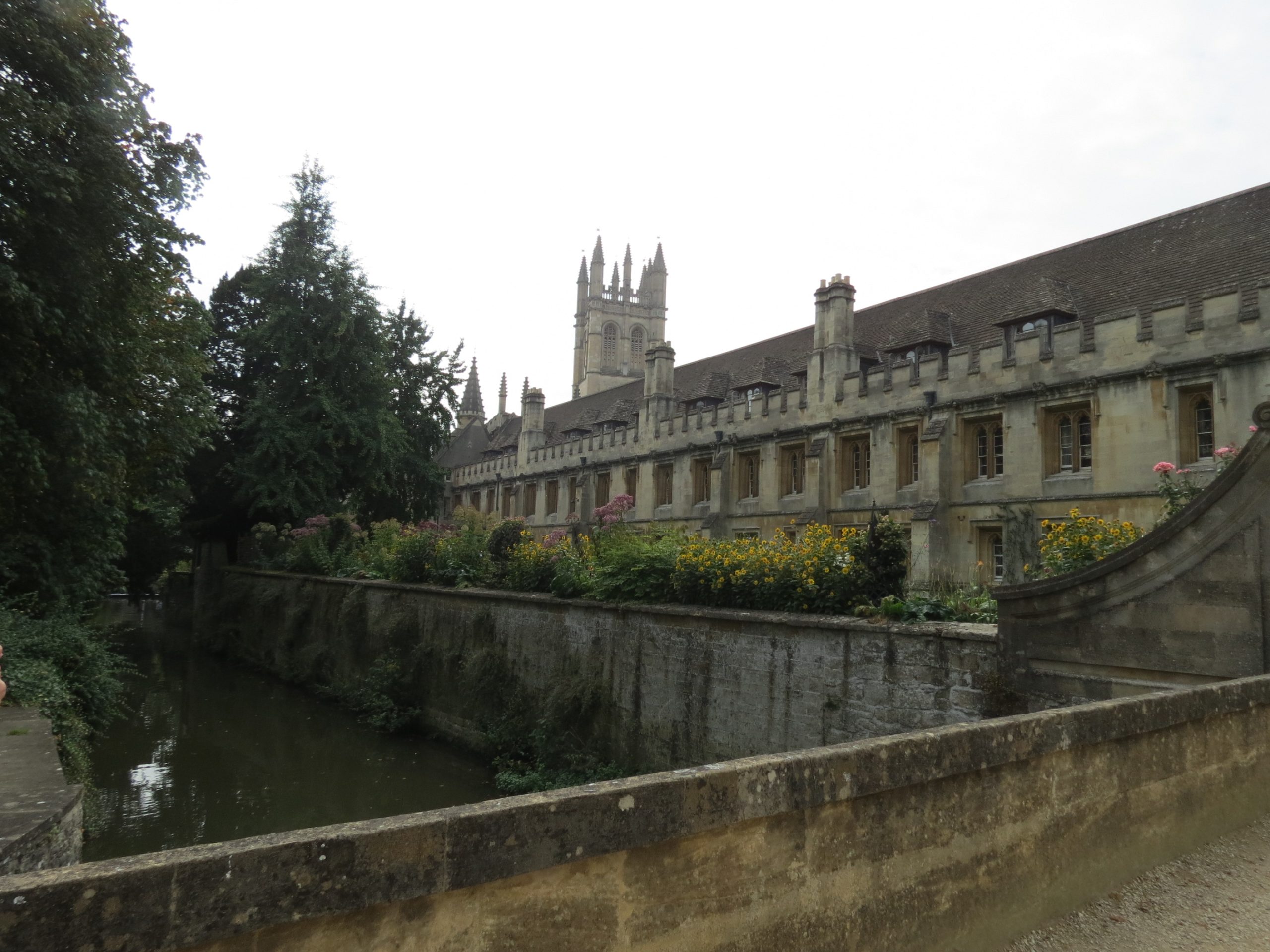
Lawrence Bridger was born in 1550 at Godalming and entered Oxford in 1568 where he was elected a fellow of Magdalen College before receiving his B.A. in 1570, and then an M.A. in 1577. Lawrence’s son Samuel graduated from Magdalen College on 30 April 1602.
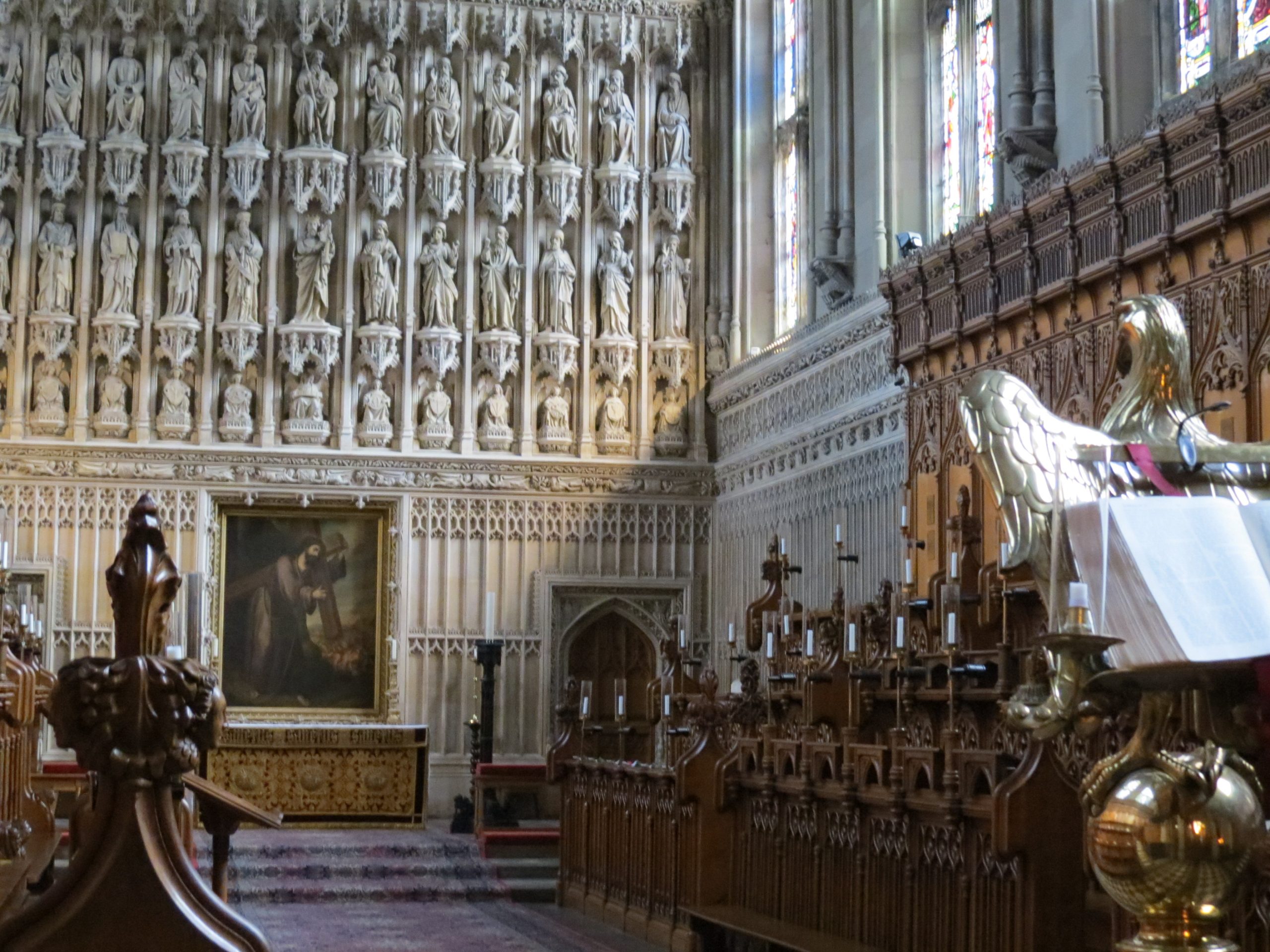
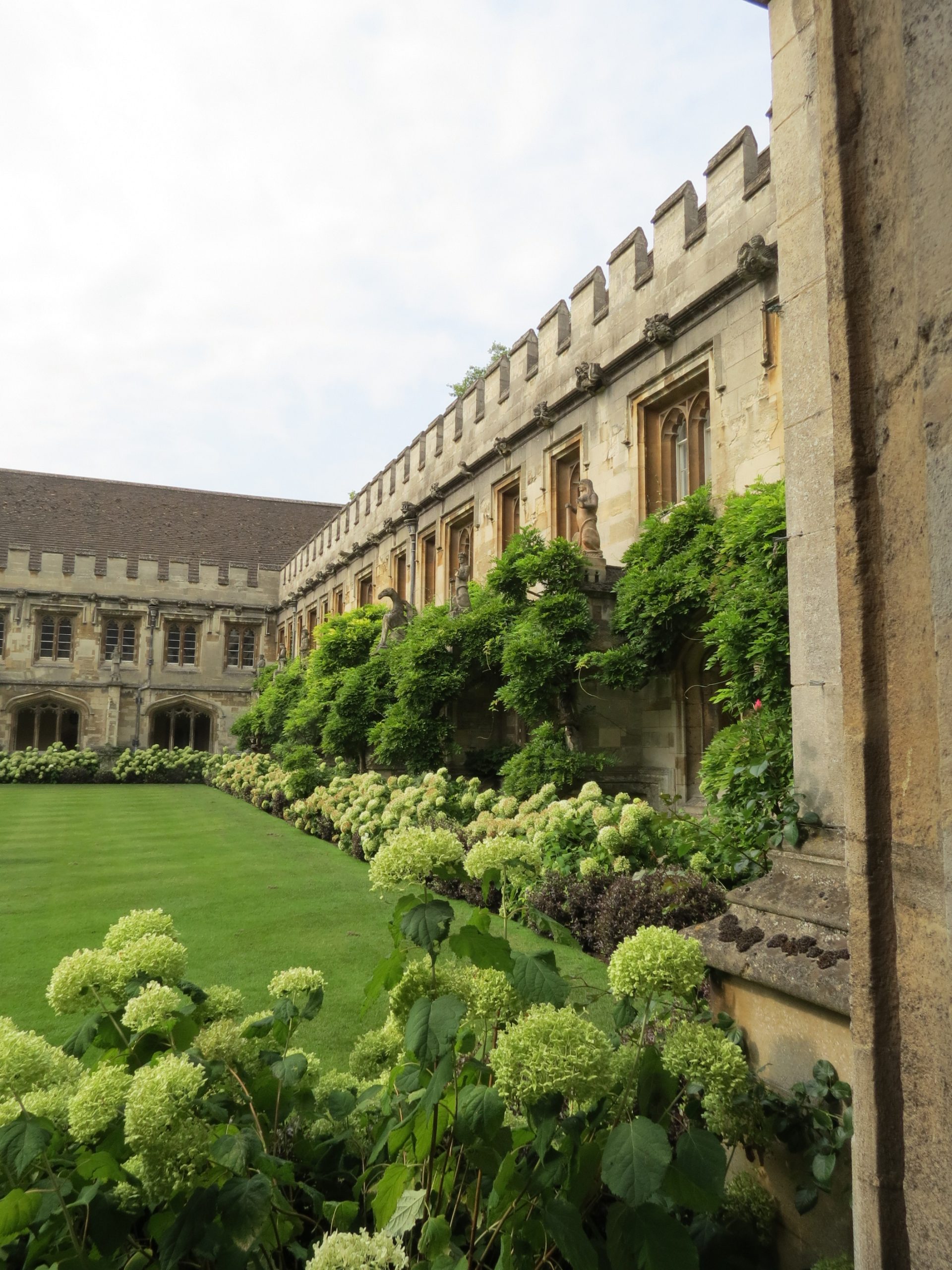
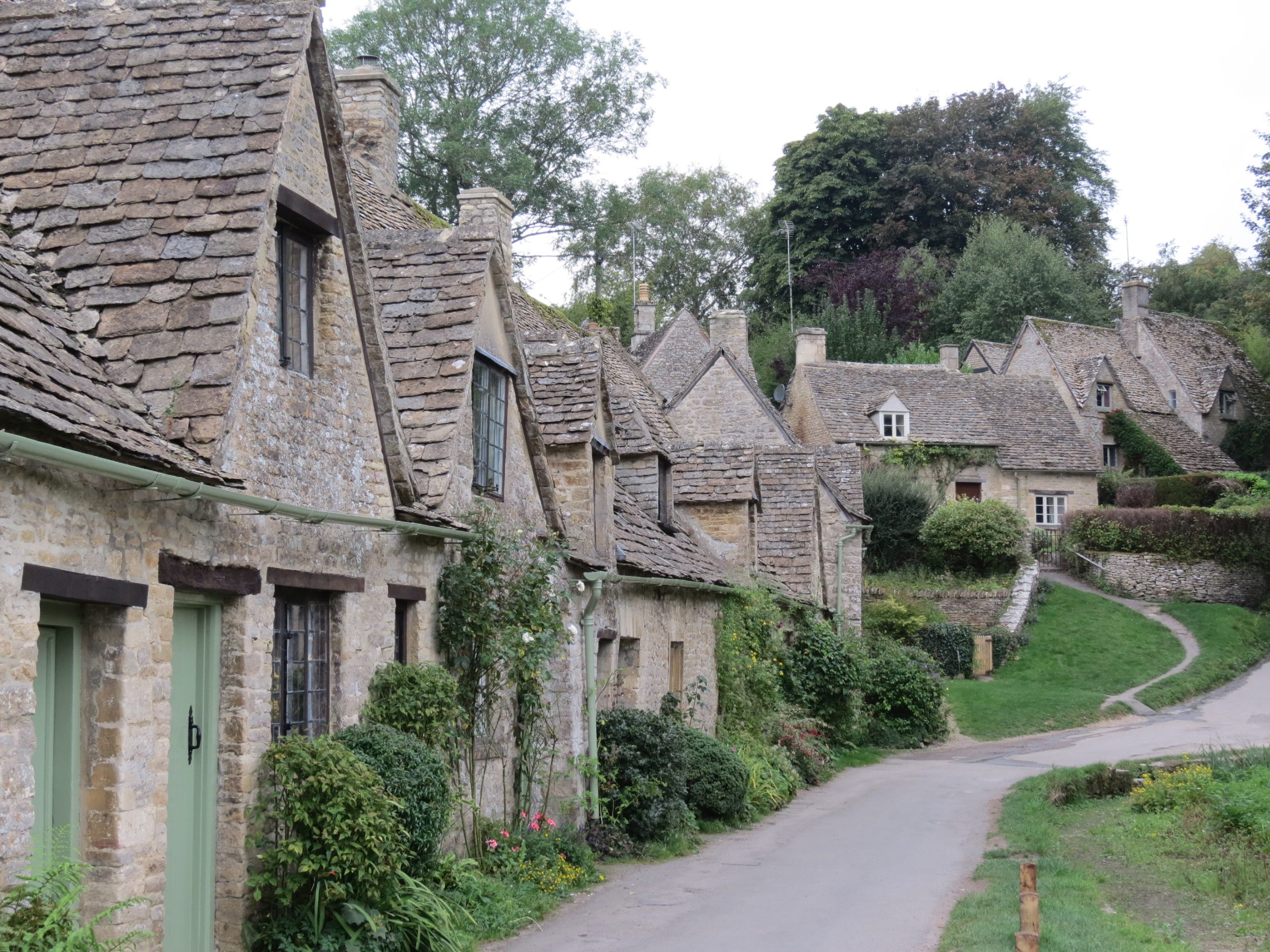
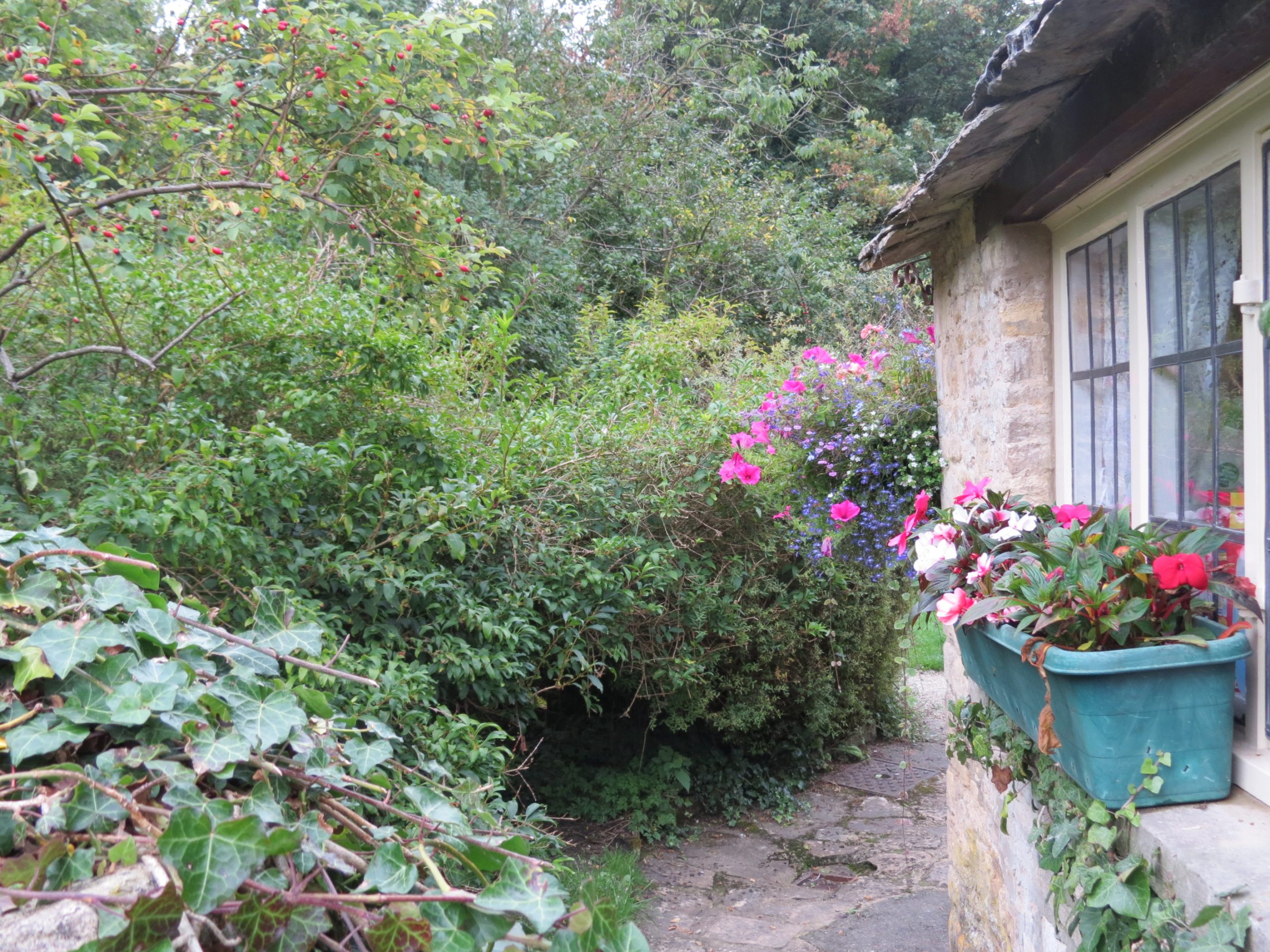
We had a brief stop at these Cotswolds quaint cottages.
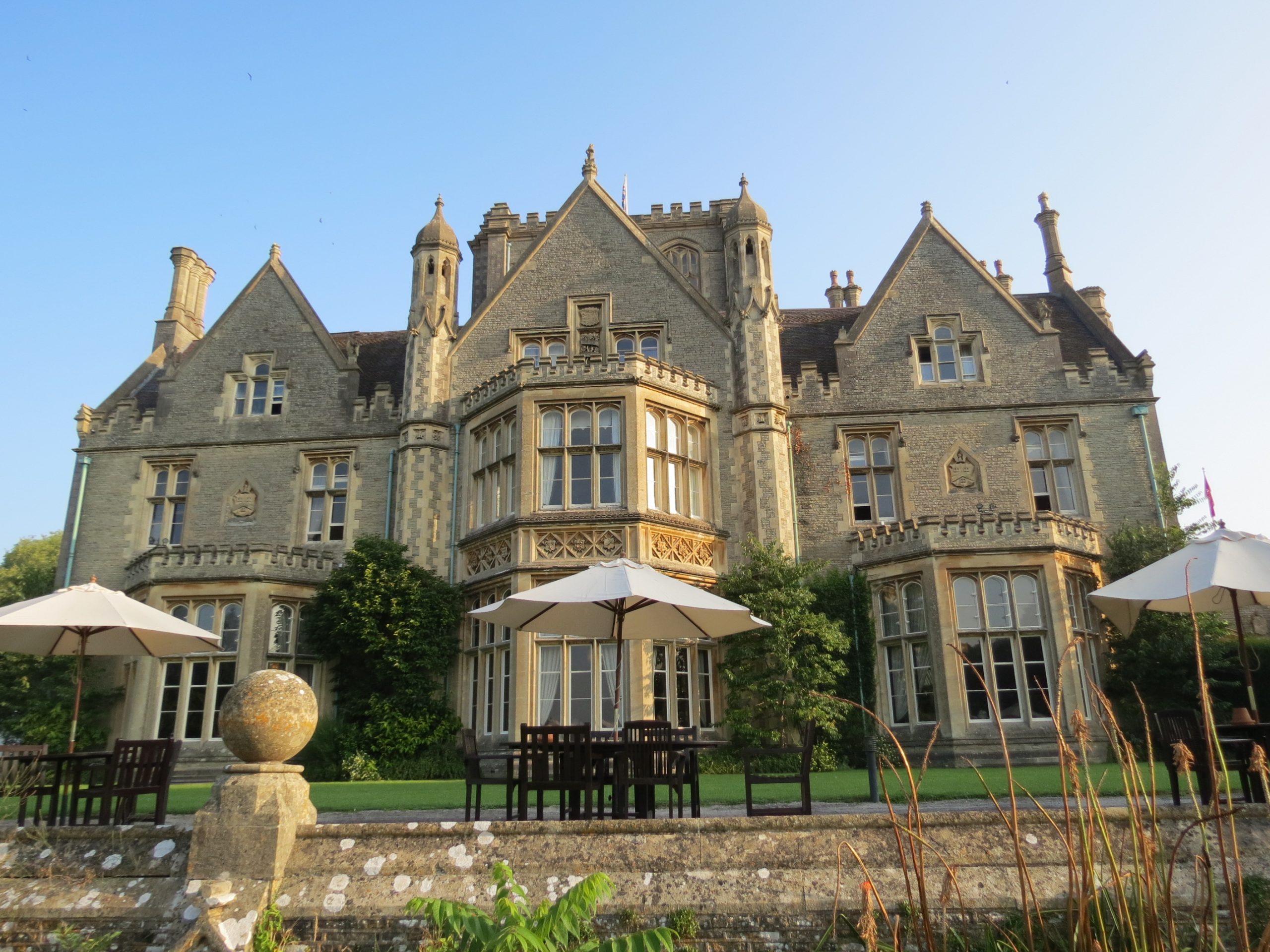
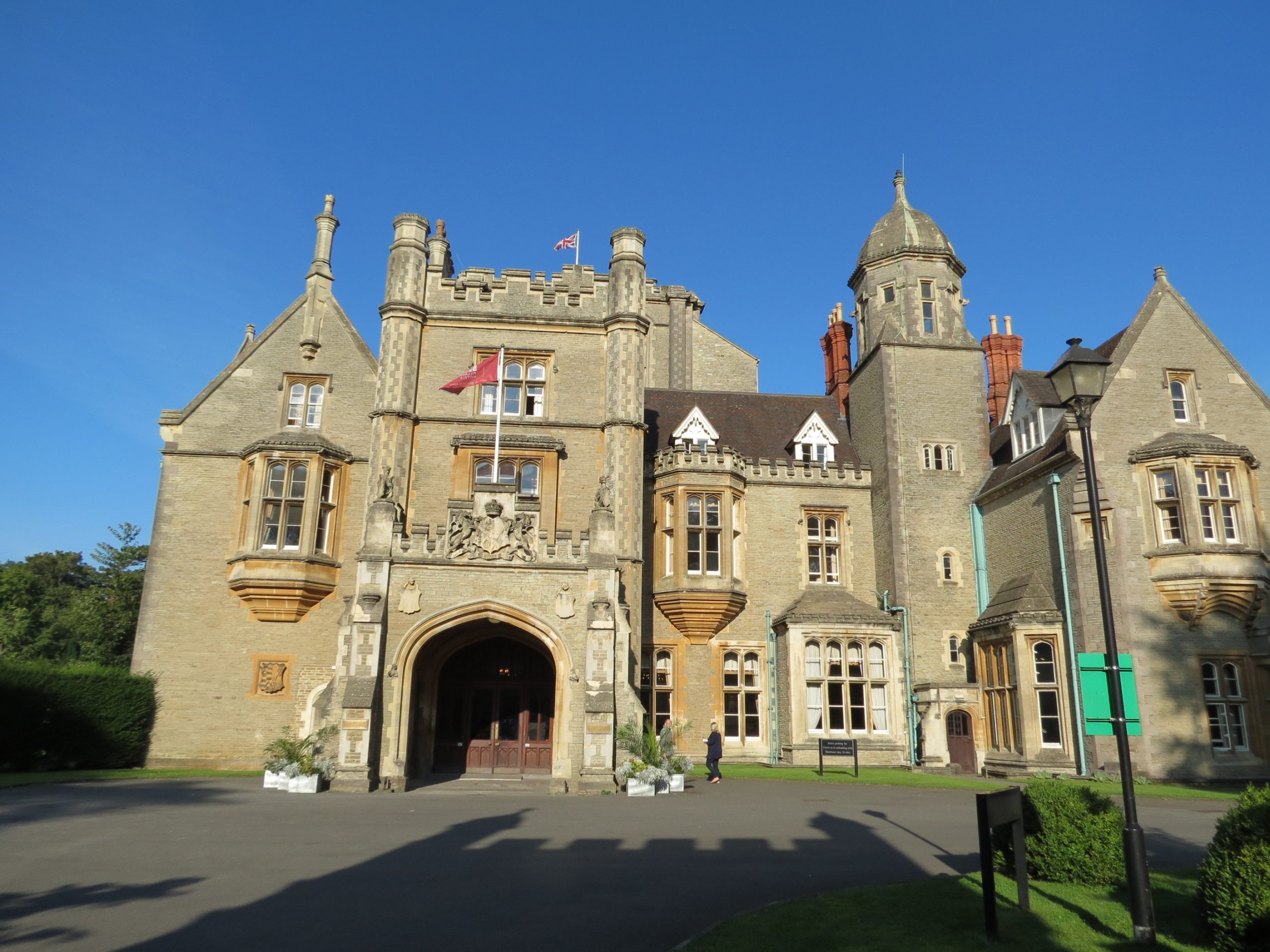
We stayed at the Tortworth Court Four Pillars Hotel in the Cotswolds. It is surrounded by beautiful English countryside, with 30 acres of private grounds and an arboretum.
Day 2 — Sunday, September 7 — Slimbridge Church
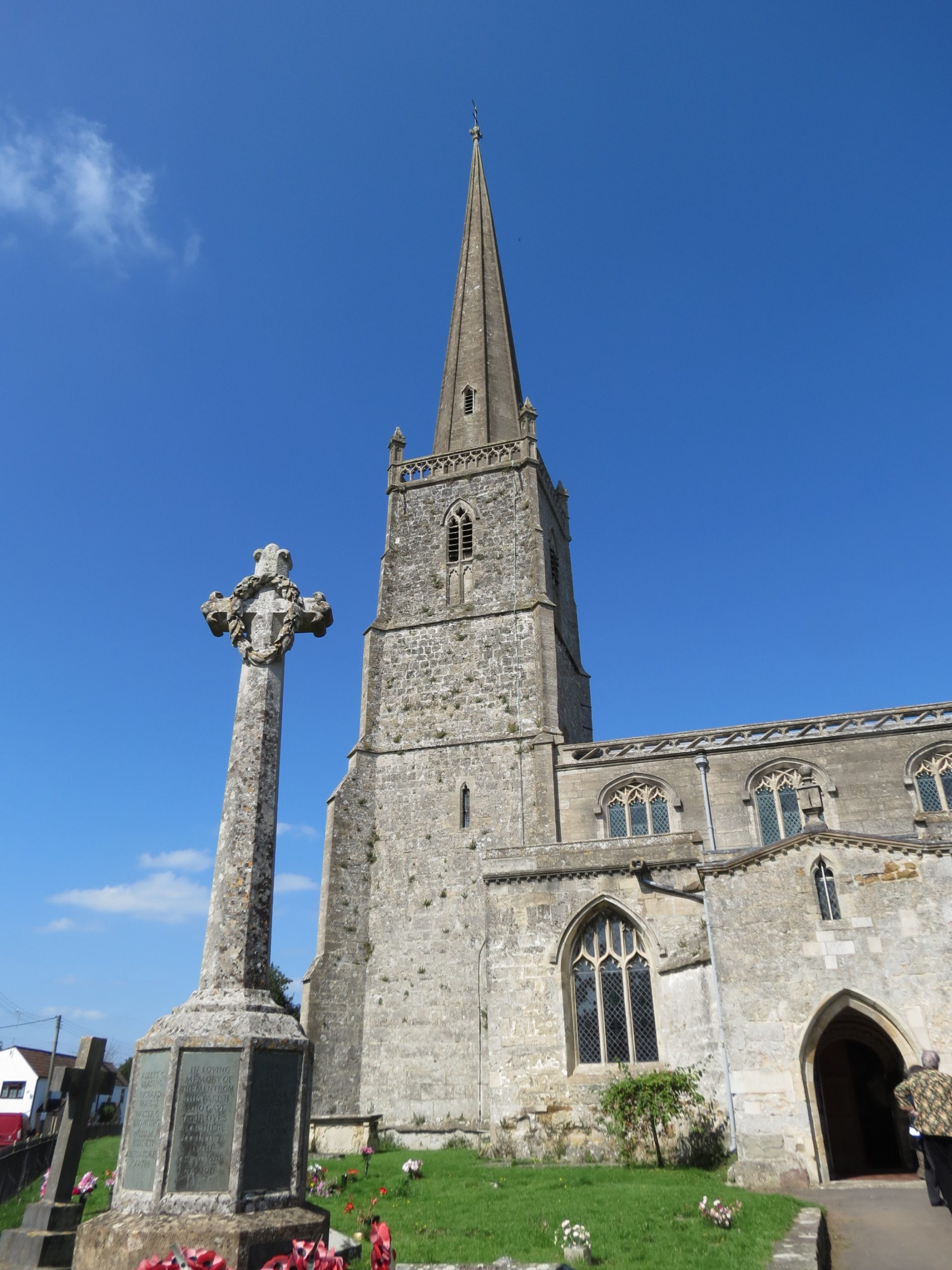
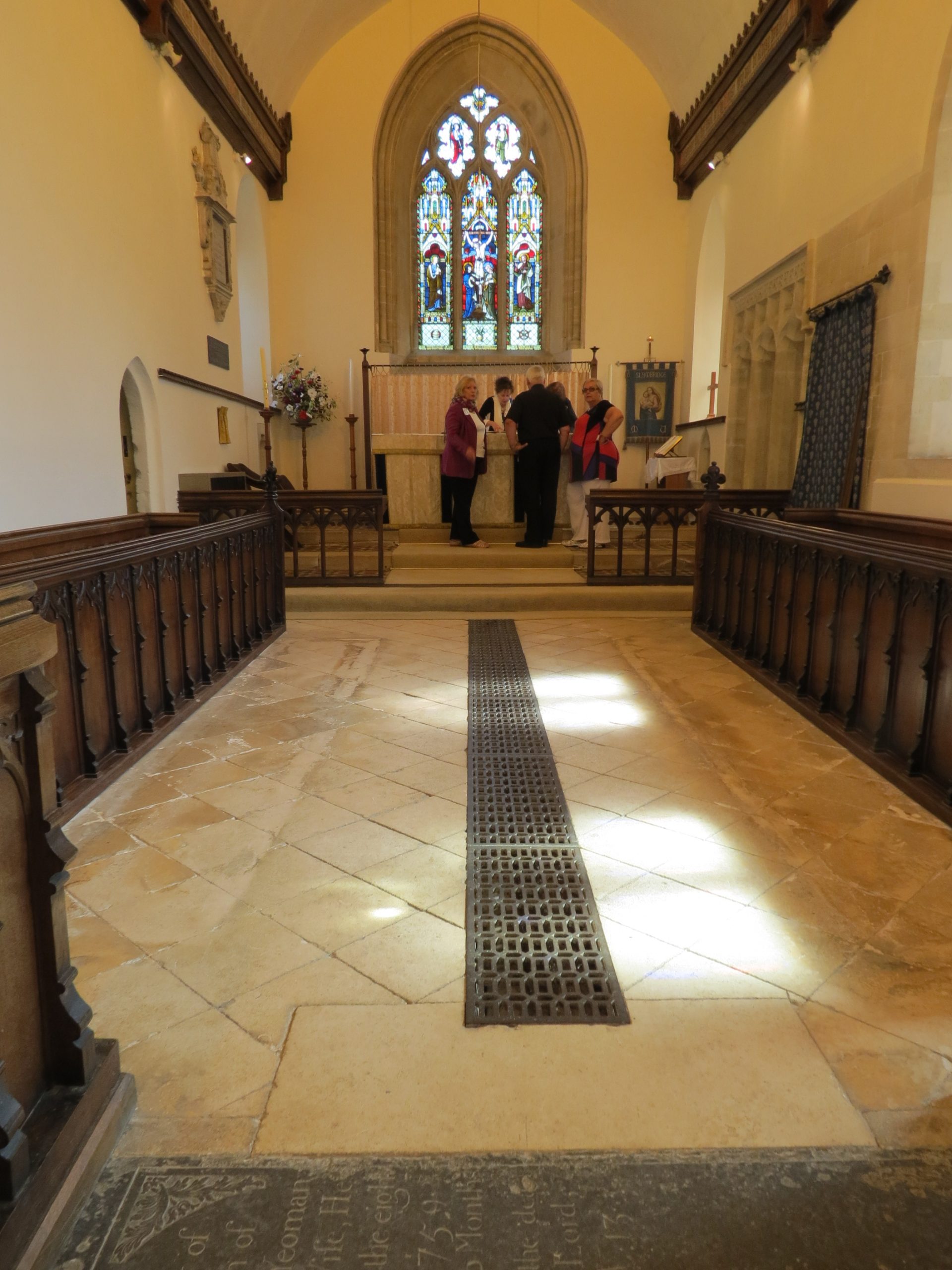
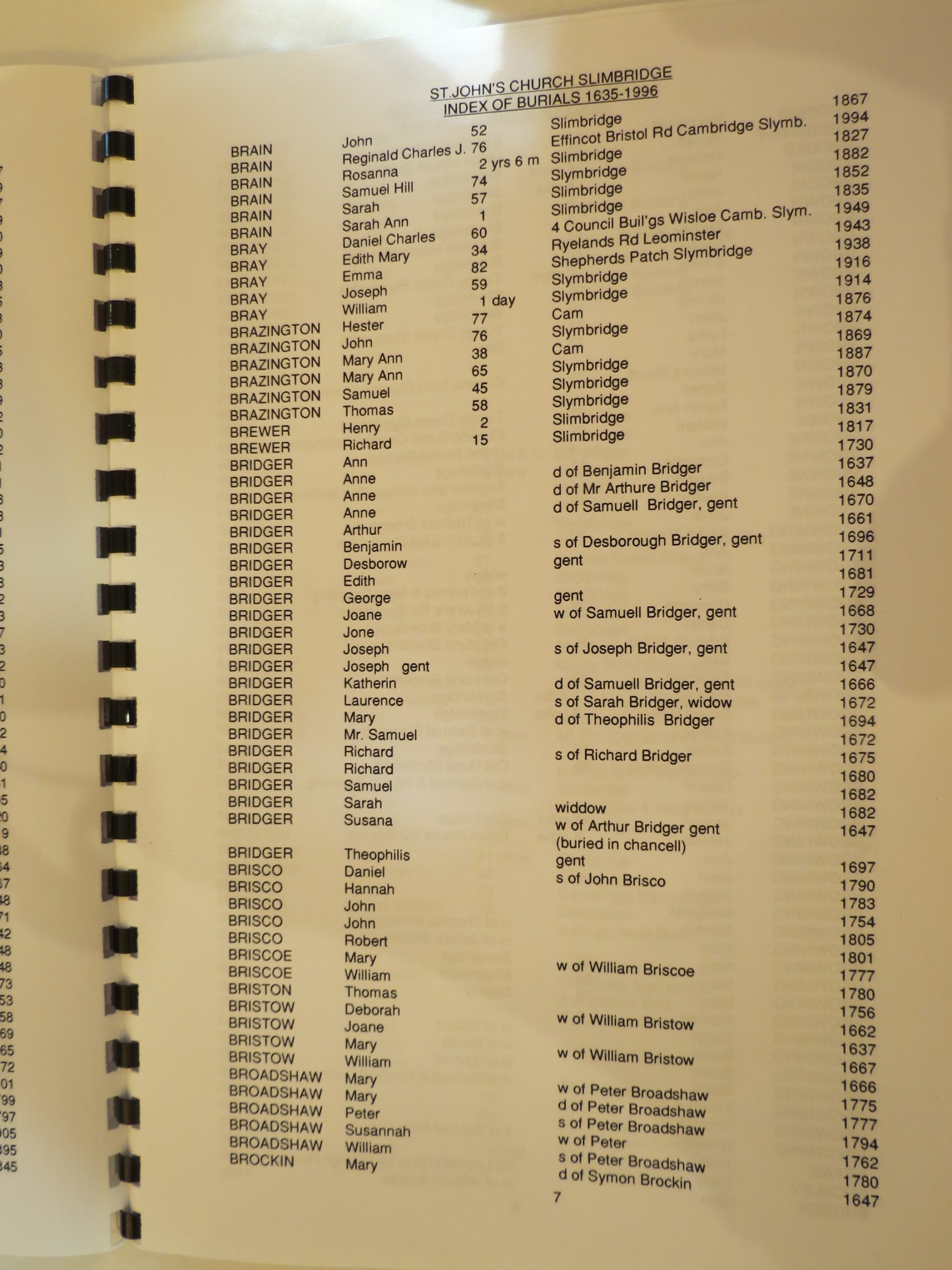
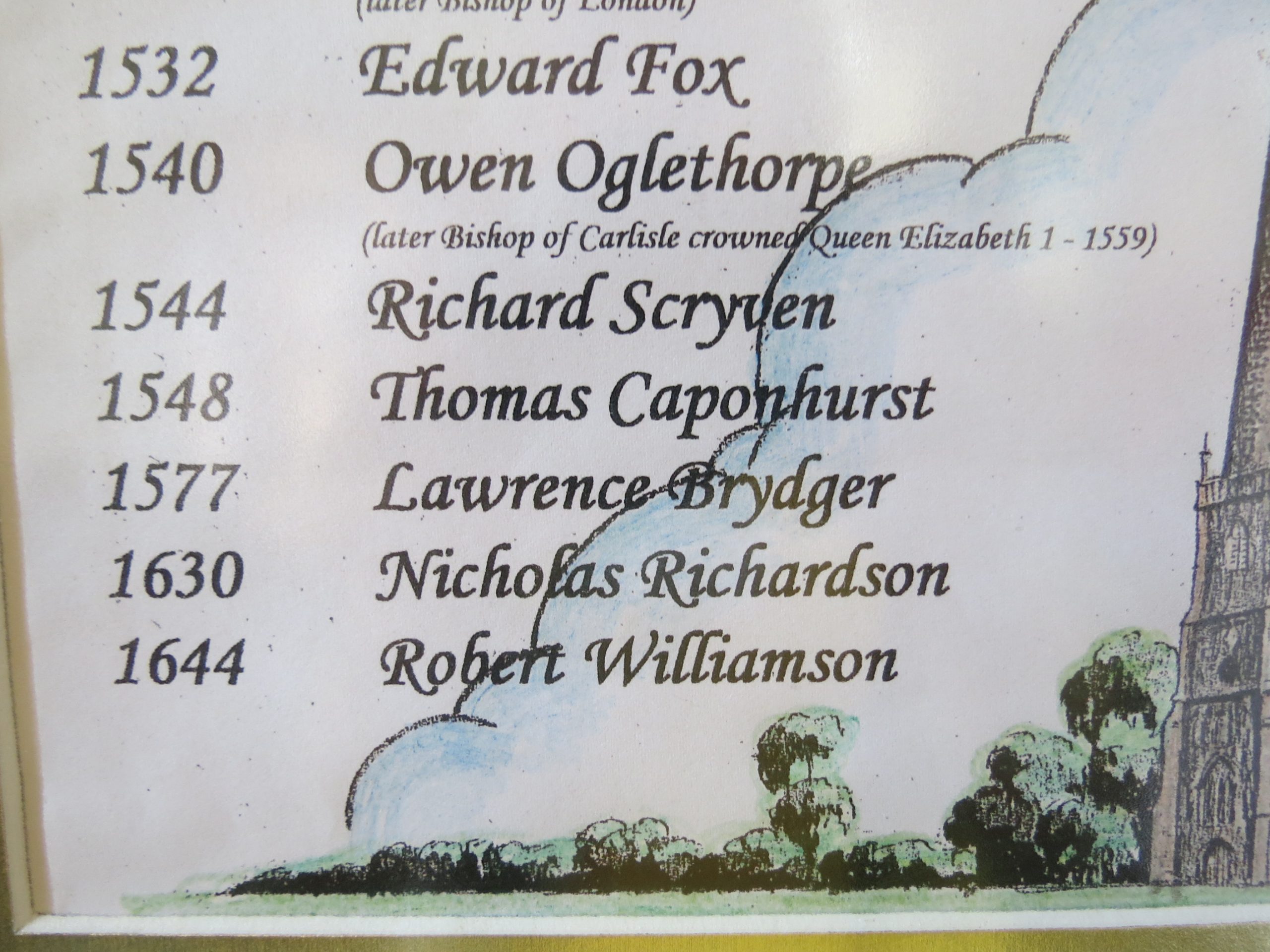
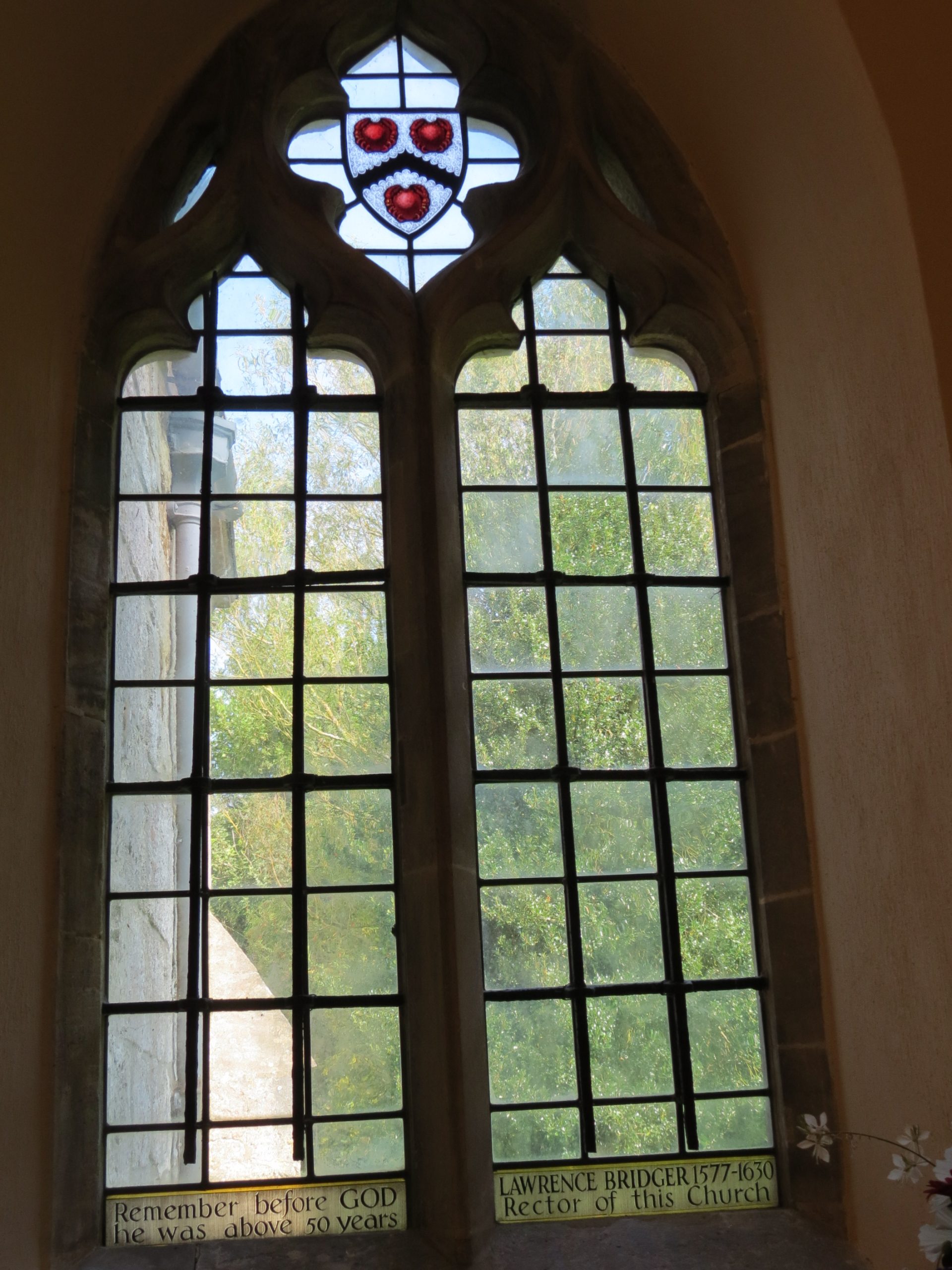
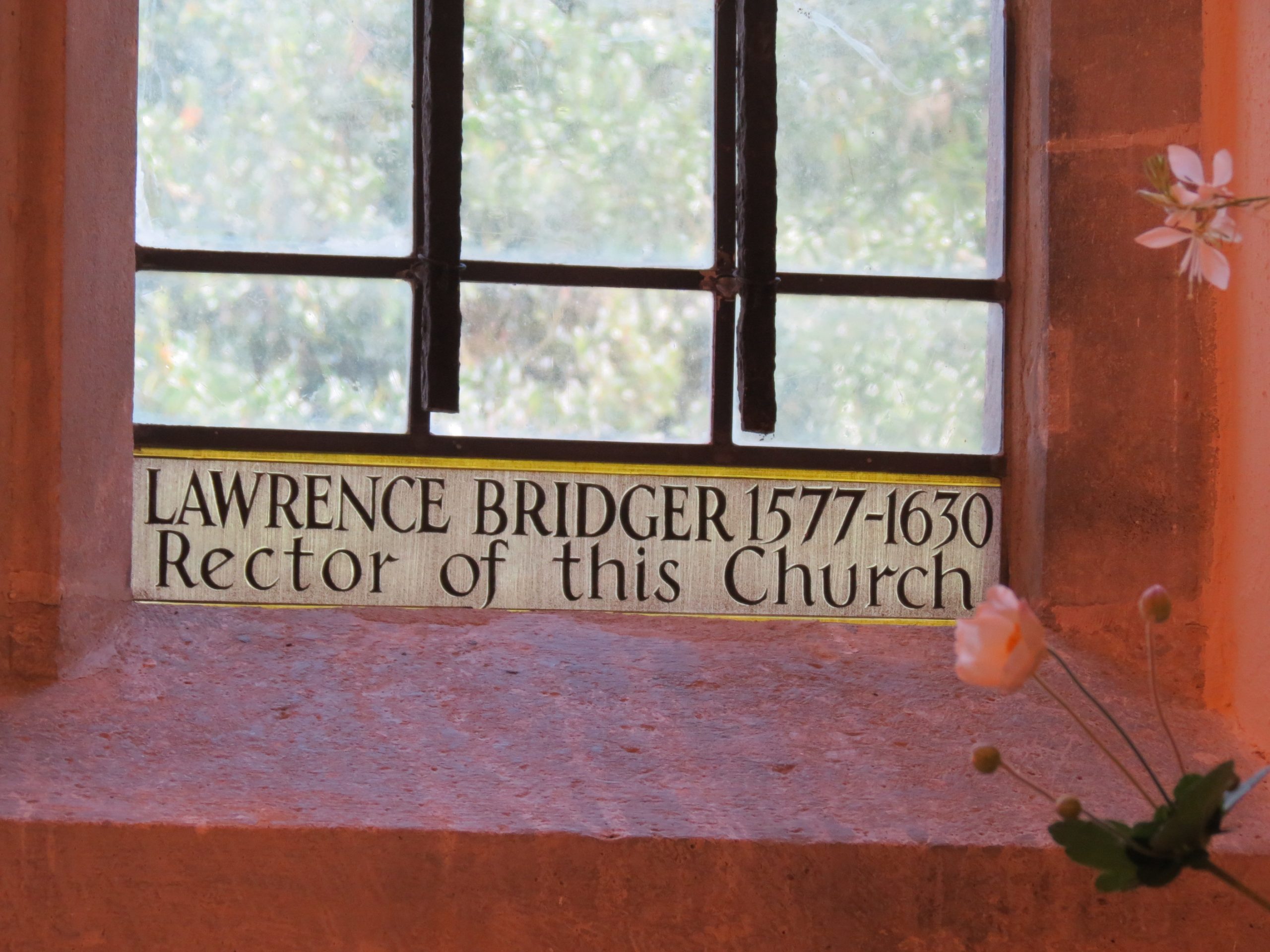
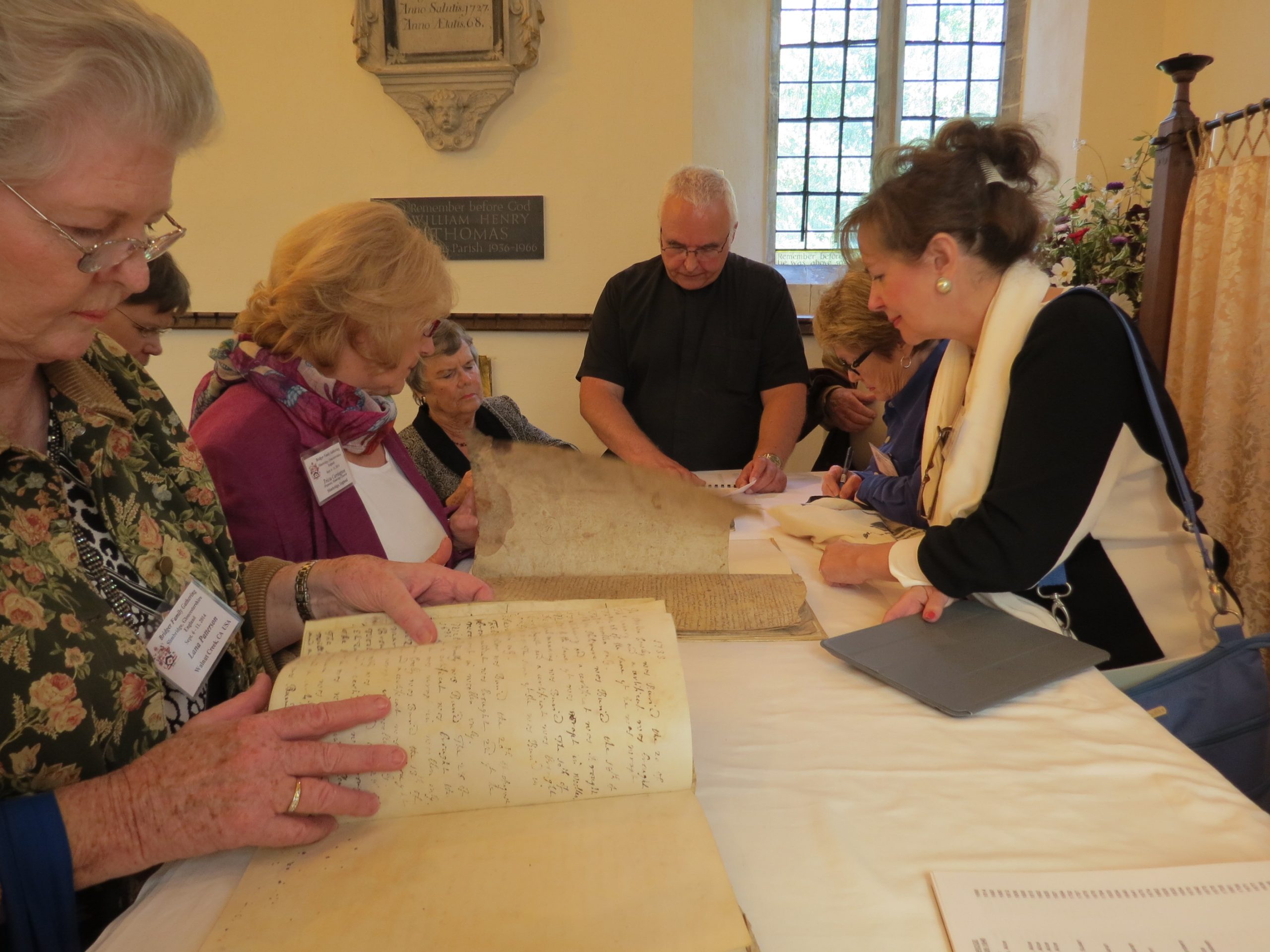
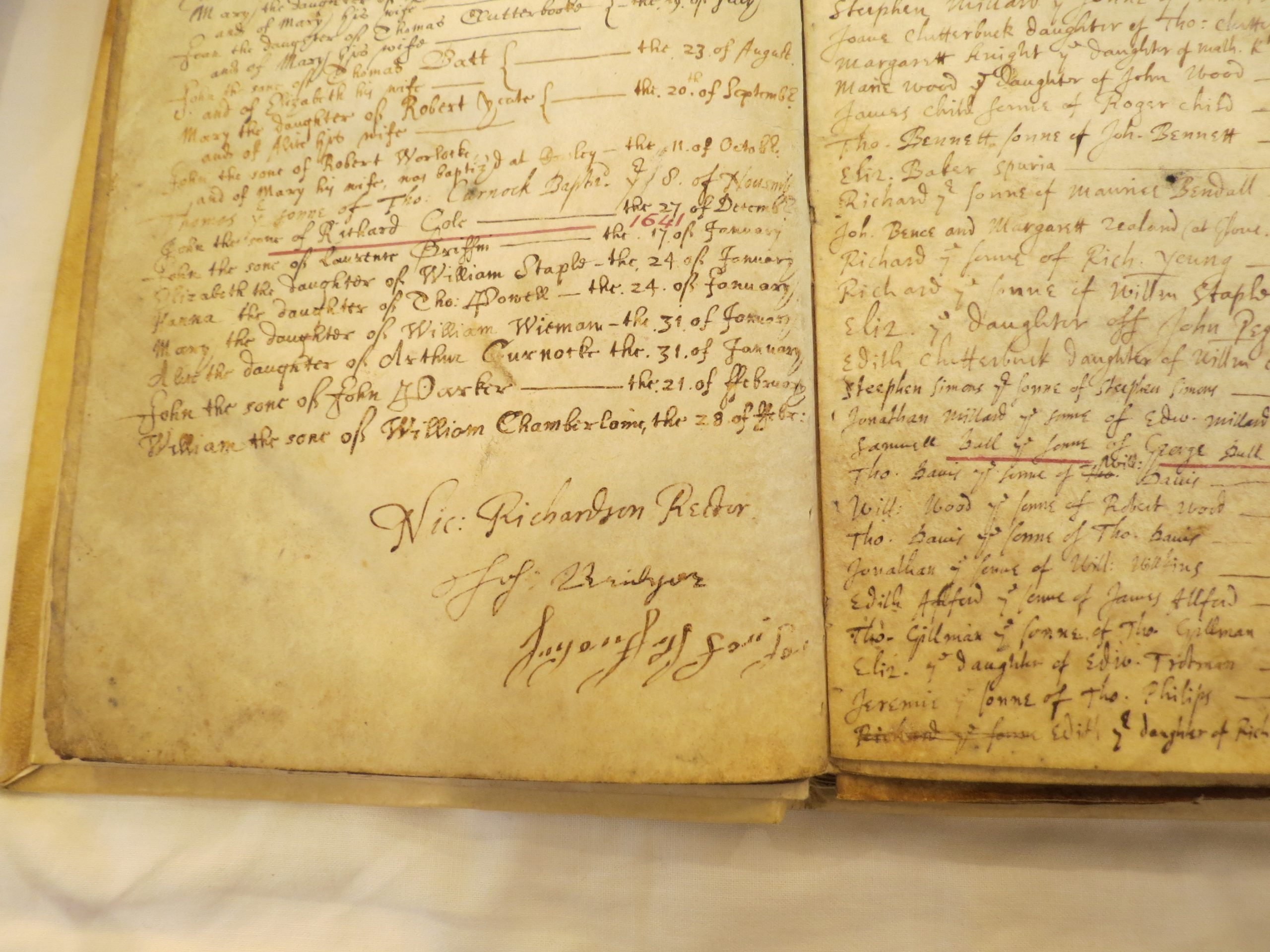
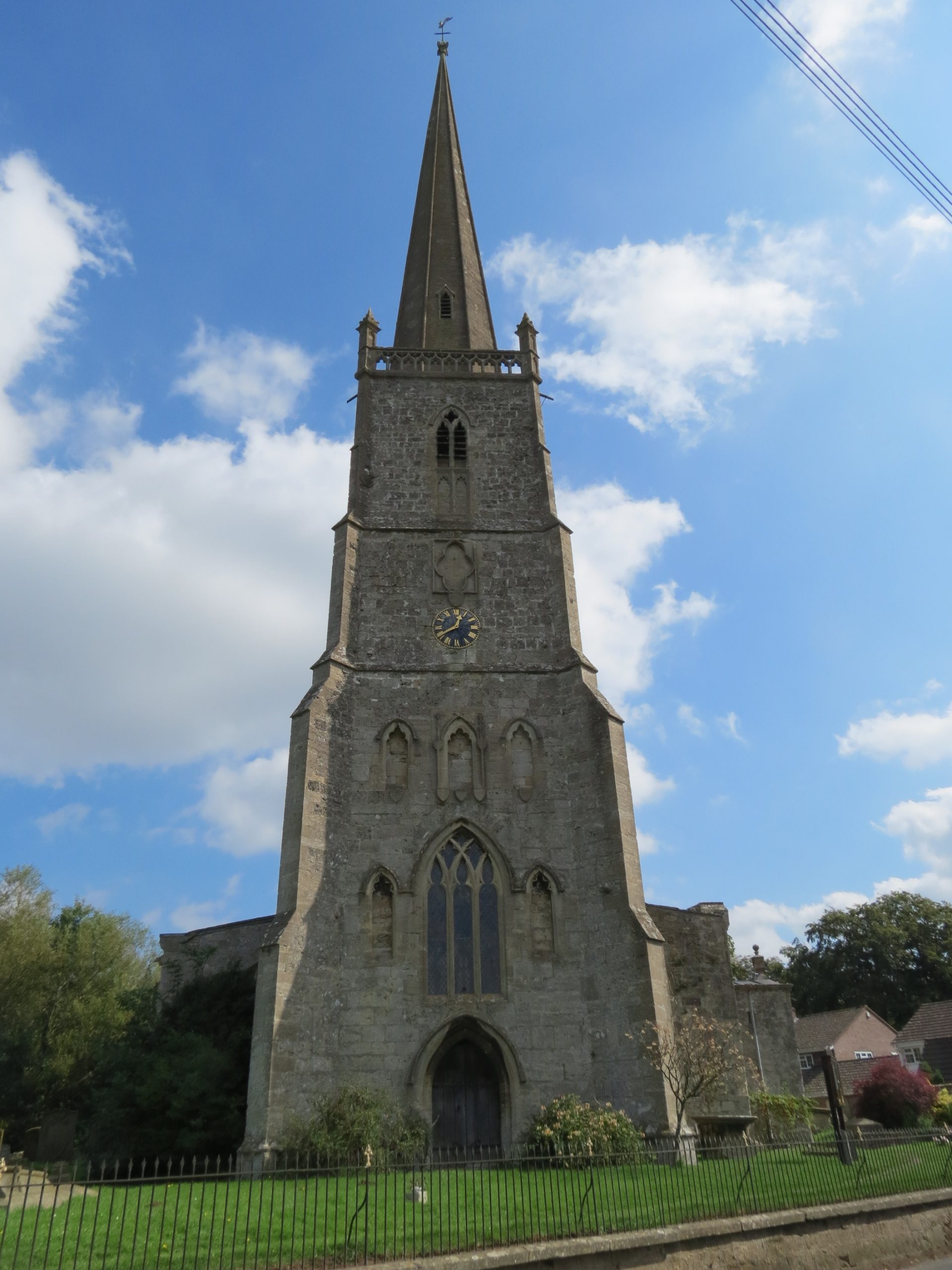
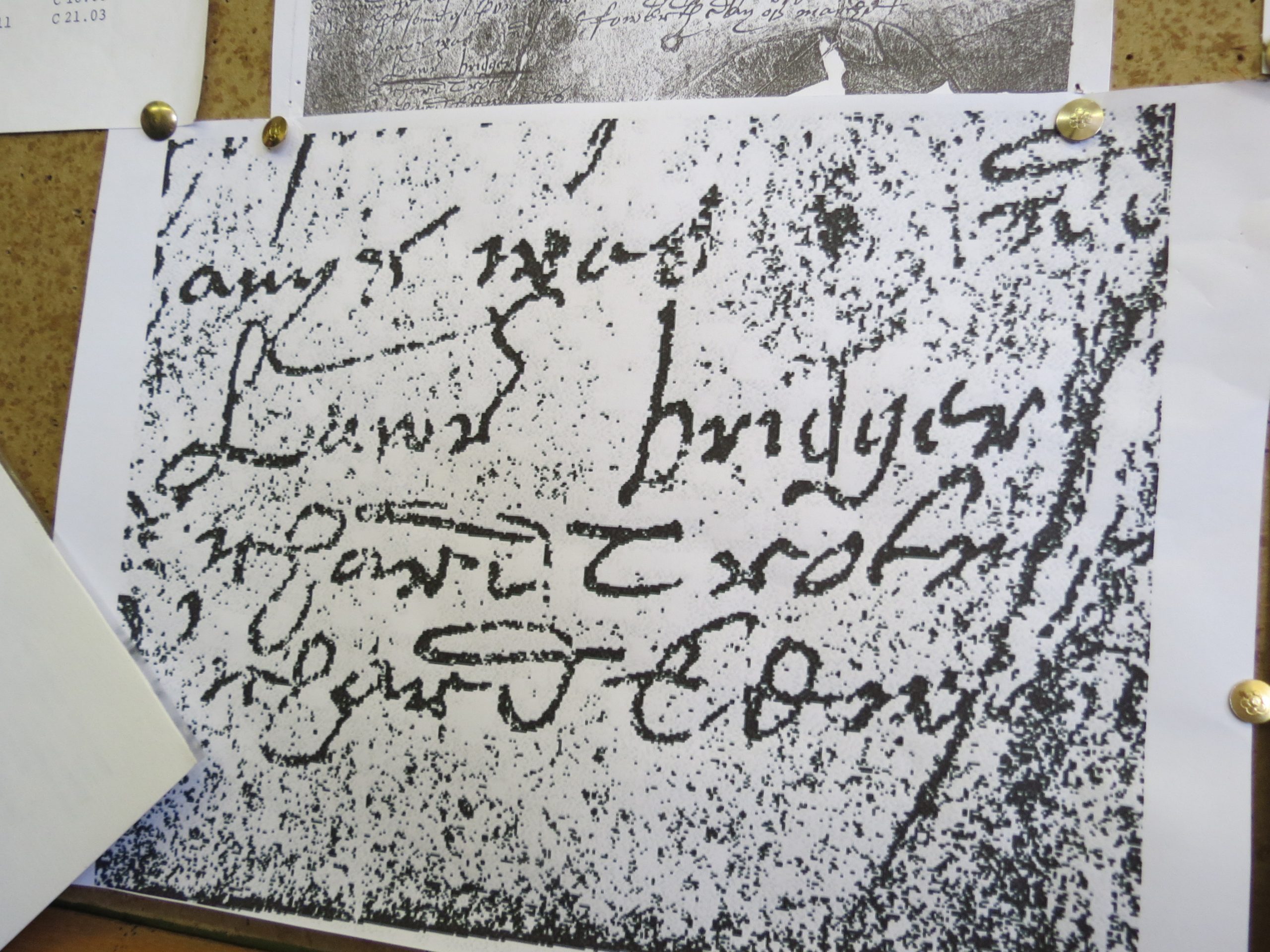
We all attended a Sunday morning church service at The Parish Church of St. John the Evangelist at Slymbridge (Slimbridge). After the service, the current Vicar of the church, Reverend Bill Boon, told us that our ancestor Lawrence Bridger, was Rector of the church from 1577 to 1630 and he is buried under the floor of the church. They found a brass plate that said:
Here lyeth the Body of
Lawrence Bridger
Who was above 50 years
Rector in this Parish,
He was buried the 18th day of October
1630
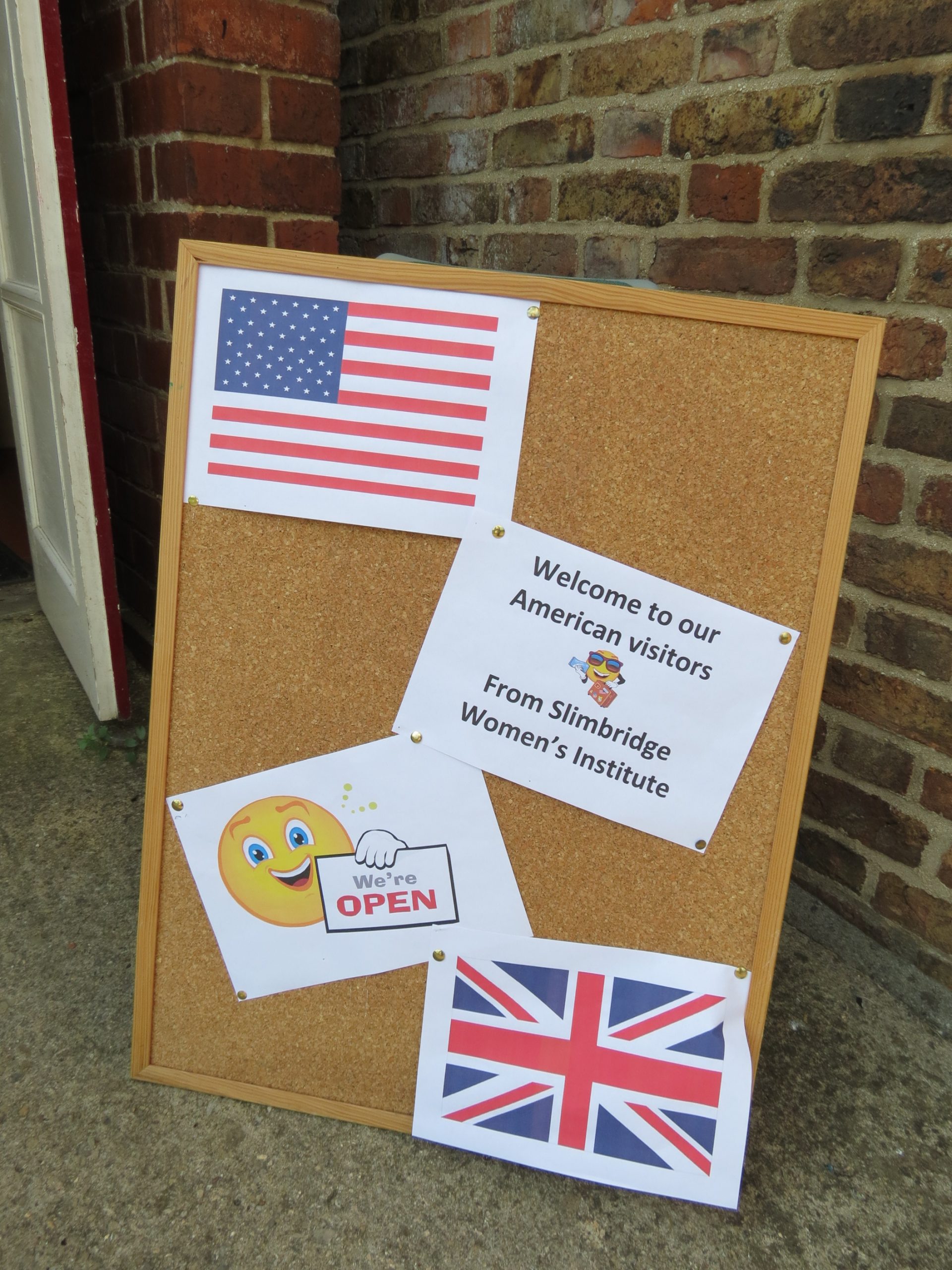
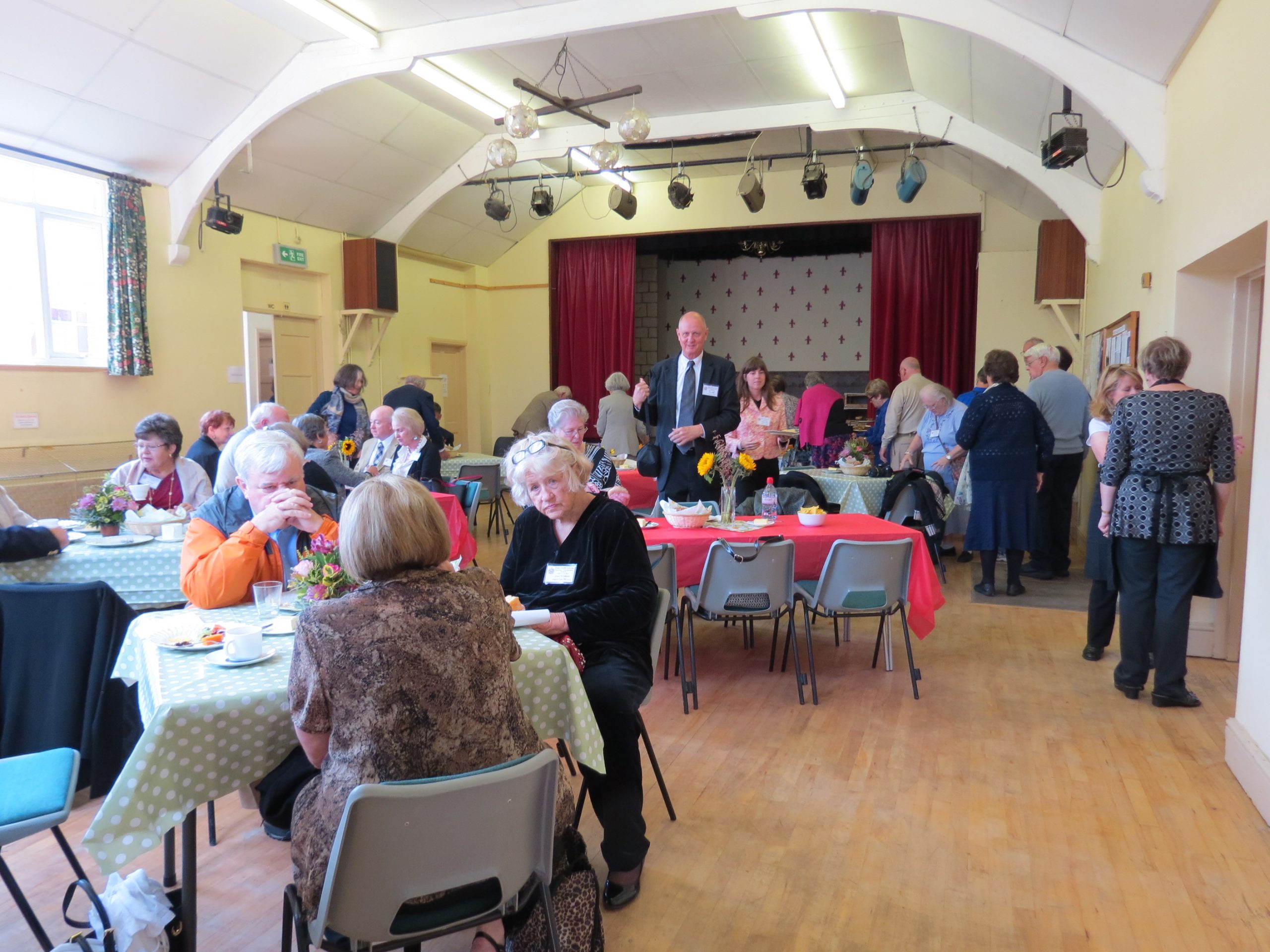
After the church service, the Slimbridge Women’s Institute had a wonderful luncheon for all of us. We had a wonderful time visiting with cousins and members of the Slimbridge Church!
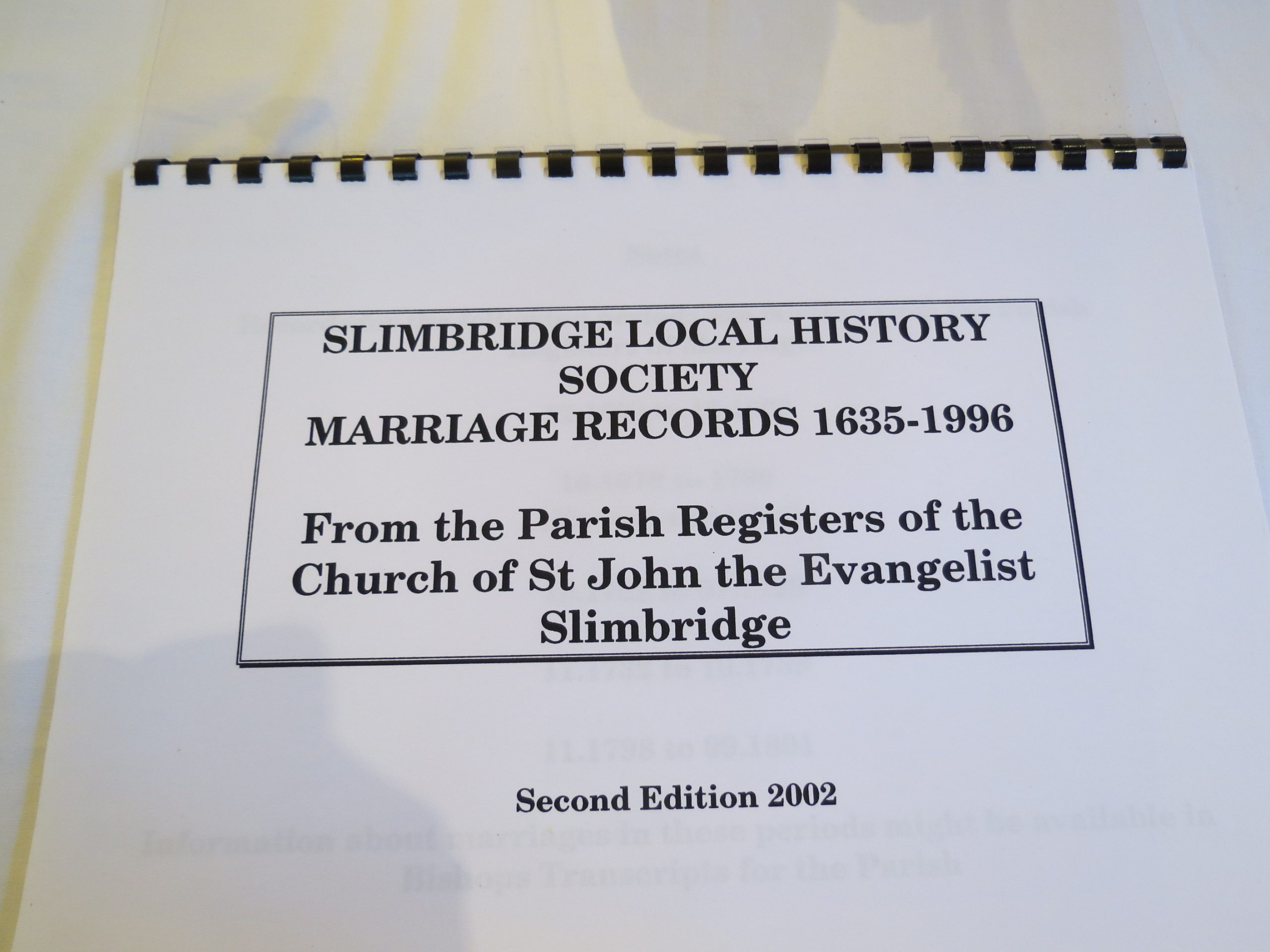
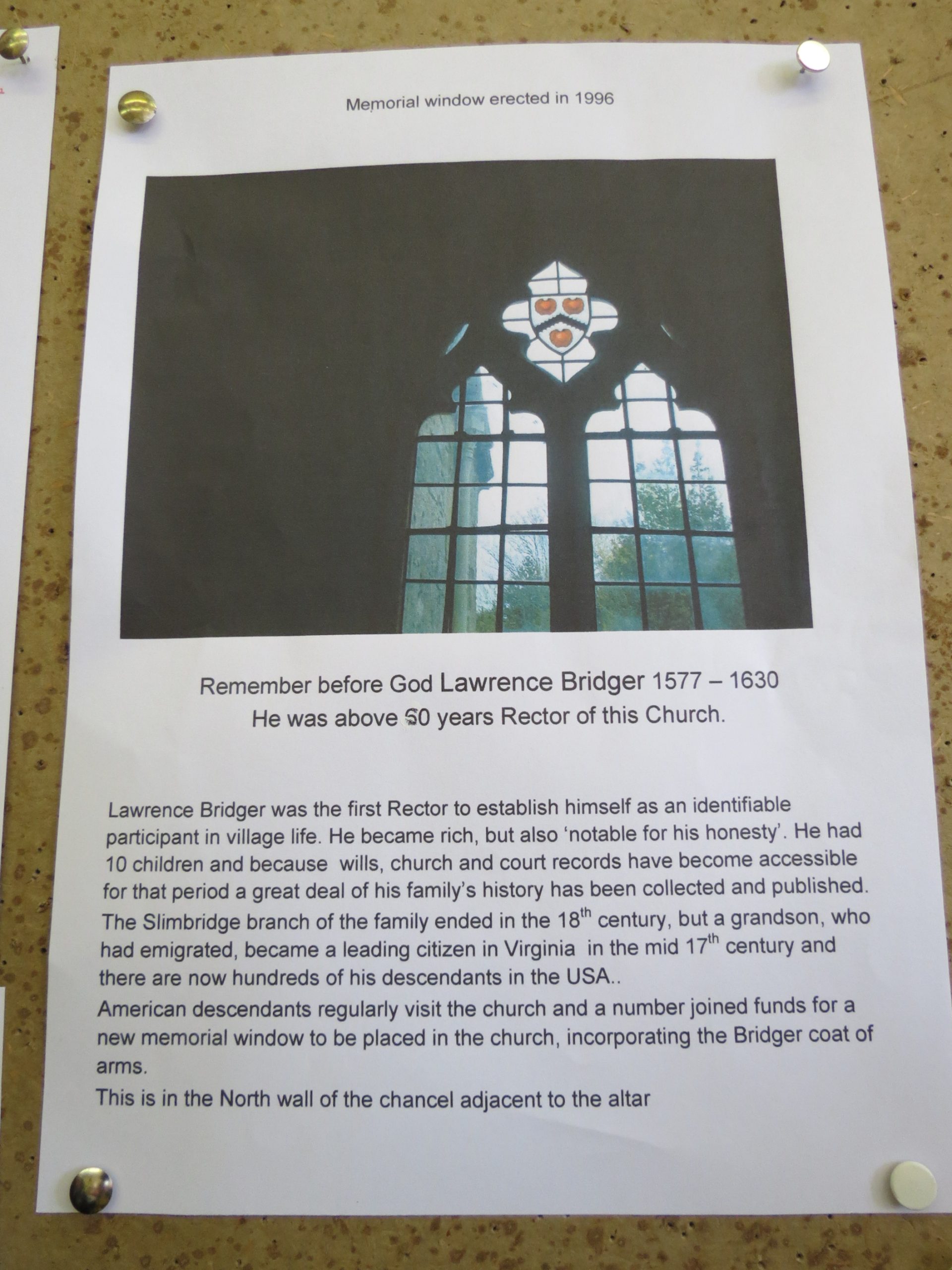
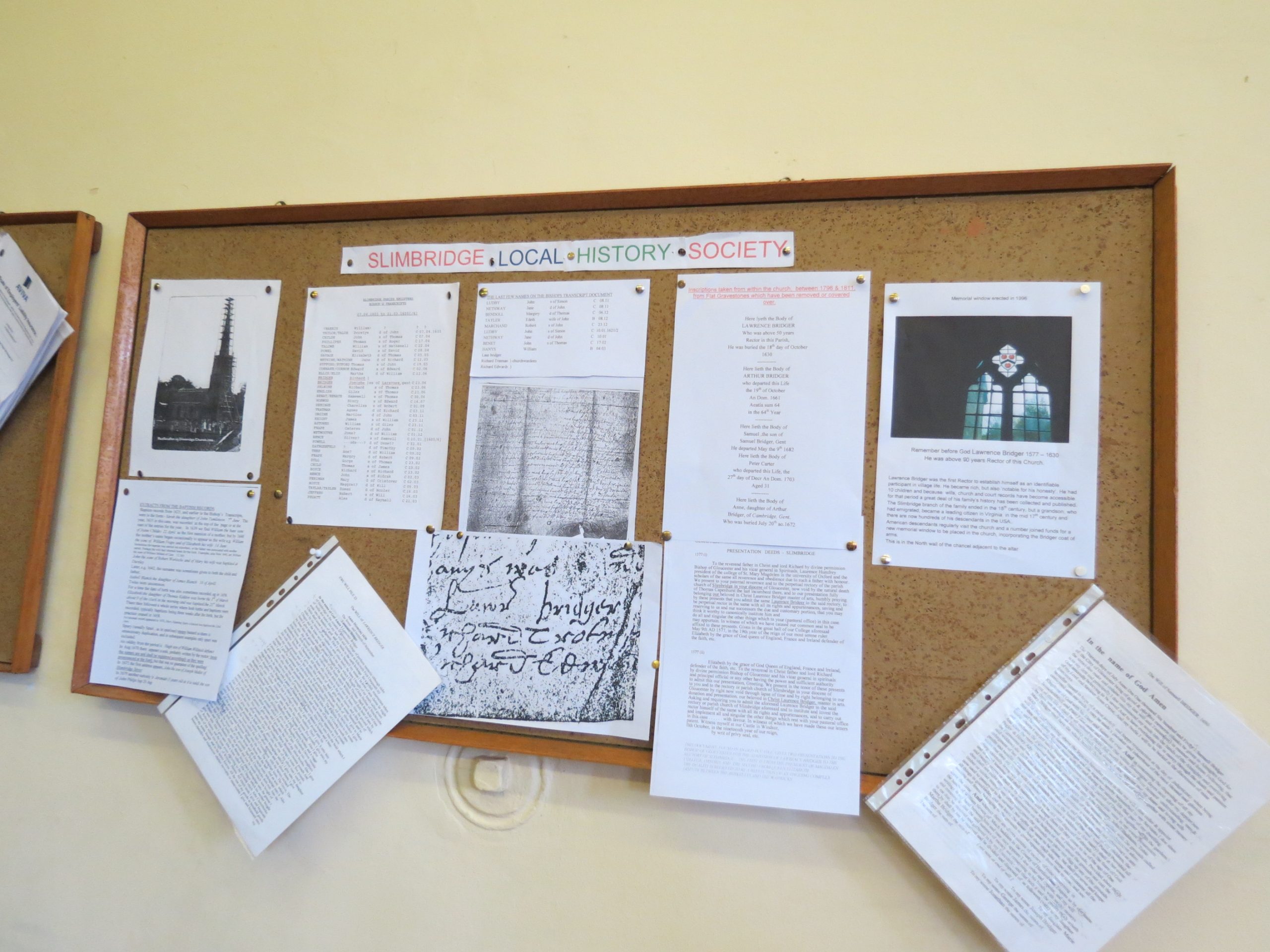
The local history society wrote this about our ancestor:
Lawrence Bridger was the first Rector to establish himself as an identifiable participant in village life. He became rich, but also ‘notable for his honesty.’ He had 10 children and because will, church and court records have become accessible for that period, a great deal of his family’s history has been collected and published. The Slimbridge branch of the family ended in the 18th Century, but a grandson [Joseph Bridger], who had emigrated, became a leading citizen of Virginia in the mid-17th century and there are now hundreds of his descendants living in the USA.
Day 3 — Monday, September 8 — Woodmancote Manor, Cheddar, Bath
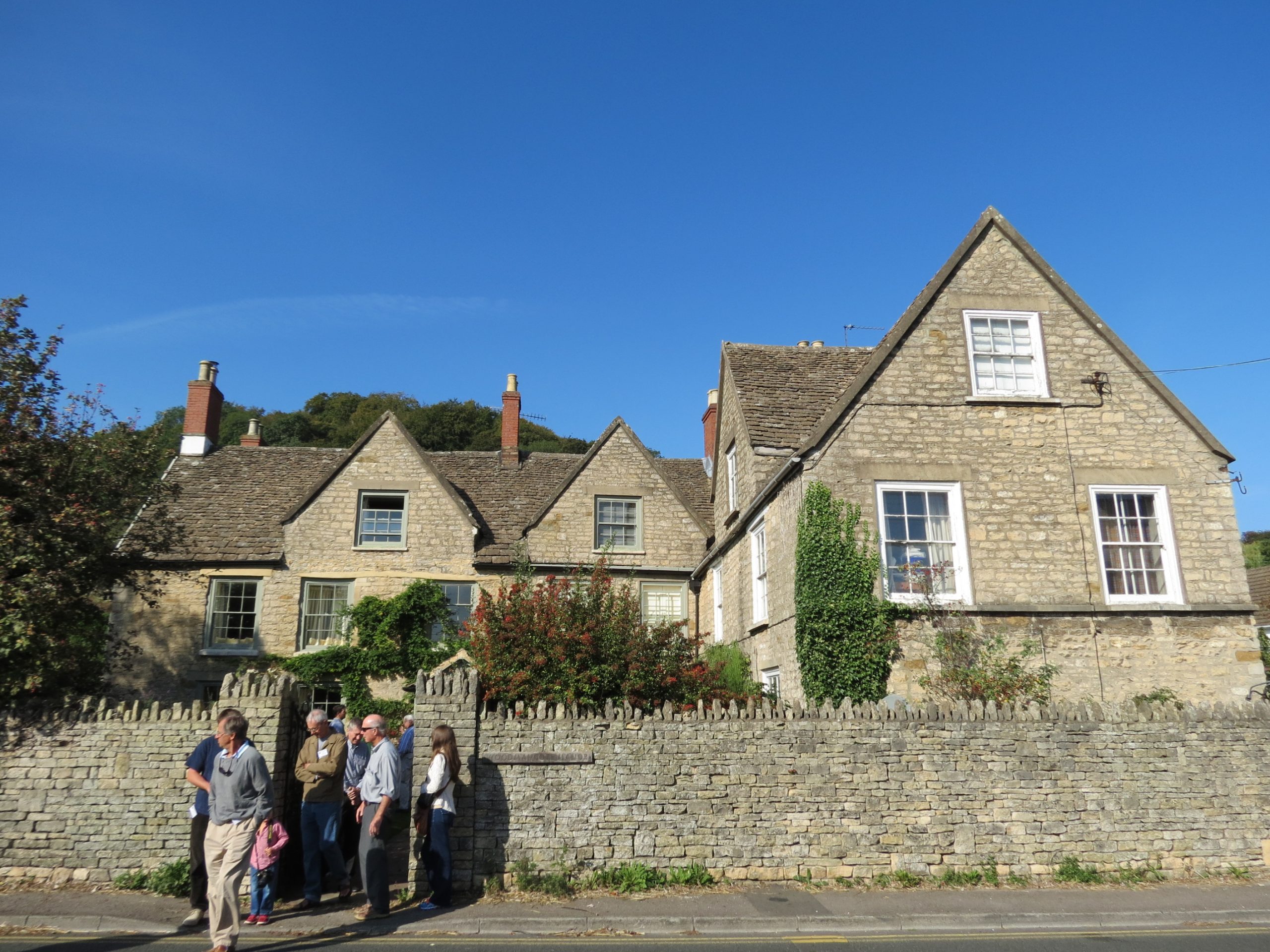
We visited Woodmancote Manor in Dursley, which was the home of our ancestor Samuel Bridger, son of Lawrence. When Samuel lived at Woodmancote Manor with his wife Mary Purchas, their son Joseph Bridger was born there in about 1631. Joseph then immigrated to Isle of Wight County, Virginia in 1652. As we left Dursley, we passed by Gossington Hall, home of Lawrence Bridger.
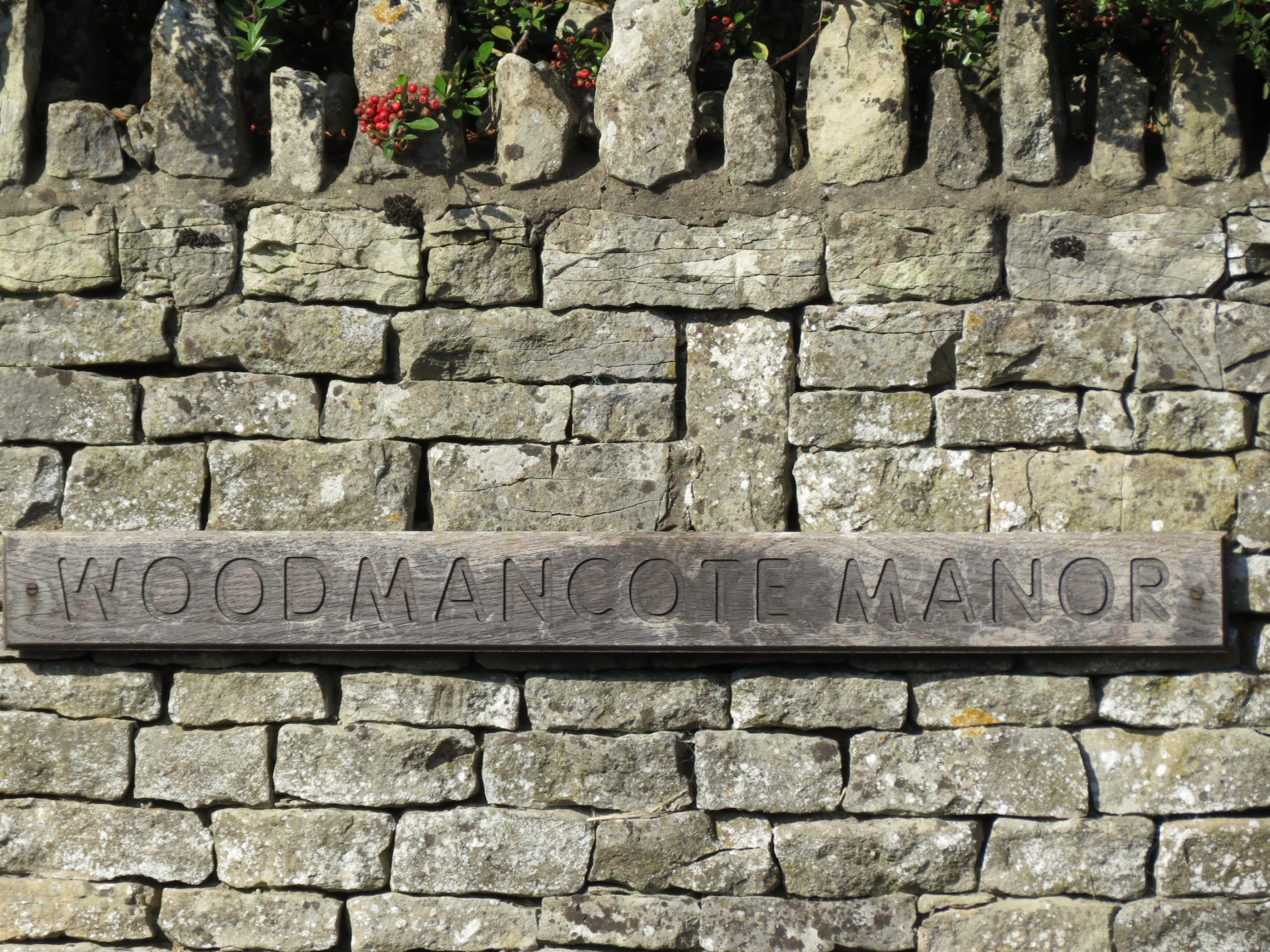
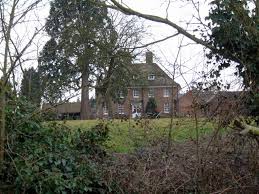
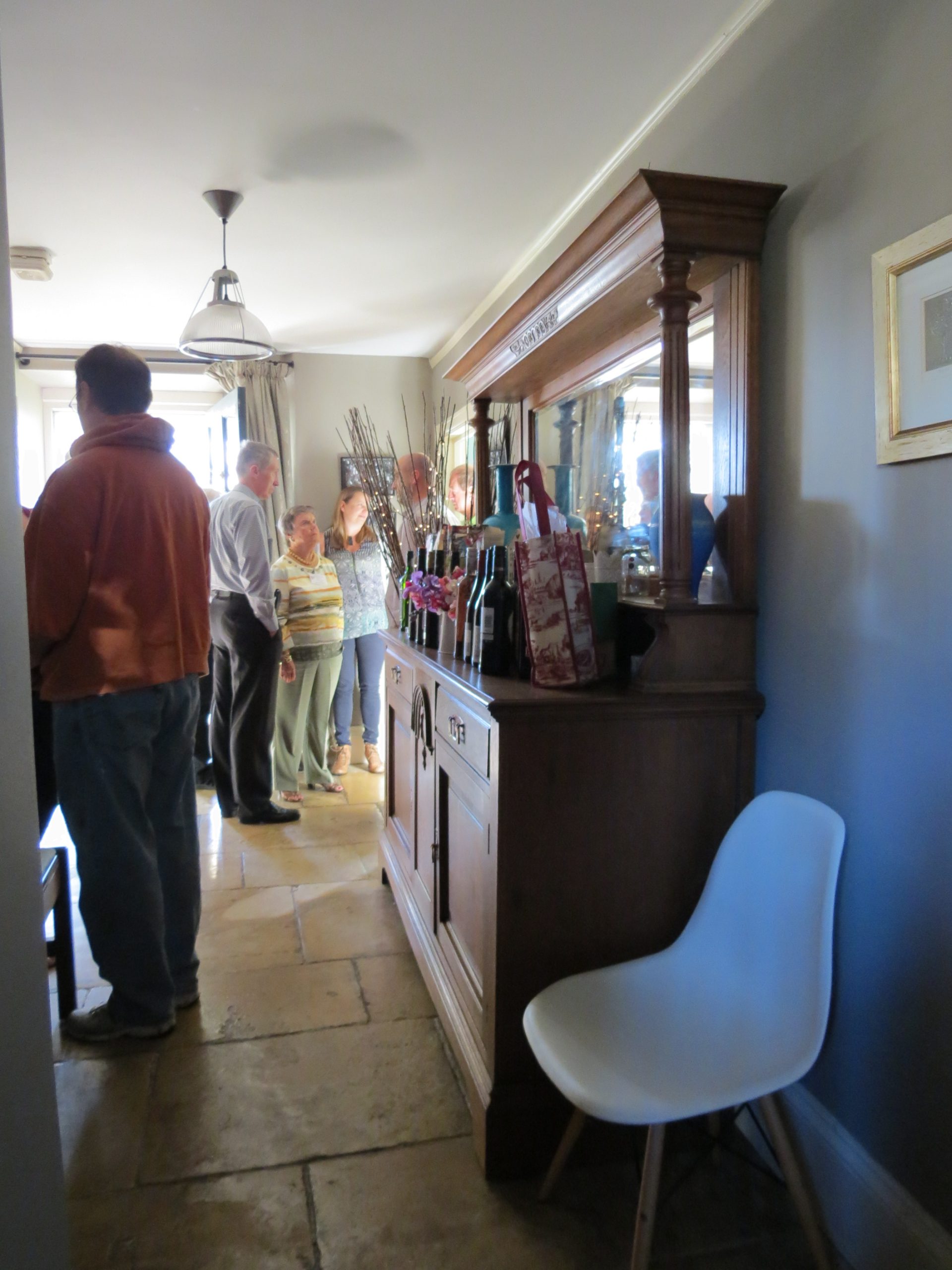
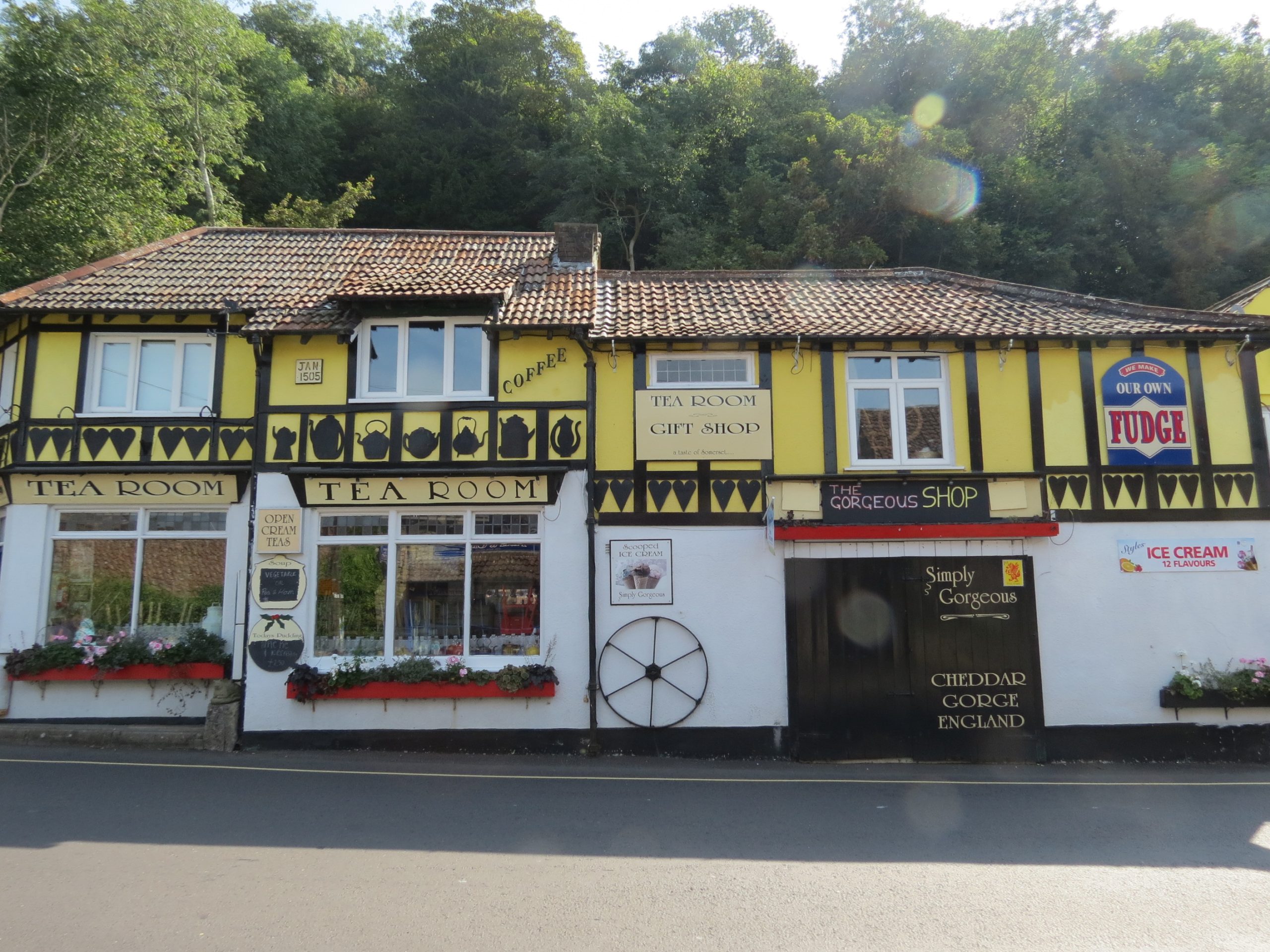
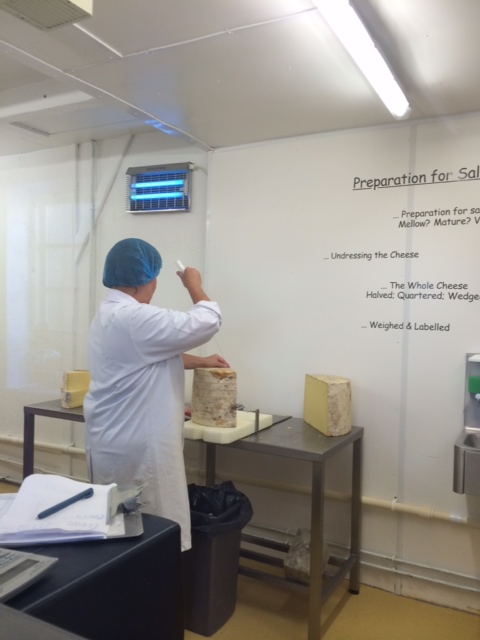
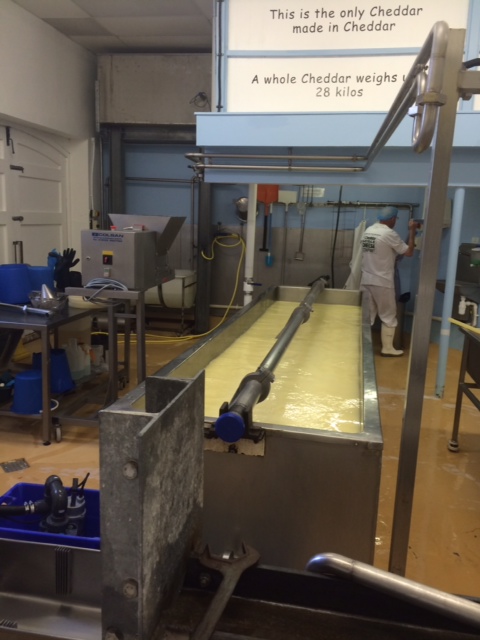
We visited Cheddar, which is a large village in the Sedgemoor district of the English county of Somerset. Cheddar Grove, which is on the northern edge of the village, is the largest gorge in the United Kingdom.
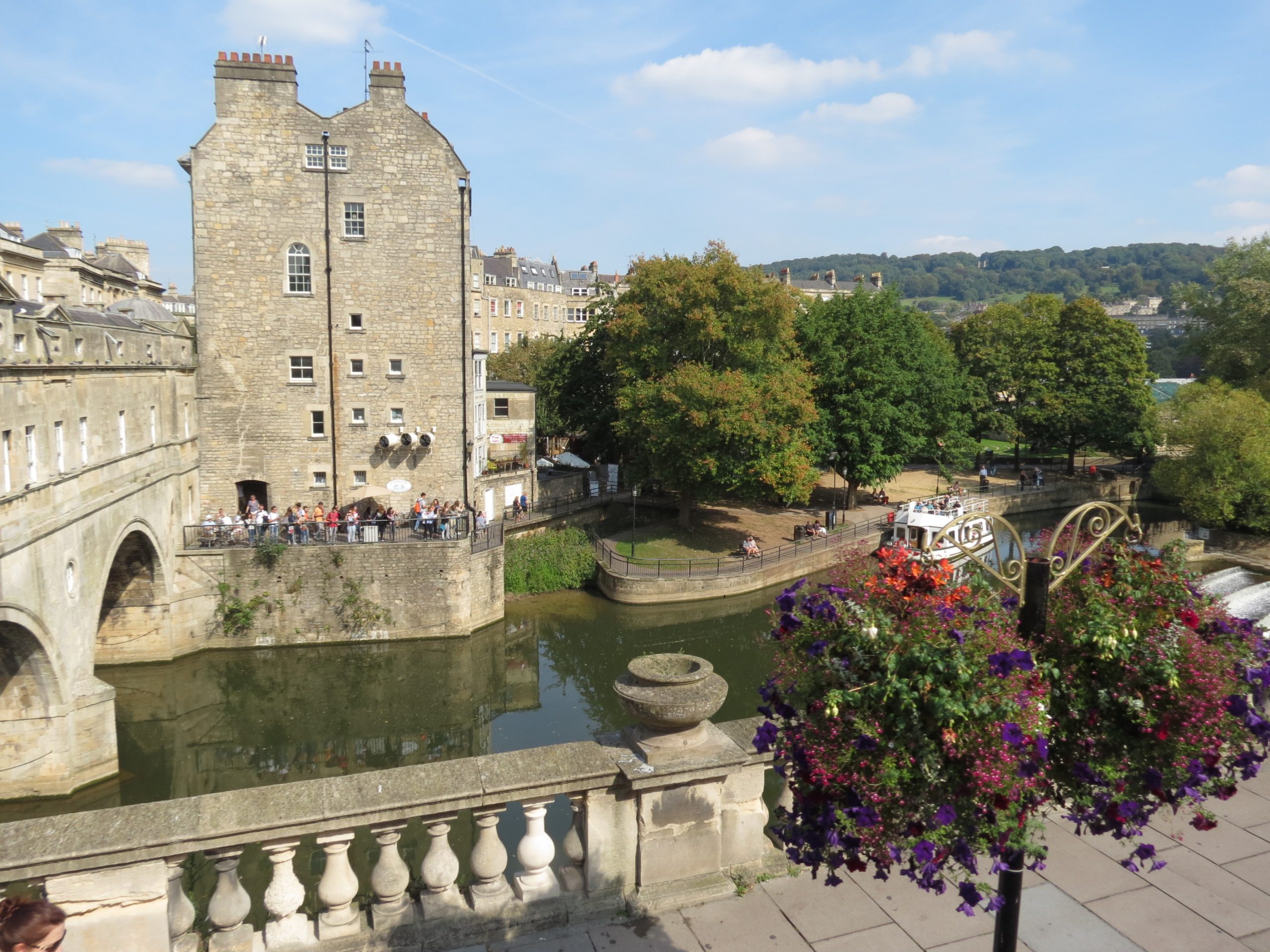
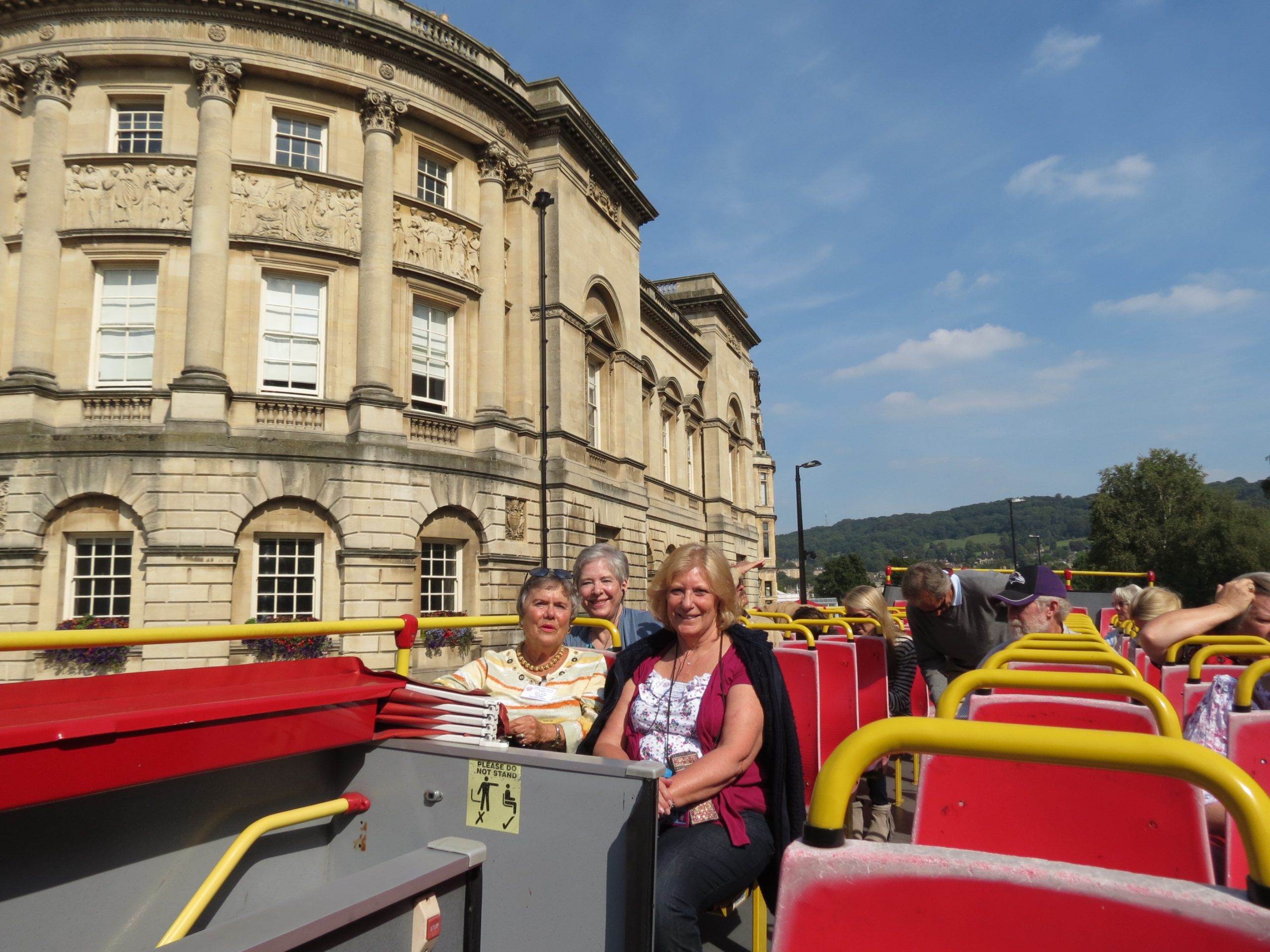
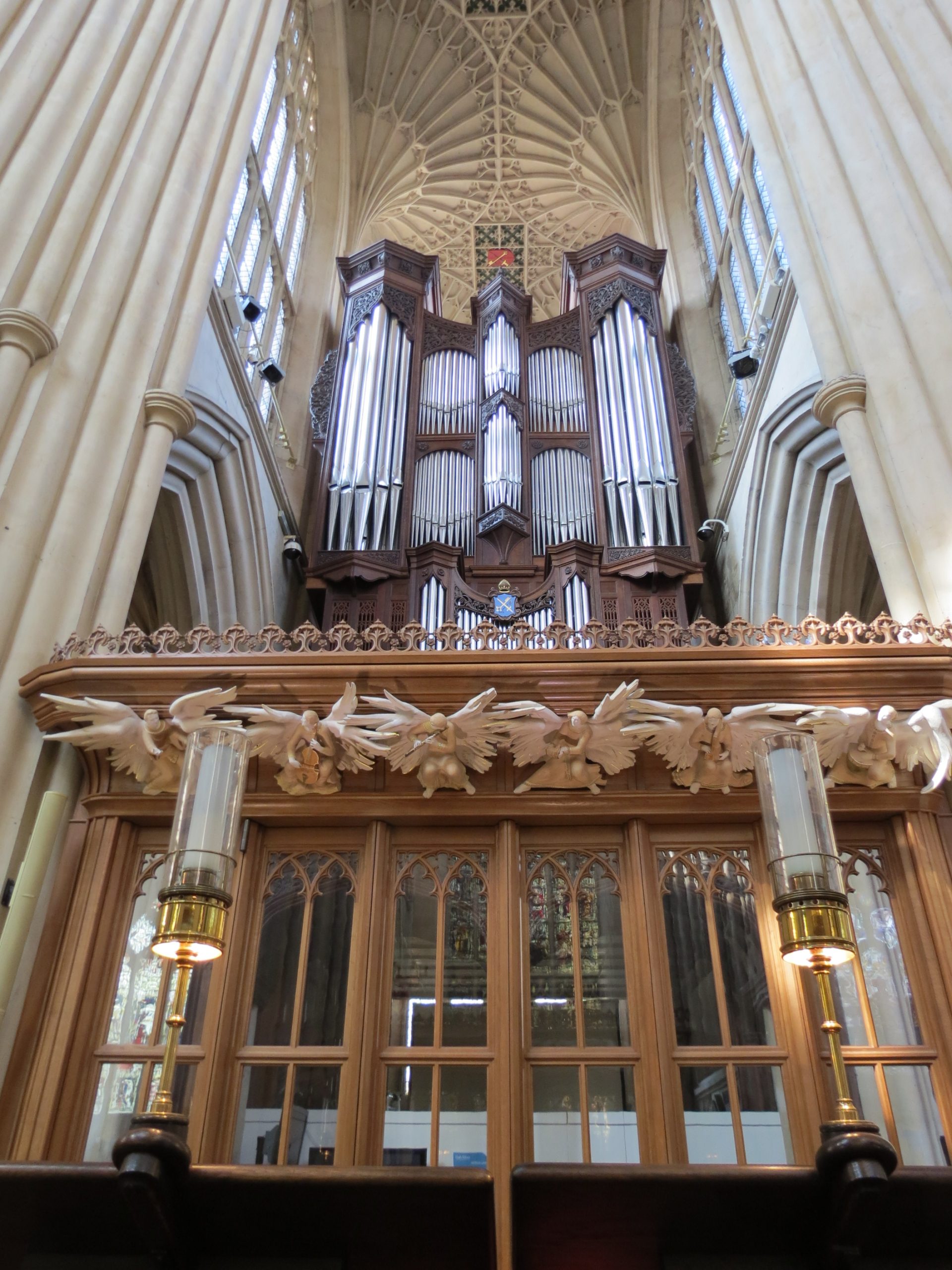
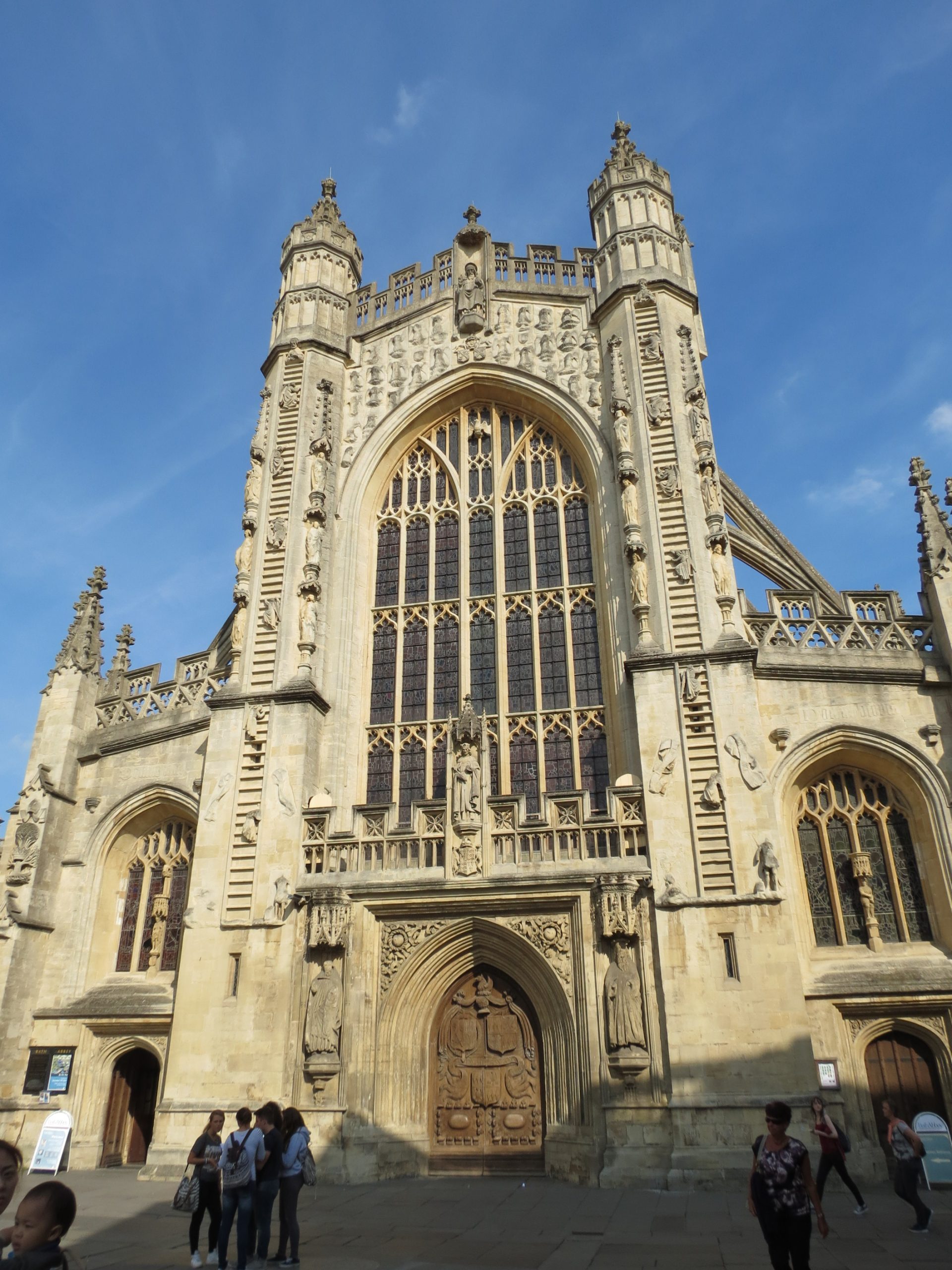
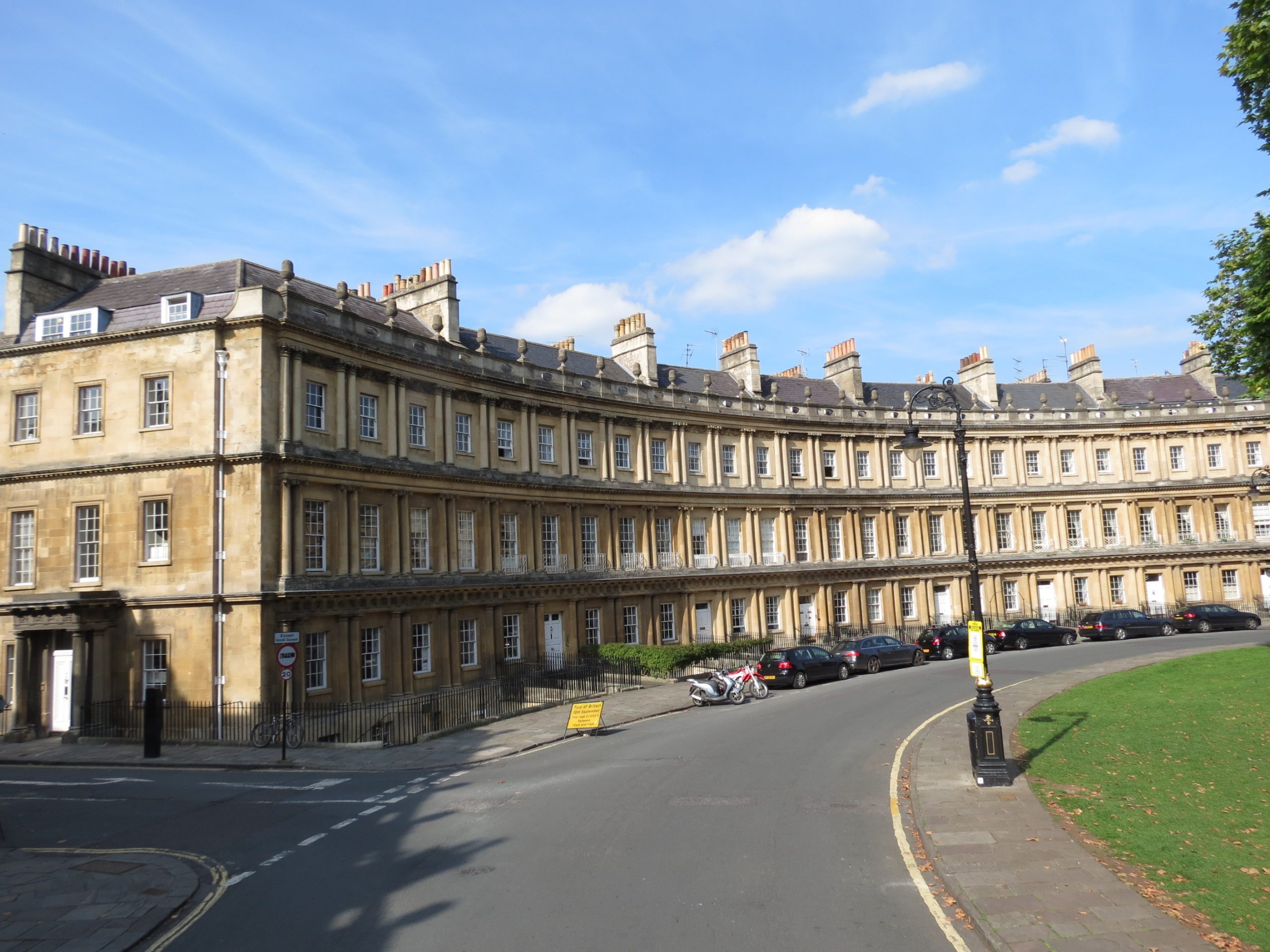
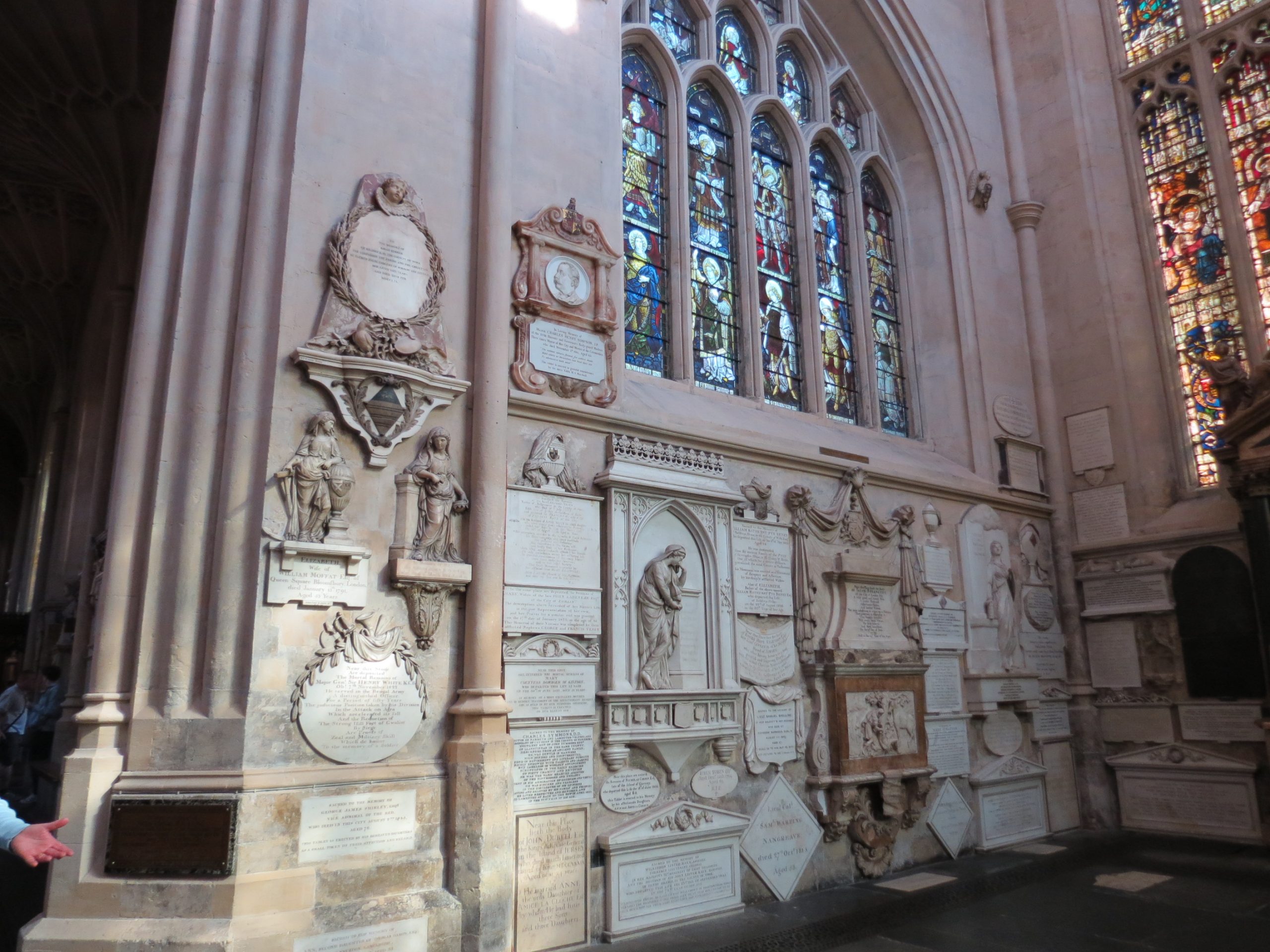
Then we visited the town of Bath. Some of us took a double-decker bus tour, others toured the Roman Baths, and others toured the beautiful Bath Abbey.
Day 4 — Tuesday, September 9 — Gloucester Cathedral, Stonehenge
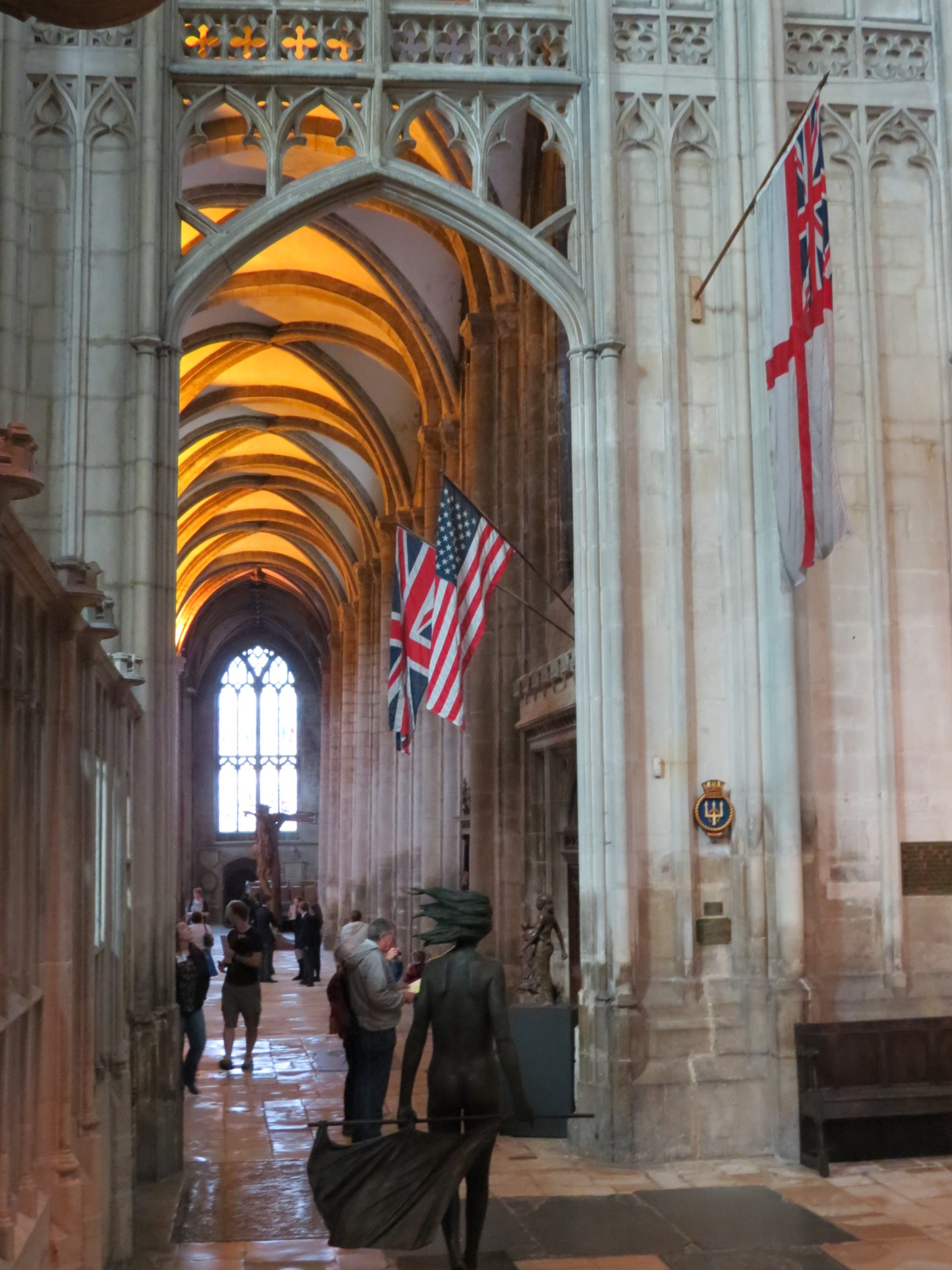
We visited Gloucester Cathedral, which has been a place of Christian worship continuously for over 1,300 years. This building was started in the year 1089. In 1216, Henry III was crowned king here — the only time a coronation was held outside of London. Samuel Bridger is buried in the Lady Chapel, which was built in the 13th century. At one time there was an interesting epitaph marking his grave:
Here lyes the body of Samuel Bridger, gent, who Departed this life upon the 21st day of July, An.1650. Receiver of this College Rents, he paid His Debt to Nature, and beneath he’s laid, To rest until his Summons to remove, At the last Audit, to the Choir above.
The epitaph was removed during a restoration at the end of the 19th century and is no longer there.
A tour guide told us that Gloucester is not nearly as ornate as Bath Abbey because for the first 500 years, it was a monastery.
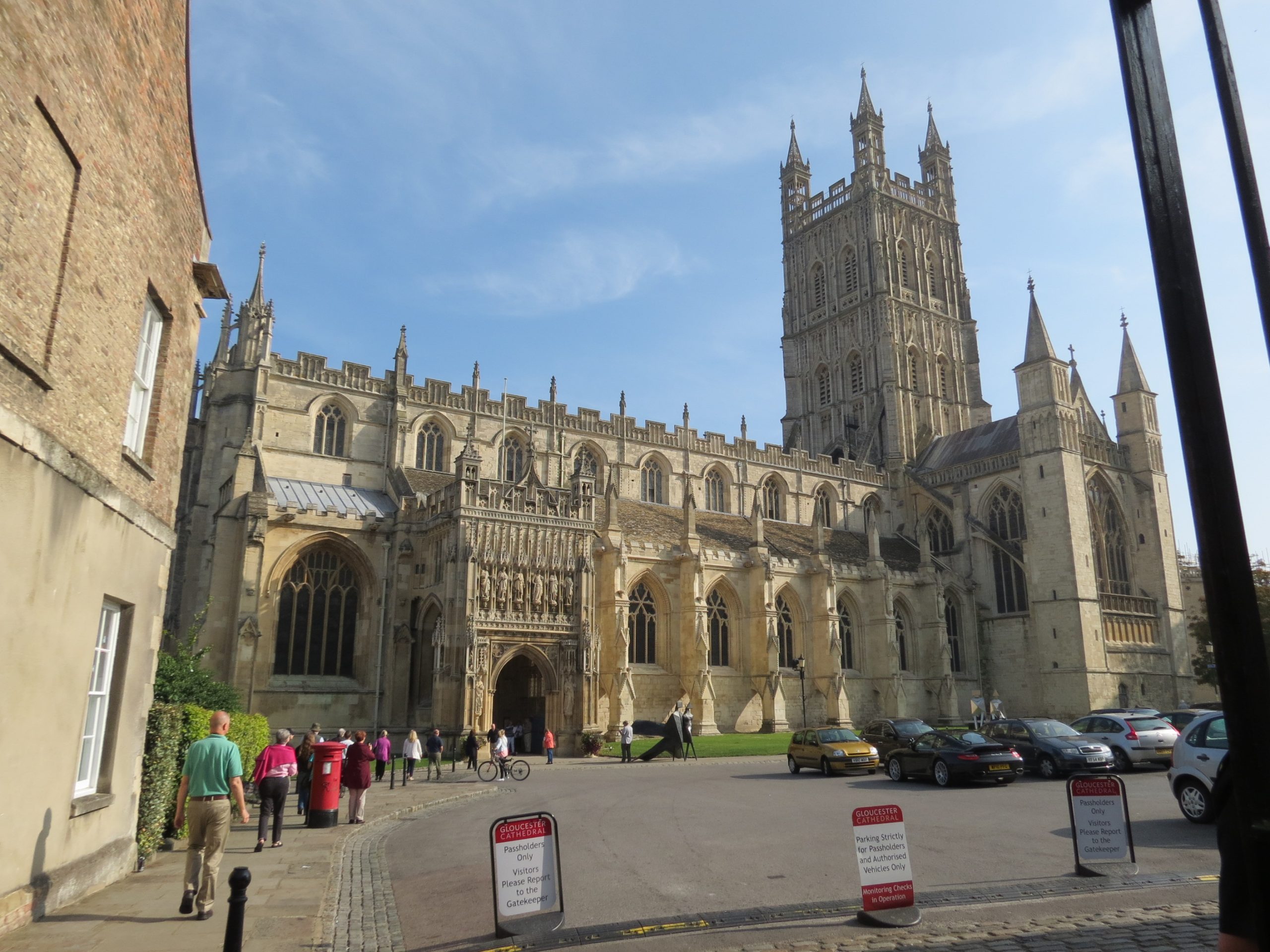
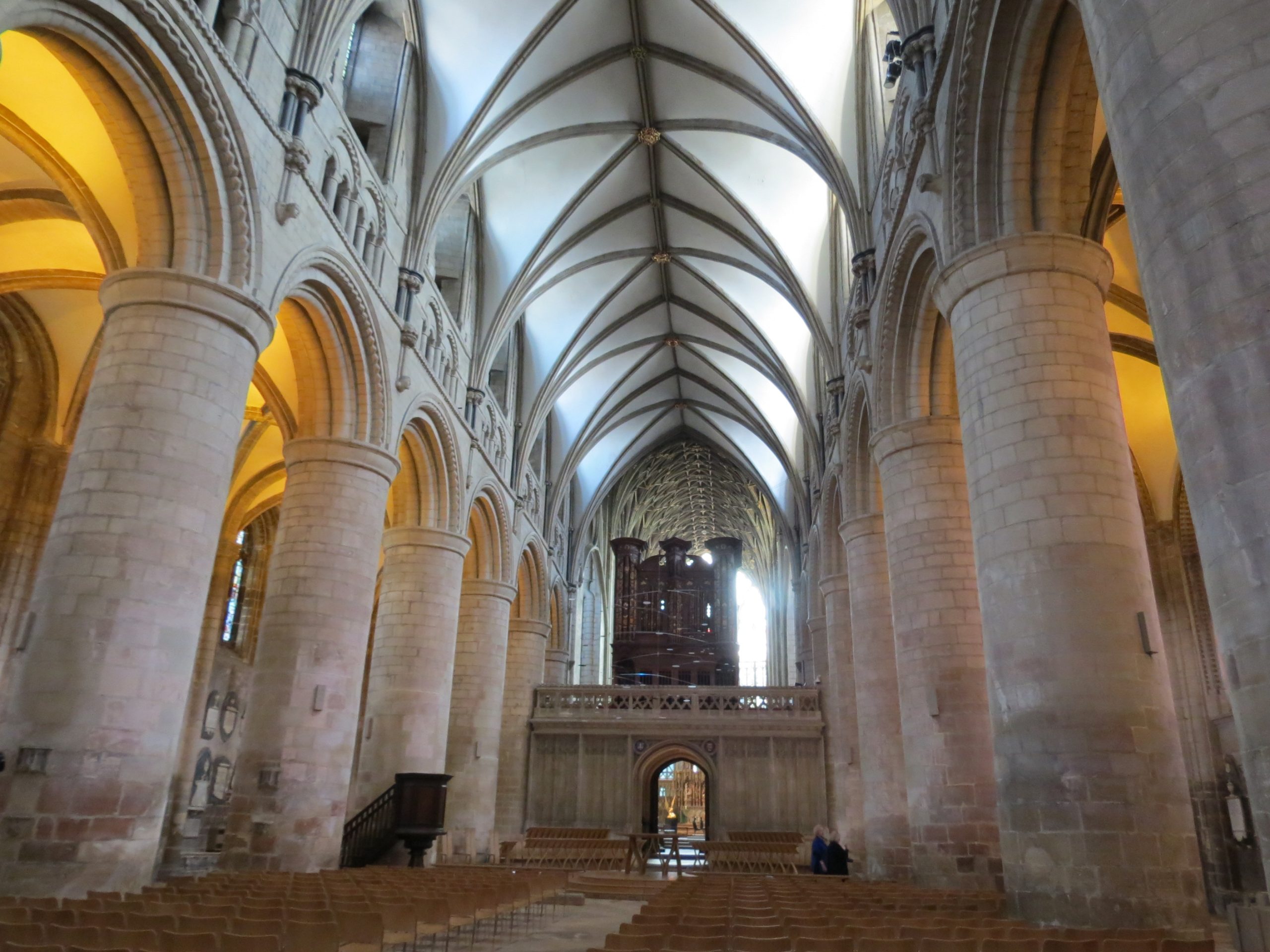
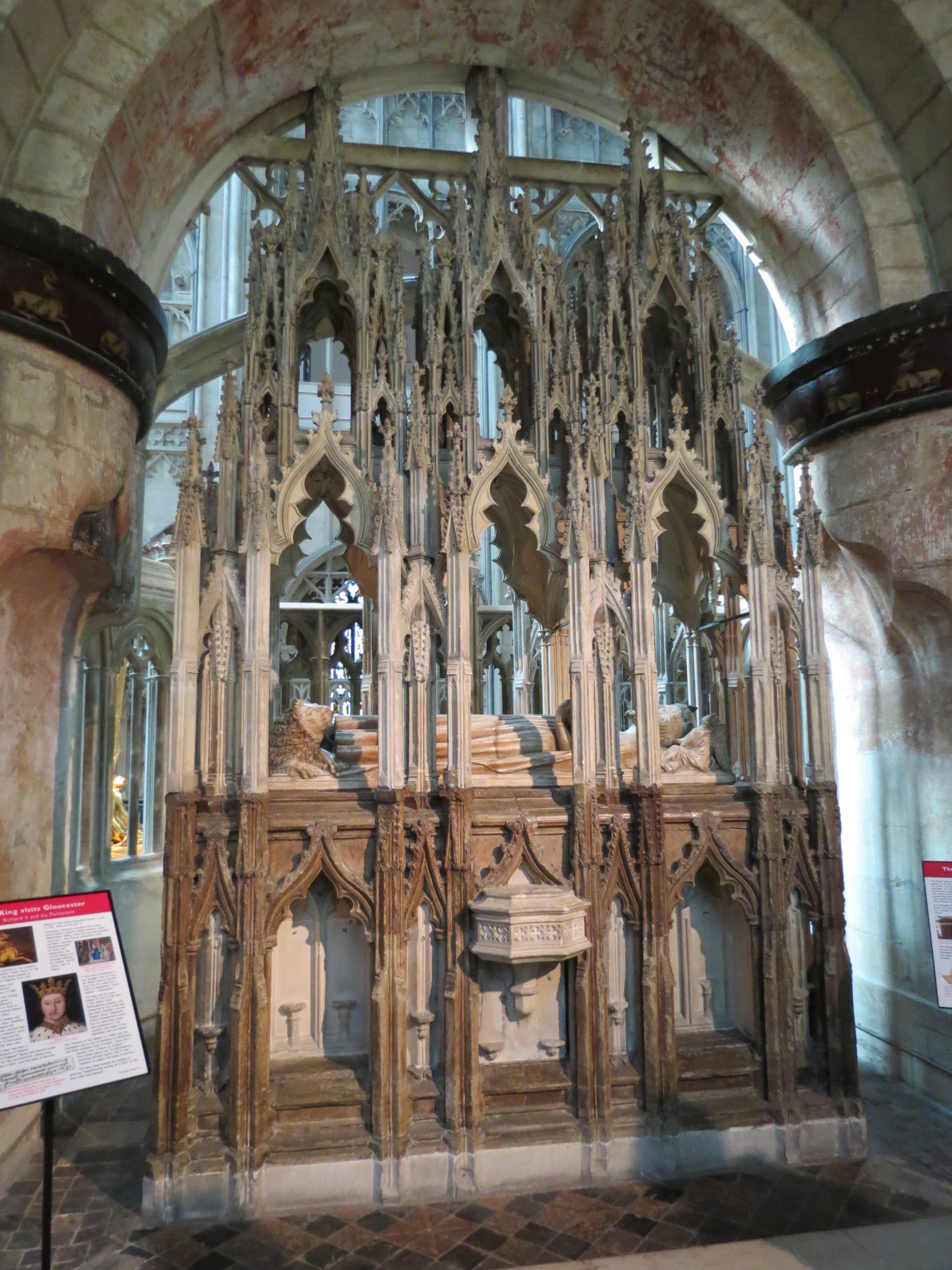
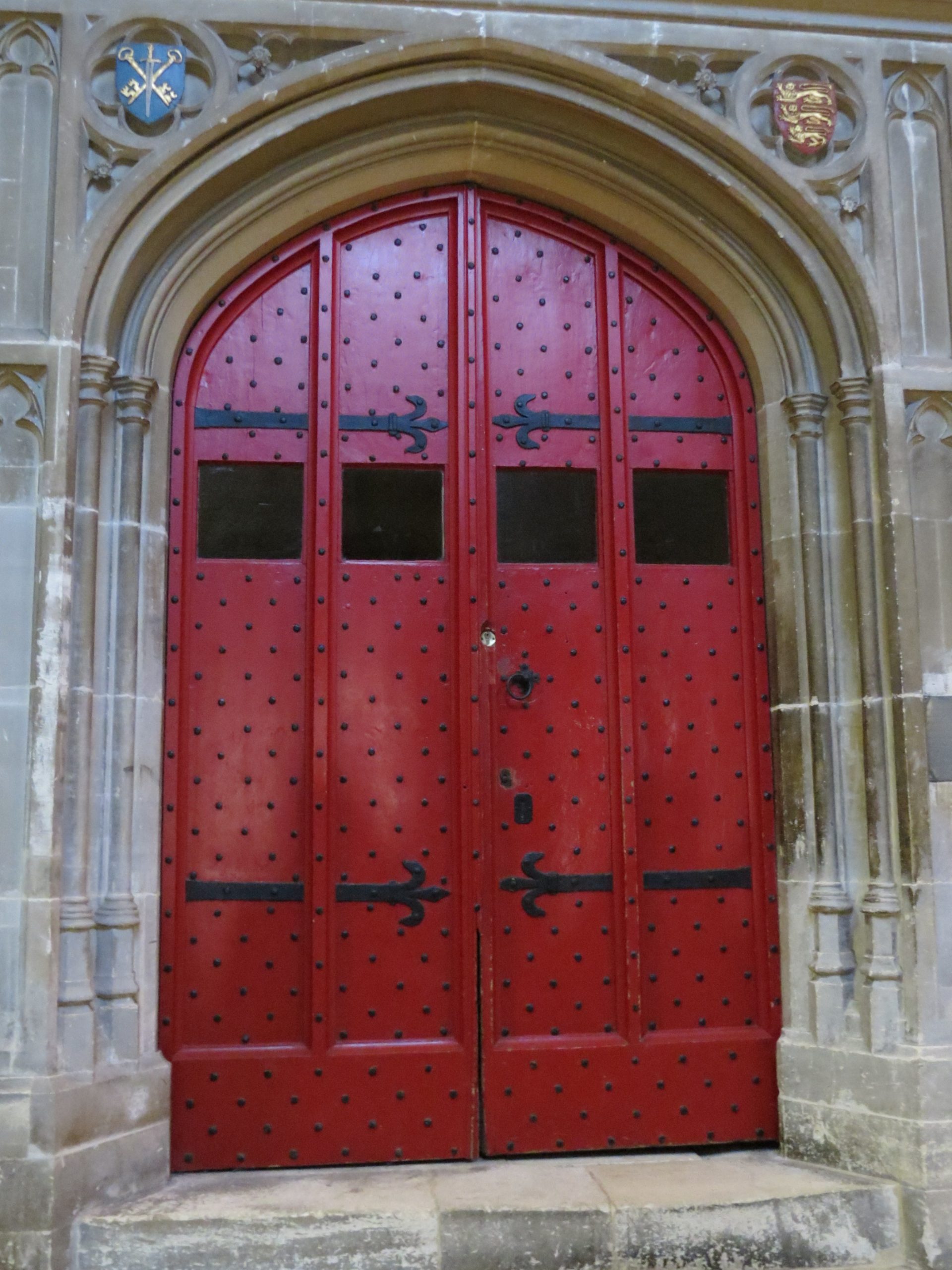
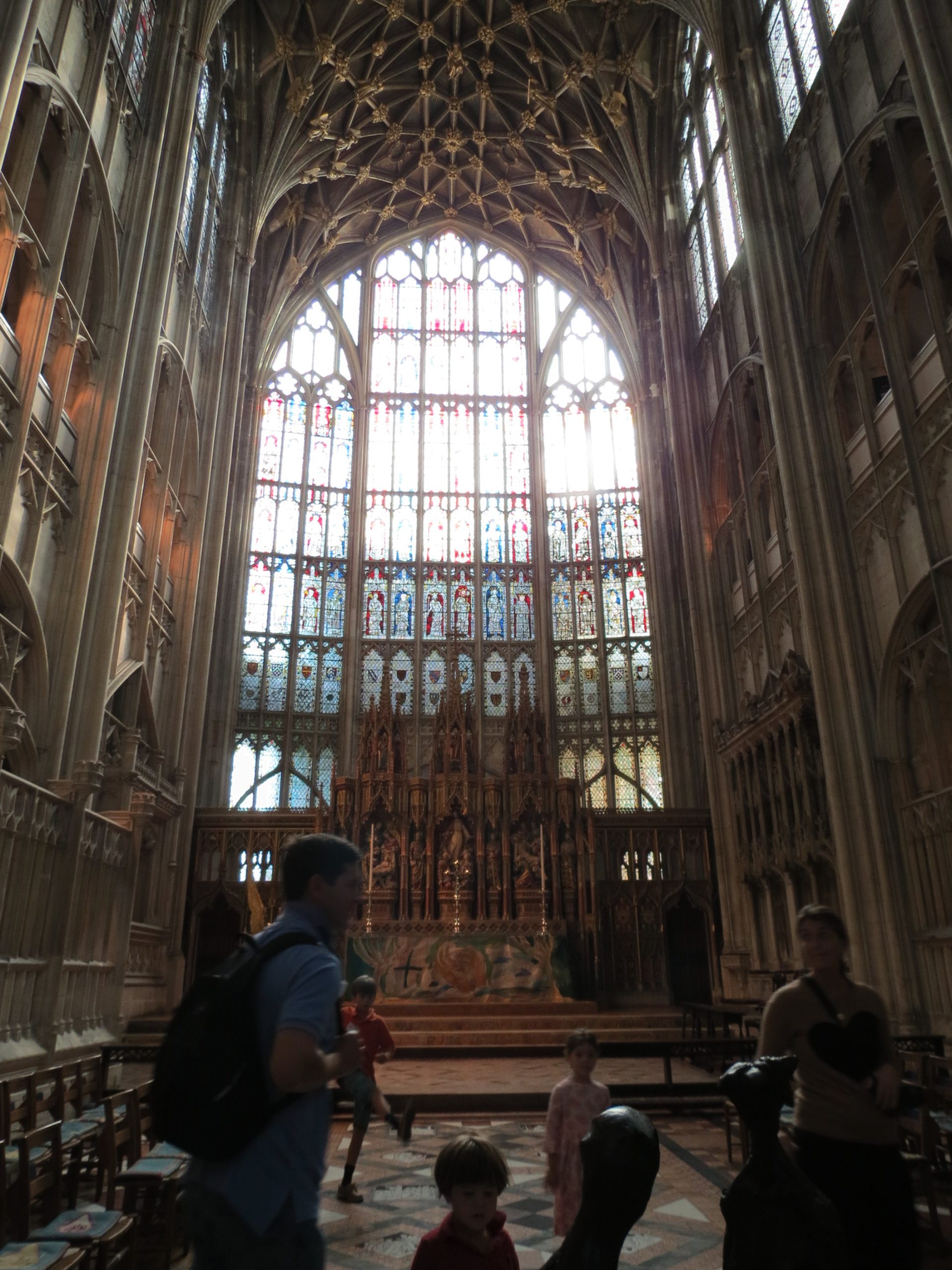
Gloucester and Gloucester Cathedral have a number of connections with the USA, many of them going back centuries.
THE STAR-SPANGLED BANNER
John Stafford Smith (1750-1836) was a choirboy here, his father being our organist. John wrote a tune called “Anacreon” which became popular in America in the latter part of the 18th Century. Francis Scott Key must have had it running in his head, when, after the siege of Baltimore, he set his own words to it and it became “The Star-Spangled Banner”. There is a memorial to John Stafford Smith on the north wall of the Nave. Above it hangs an American flag, the gift of the Rotary Club of New York.
We ended the day with a visit to Stonehenge.
Day 5 — Wednesday, September 10 — Wales, Berkeley Castle, Bridger Banquet
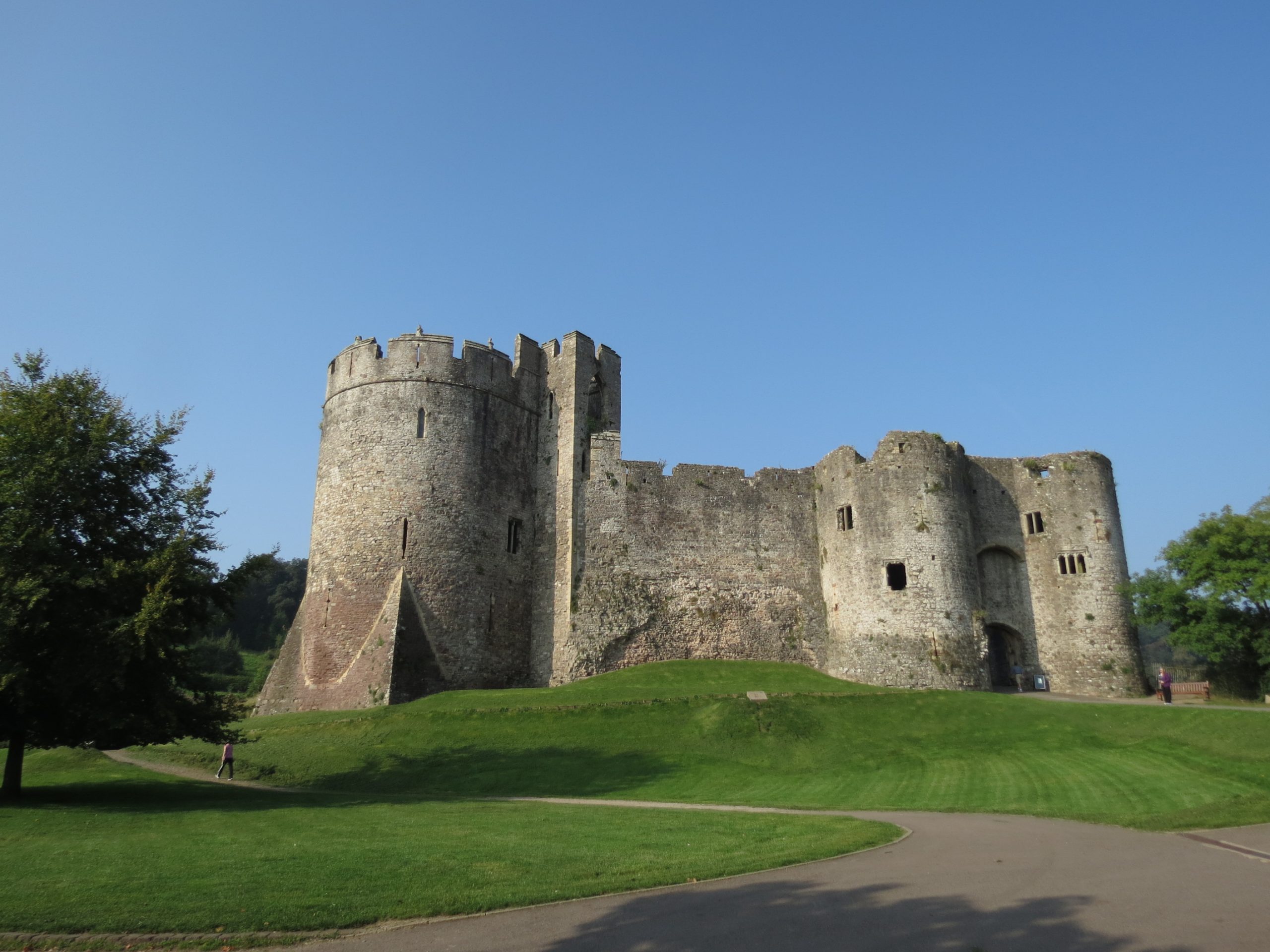
We visited the Chepstow Wales Castle, located in Monmouthshire in Wales, on top of cliffs overlooking the River Wye. It is the oldest surviving post-Roman stone fortification in Britain. It was built between 1067 – 1188.
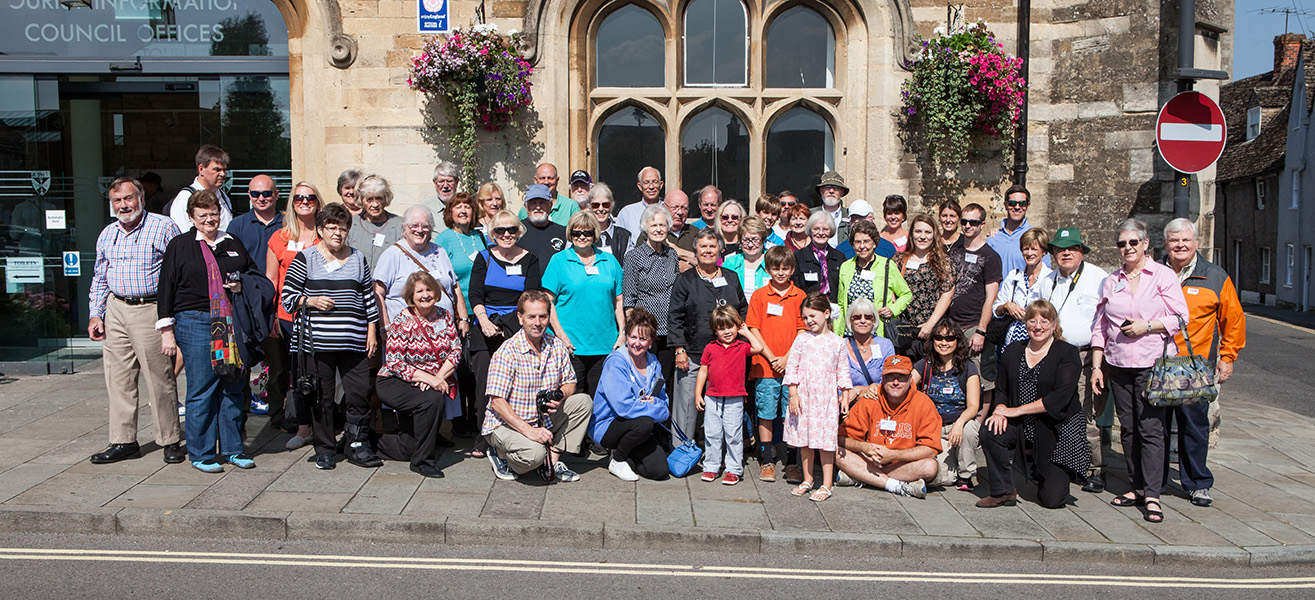
We then had a wonderful lunch at the Kings Arms Hotel in Malmesbury. Afterwards one of our American Bridger cousins Tammy Kwan, who now lives in England, took this photo. Tammy is a professional photographer.
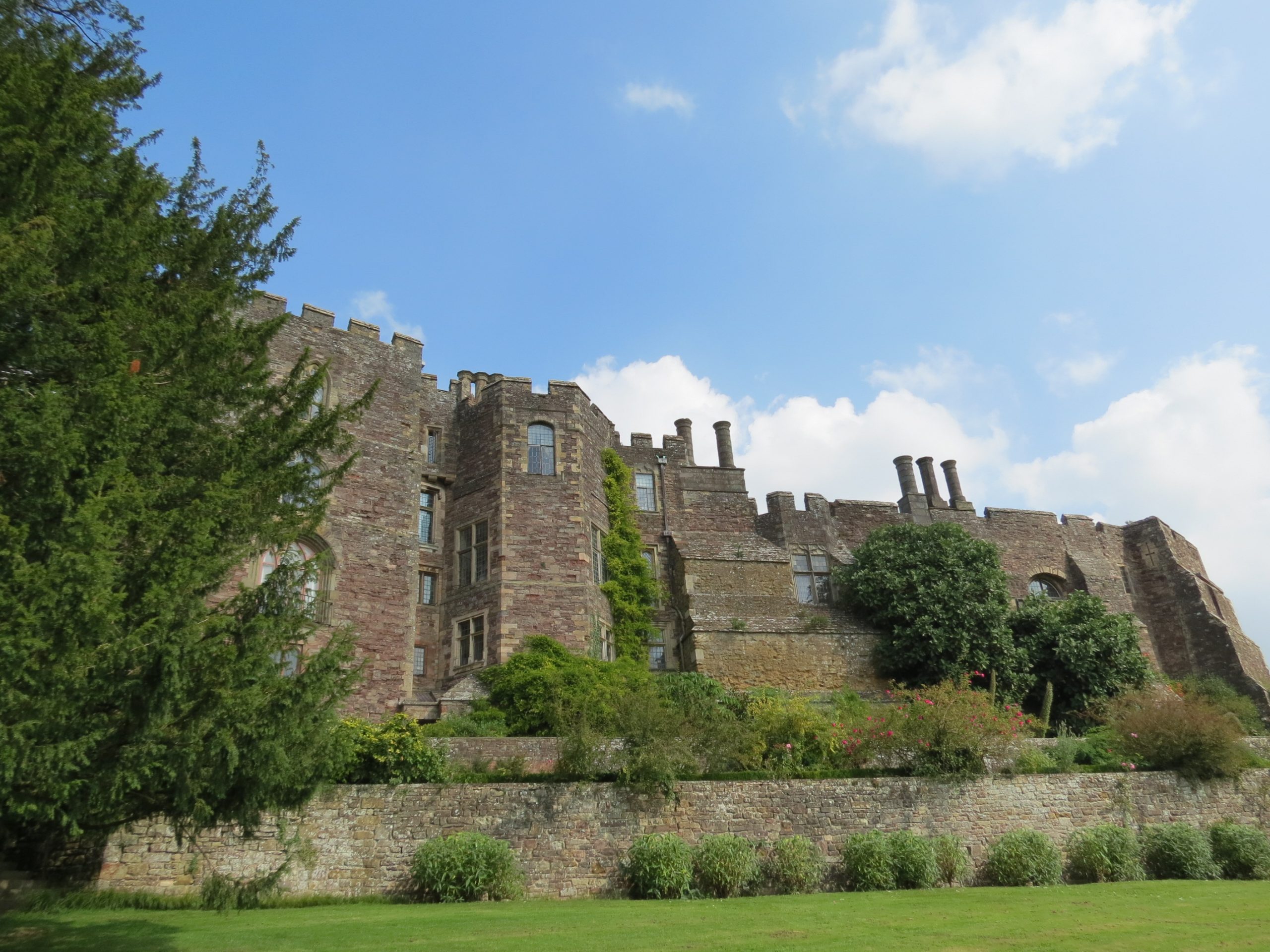
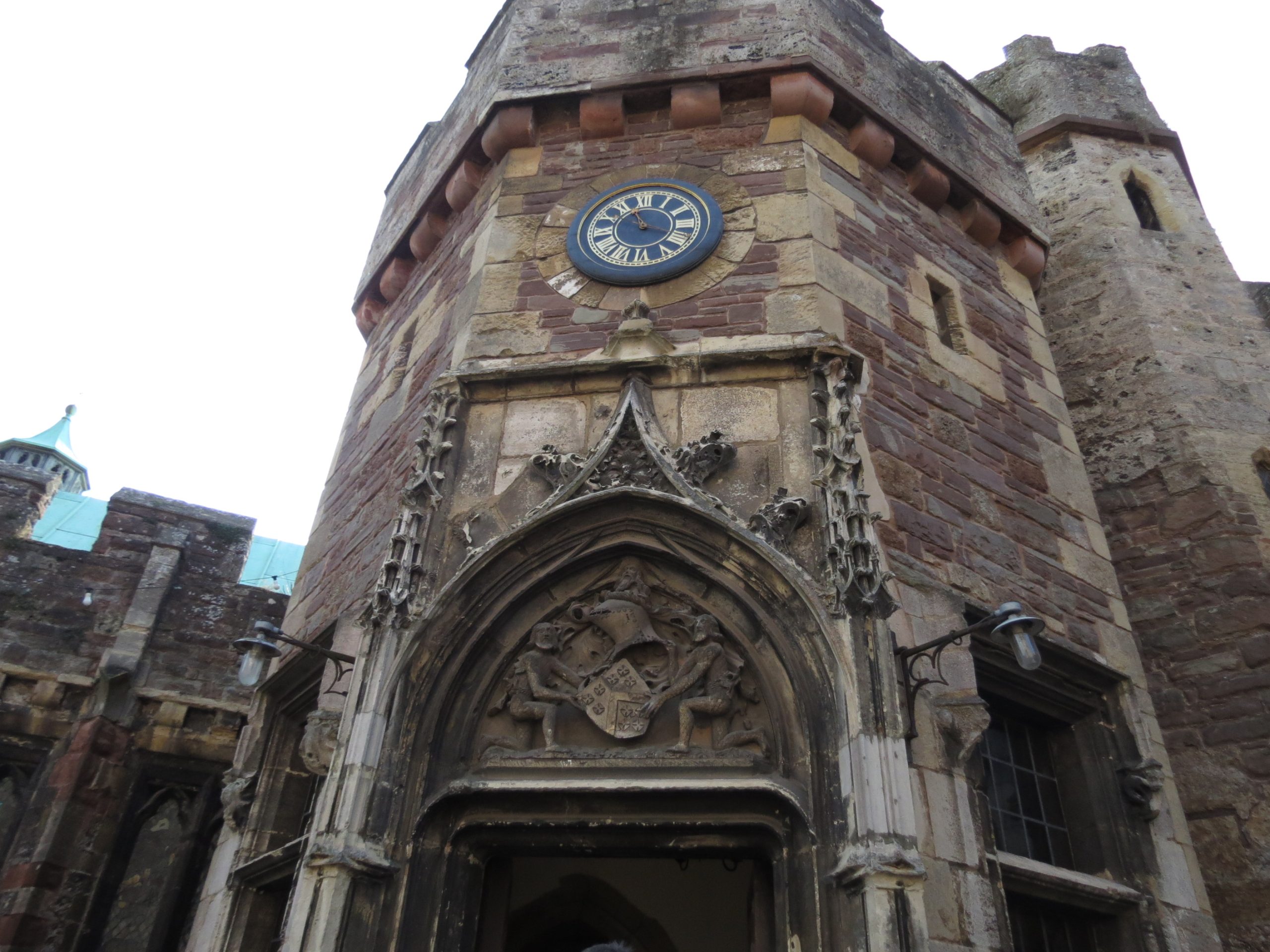
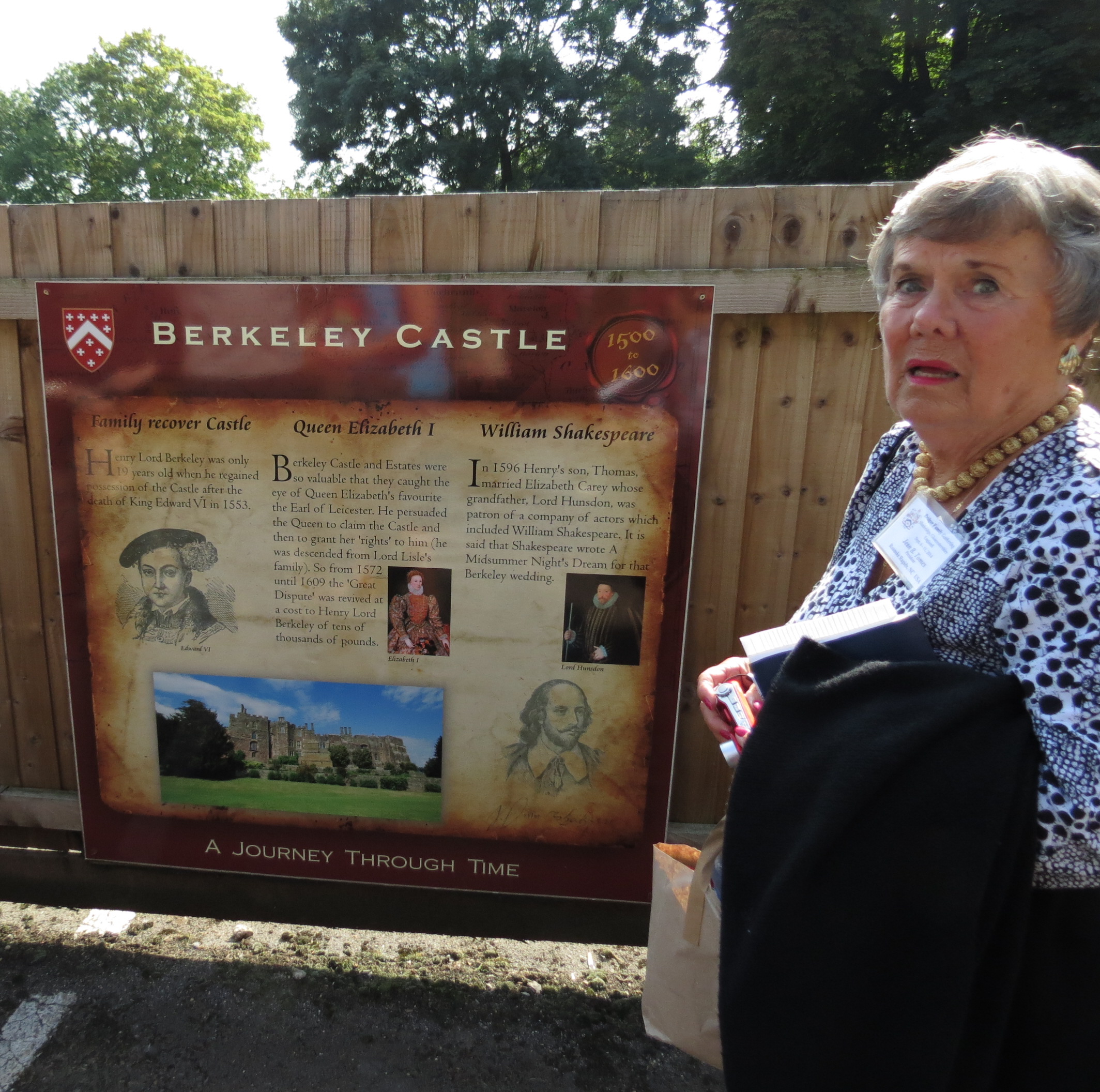
Next we visited Berkeley Castle (pronounced BARKley). Some members of the Bridger family also descend from the Berkeleys.
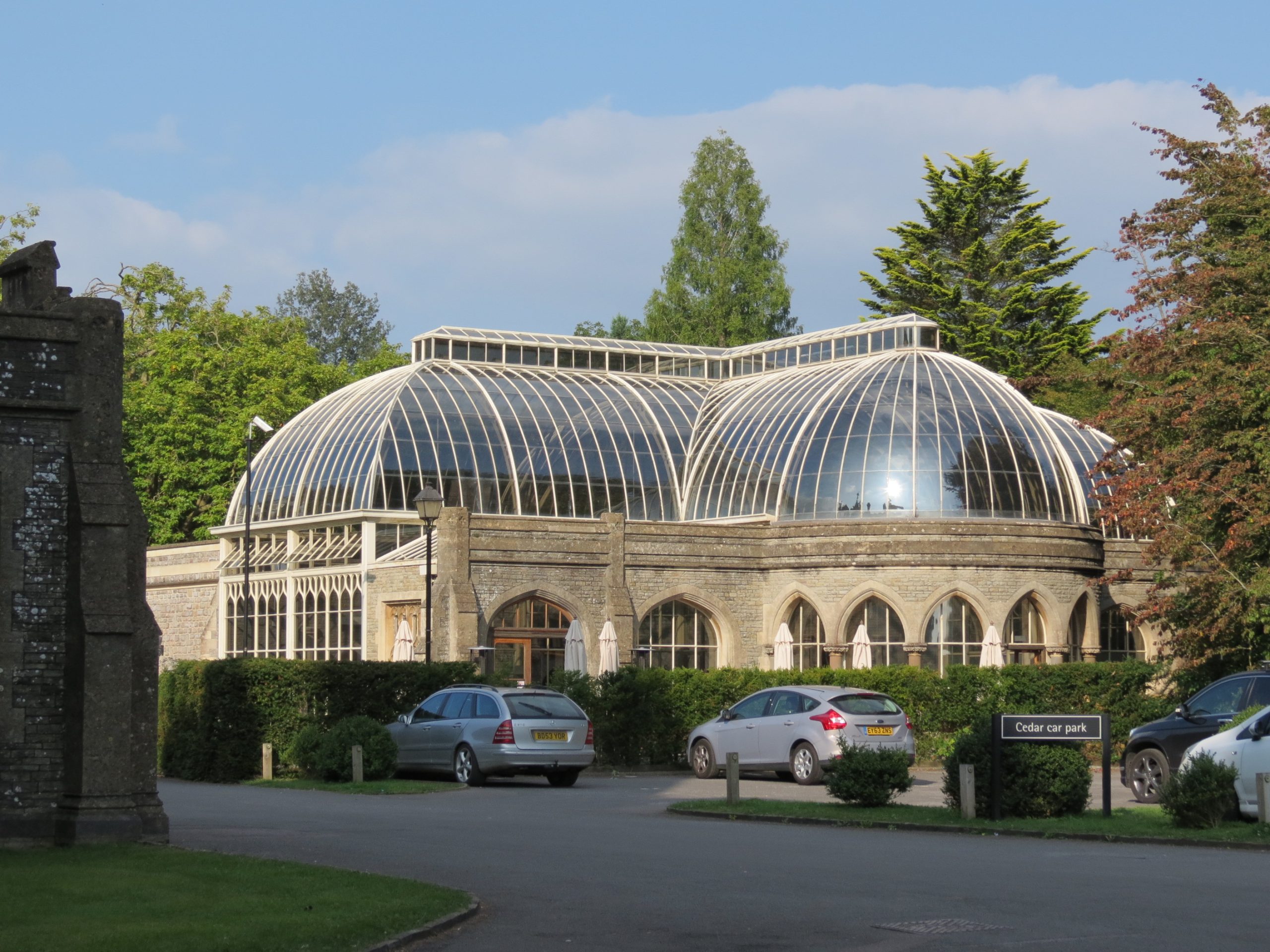
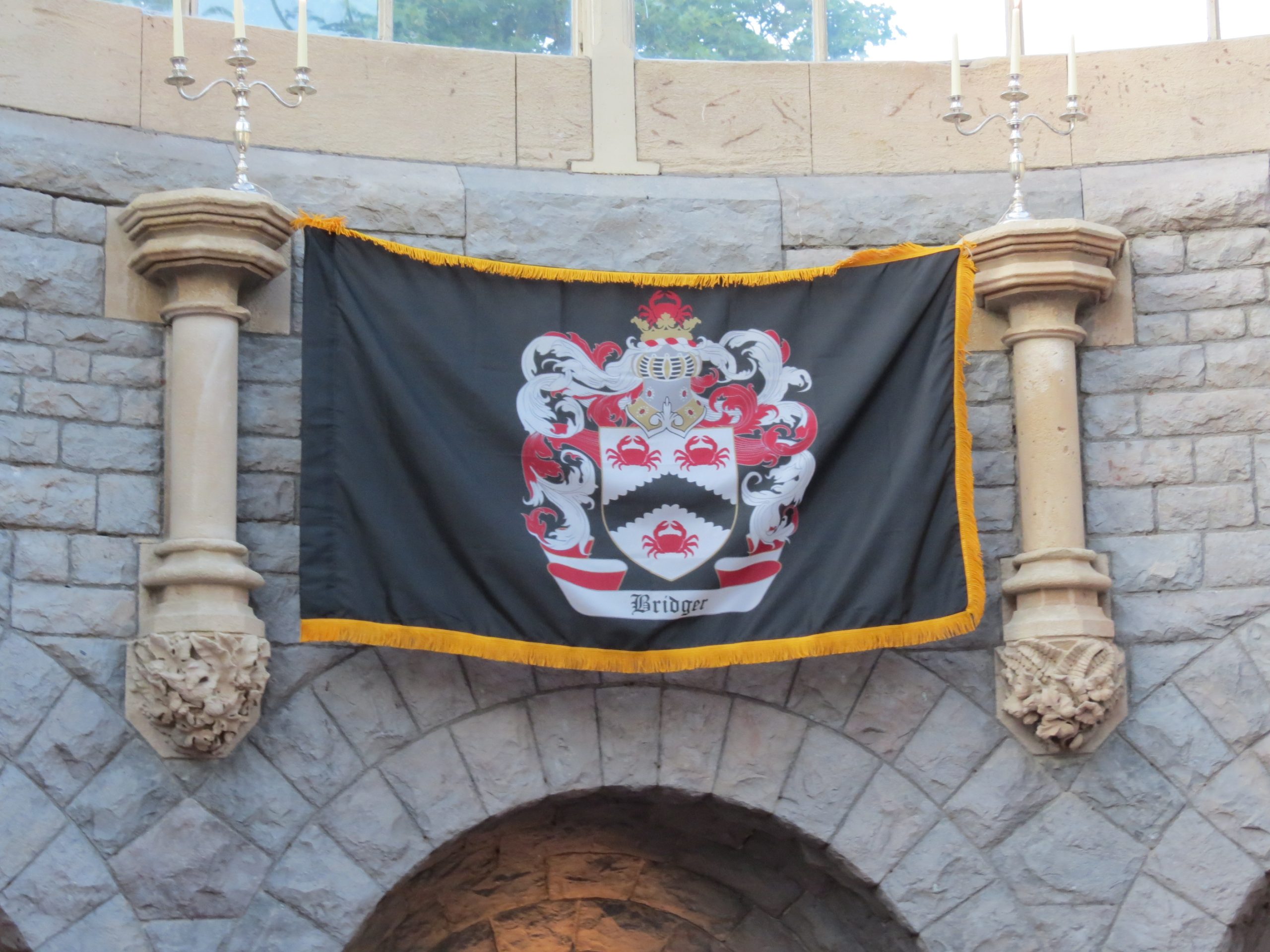
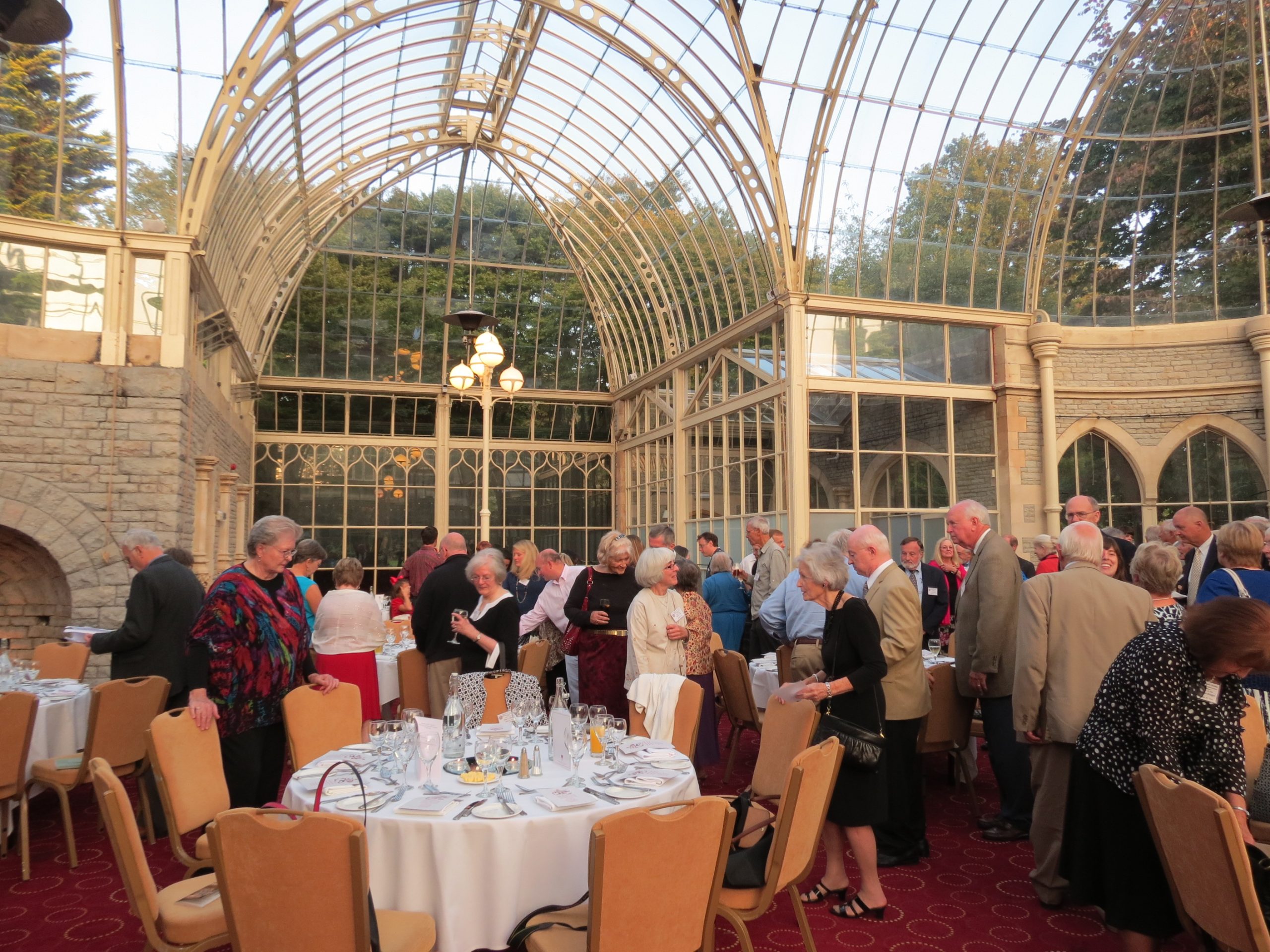
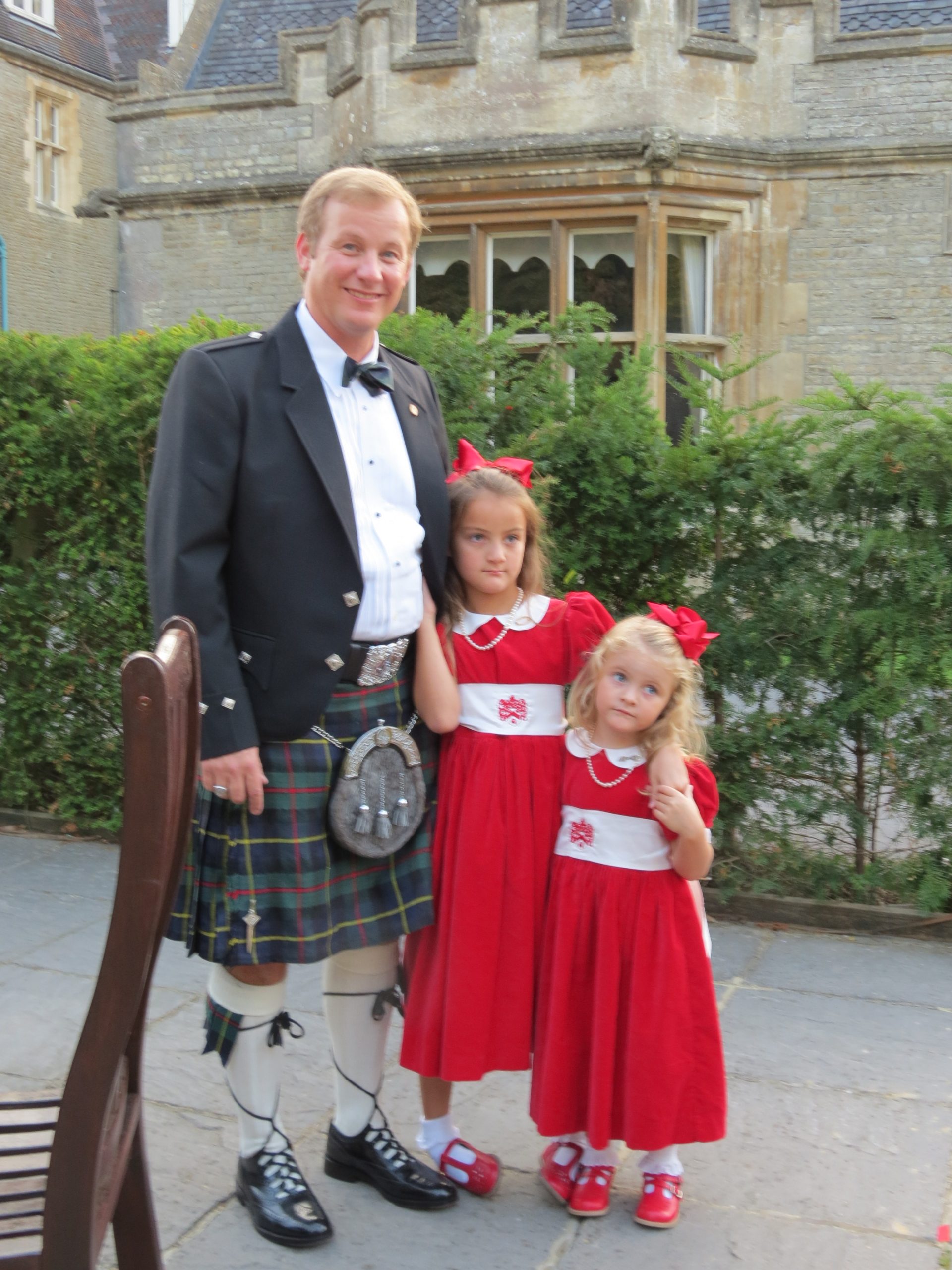
Our annual Bridger Family meeting and banquet took place at the beautiful Orangery at Tortworth.
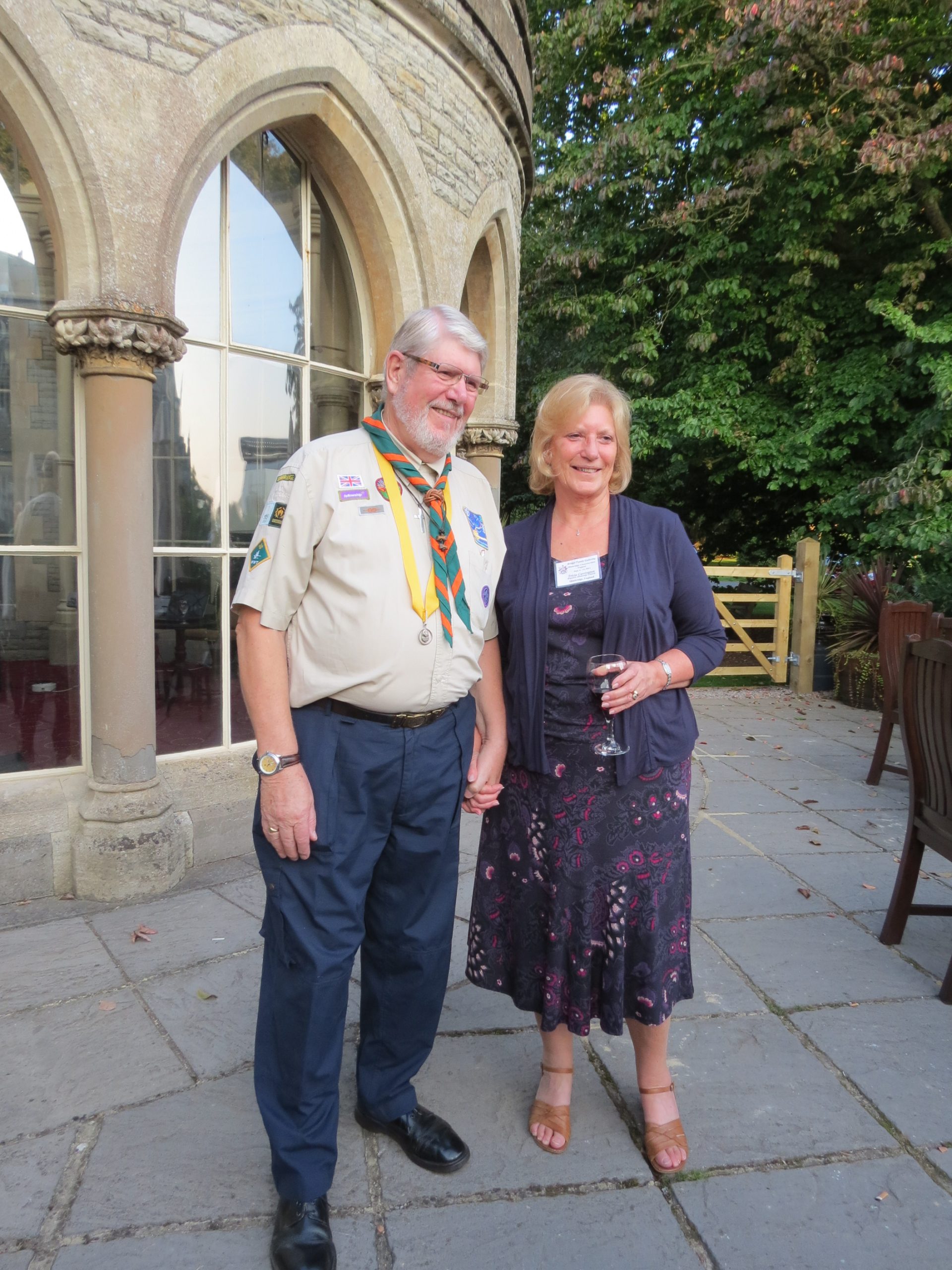
From Jean Tomes, BFA President:
“Our Bridger family will be eternally thankful to Tricia and David Carrington. Not even being a member of the Bridger family, they spent many hours that no one but me even knows about to help make this trip so successful.”
The banquet was the end of the official Bridger Family Gathering.
A Visit to Godalming
While not part of our official Bridger Family Gathering, some of us went on to visit other parts of England. For myself (Elaine Powell) and cousins Ray Smith and Sandy Boyd, I wanted to share the information about our wonderful trip to Godalming, home to Rychard (Richard) Brydgere (Bridger), who was the father of Lawrence Bridger. Richard was born in Godalming in about 1510 and he died there in 1594. His father was Henry Brygger (Bridger), born in Godalming in about 1480 and he died there in about 1521. The Bridgers are quite well known in Godalming and the cab driver told us he knows many Bridgers who still live in the area today.
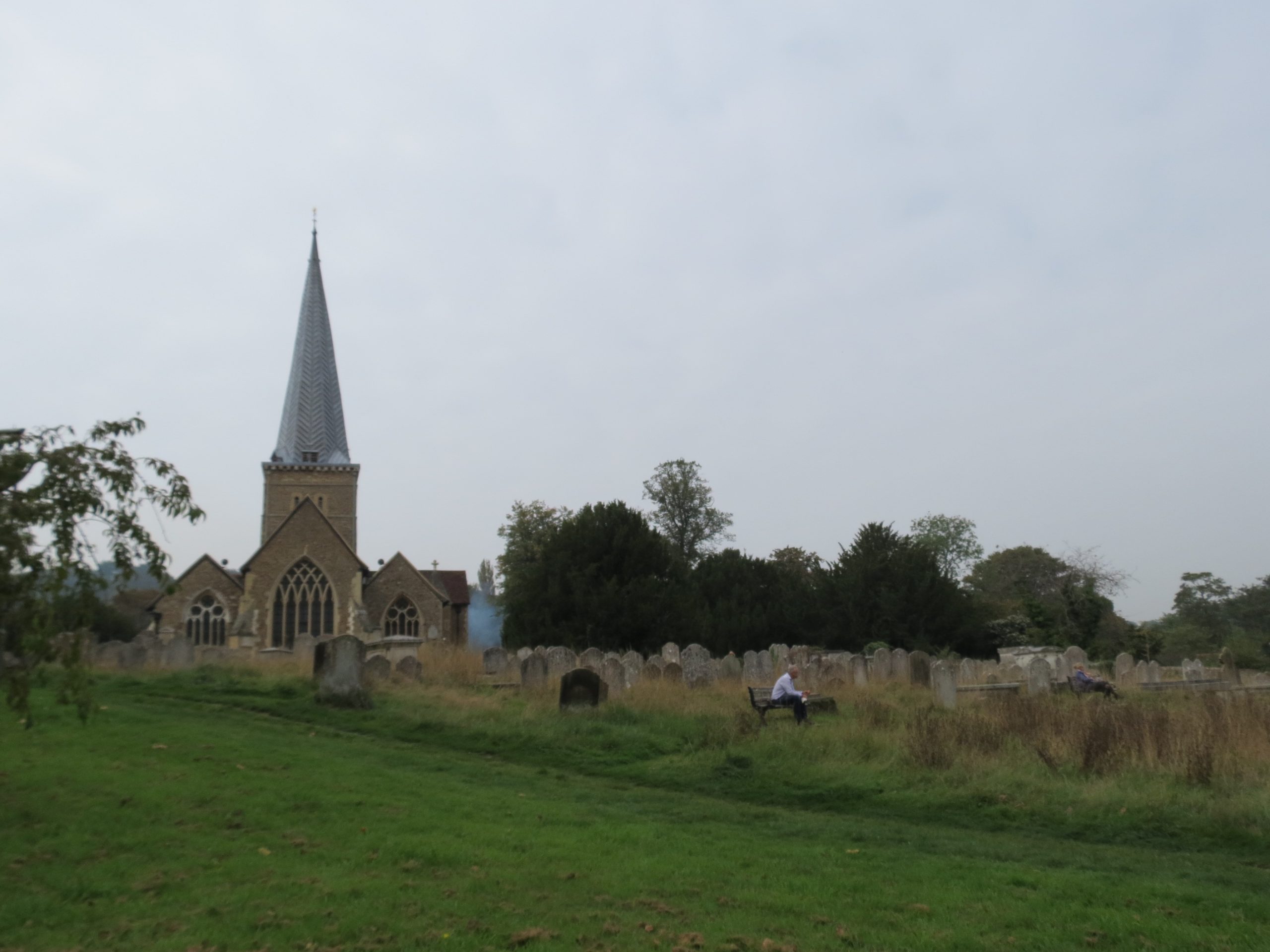
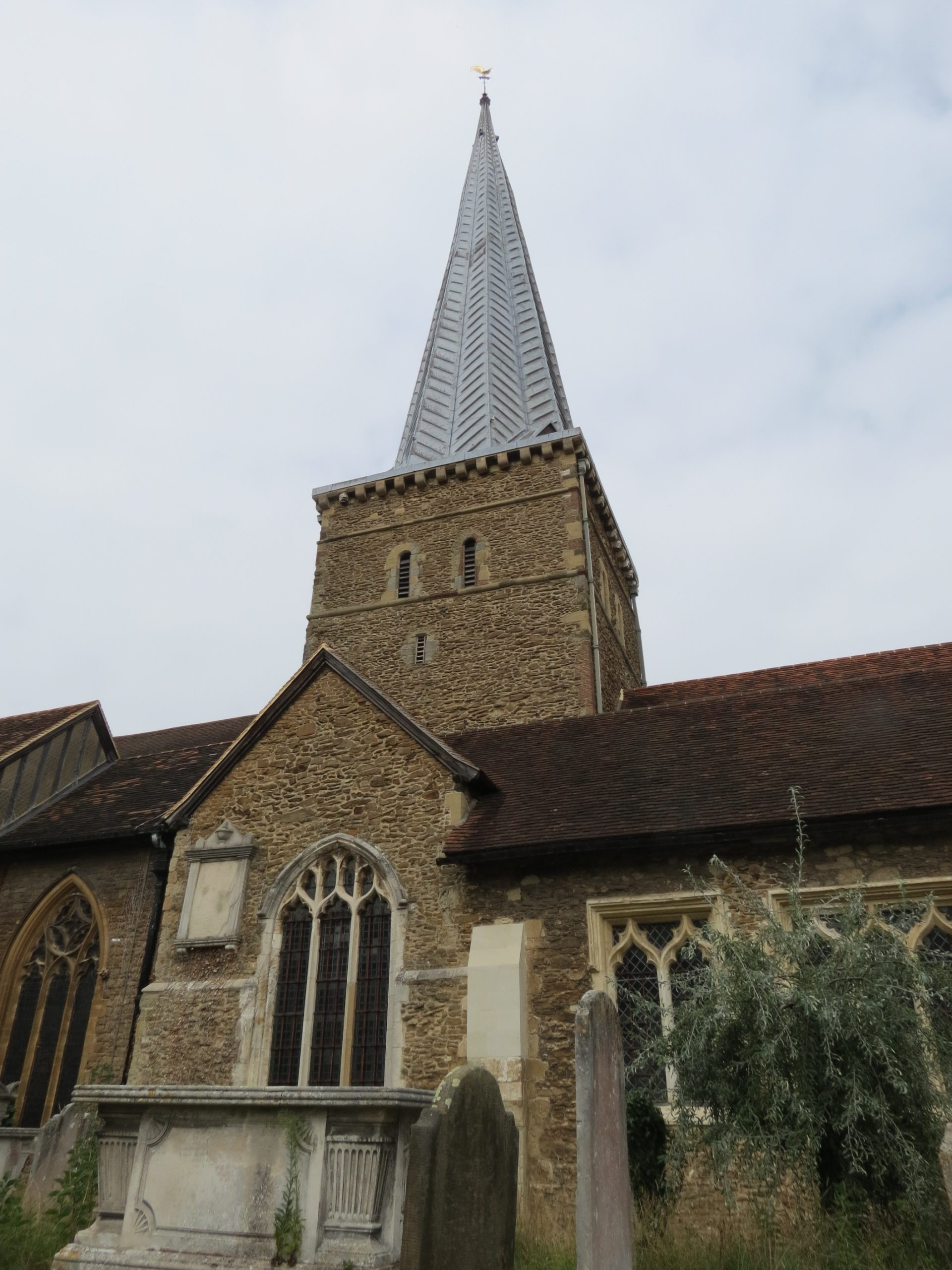
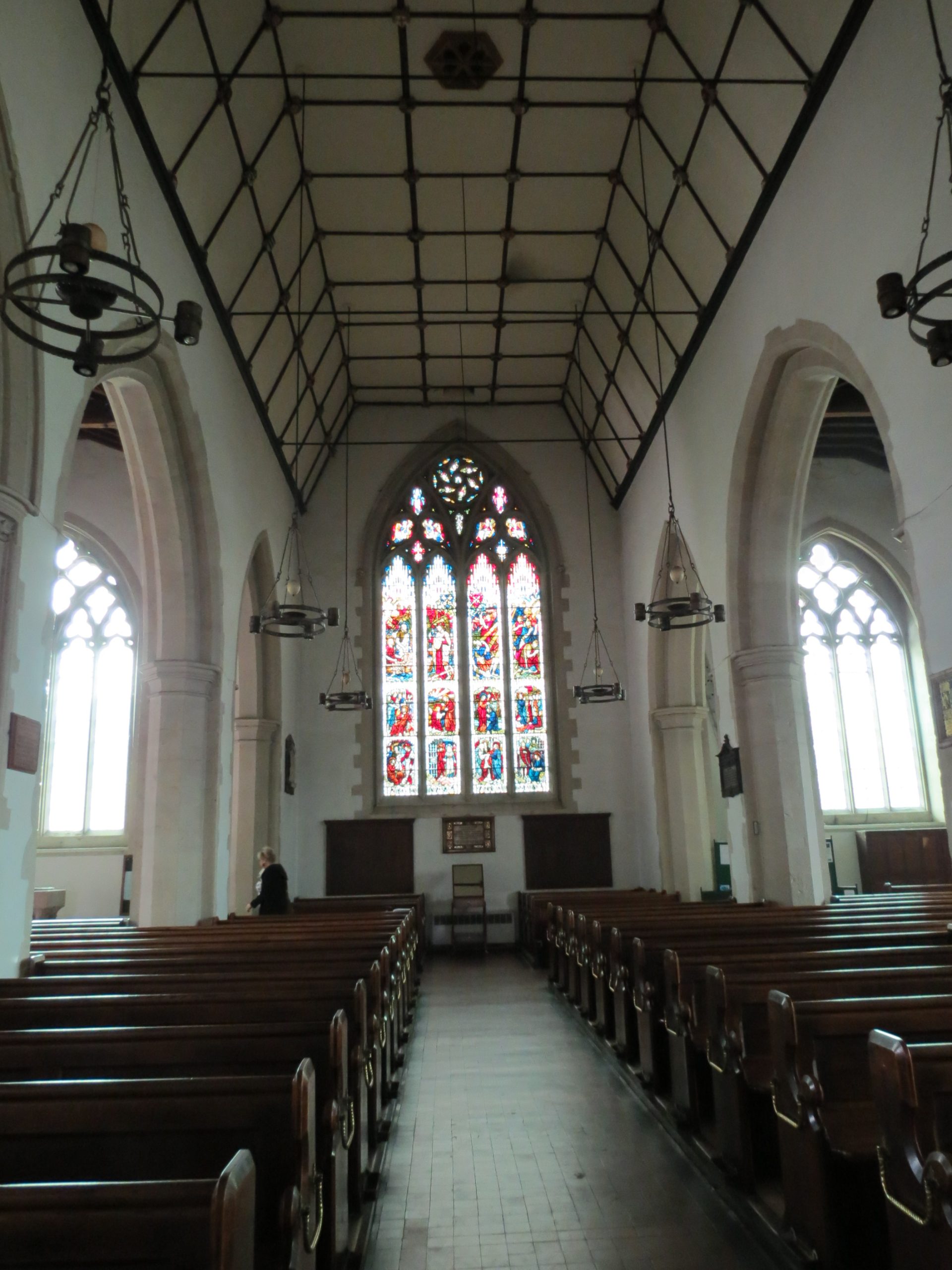
As we approached the town of Godalming the image below was the magnificent view of the church we saw. The church is where our Bridger ancestors would have worshipped. There was a graveyard that does have Bridger headstones, but time has washed away the names. While it might look like the graveyard is unkempt, it actually is a sanctuary for wildlife. The church has stood at the heart of the community for over 1,000 years!! As we entered the church we saw Reverend Canon Mervyn Roberts. He greeted us warmly and said that yes, he knew about the Bridgers who had attended the church so long ago and he also knew that Richard Bridger was married to Margery Elliott and the Elliott family was quite a prestigious family and in fact I found two Elliott slates marking burials in the floor near the alter at the front of the church.
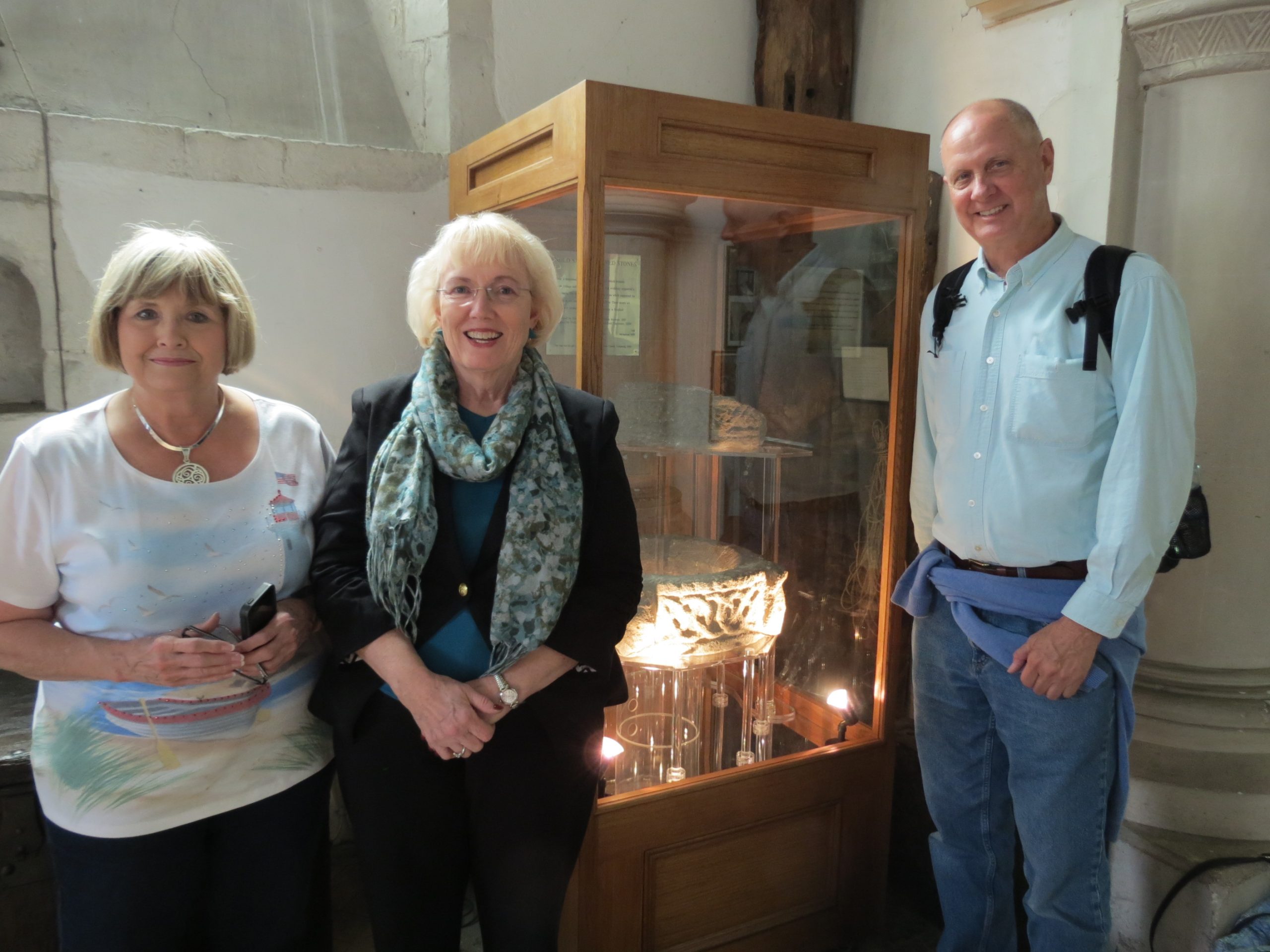
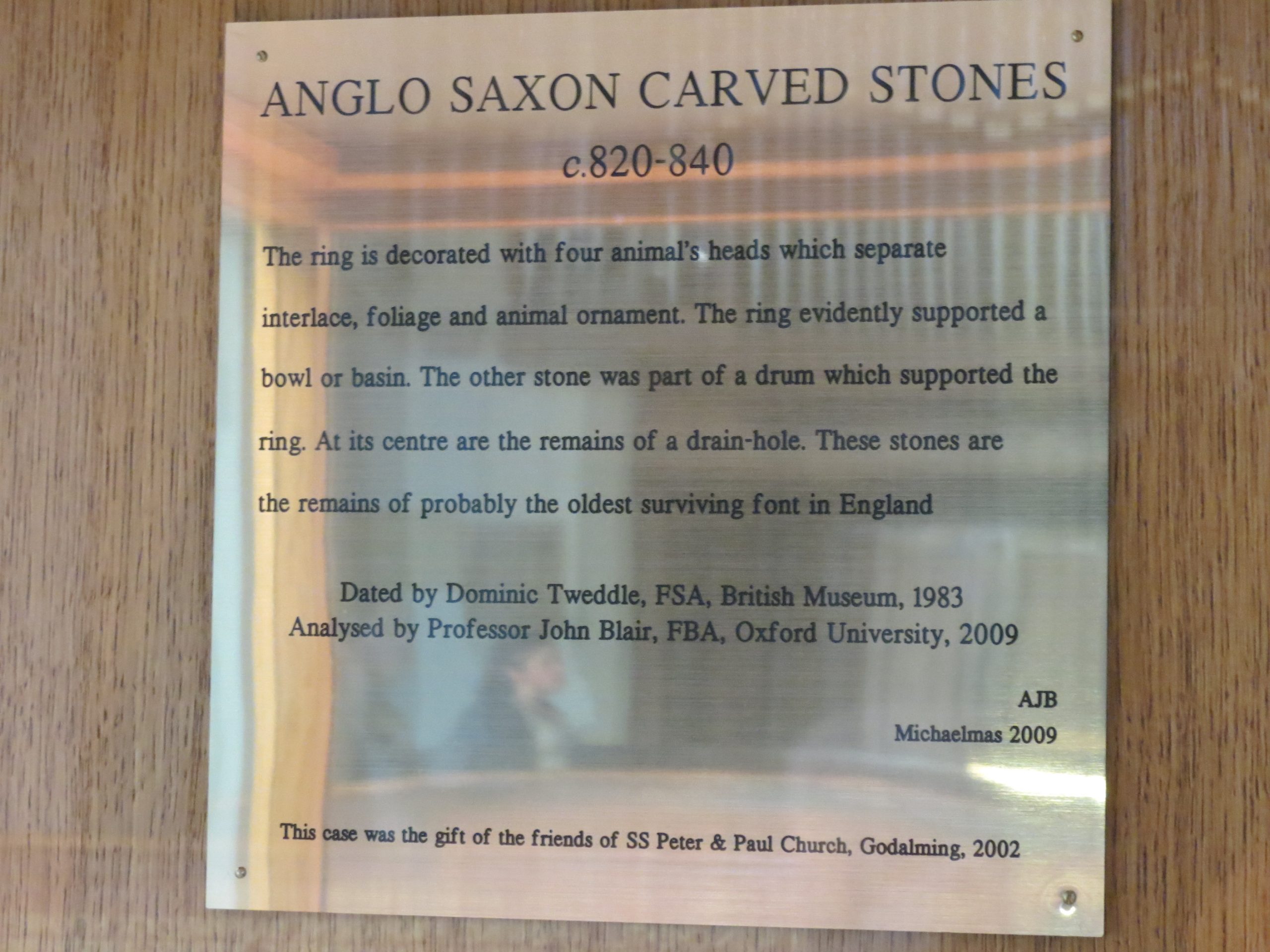
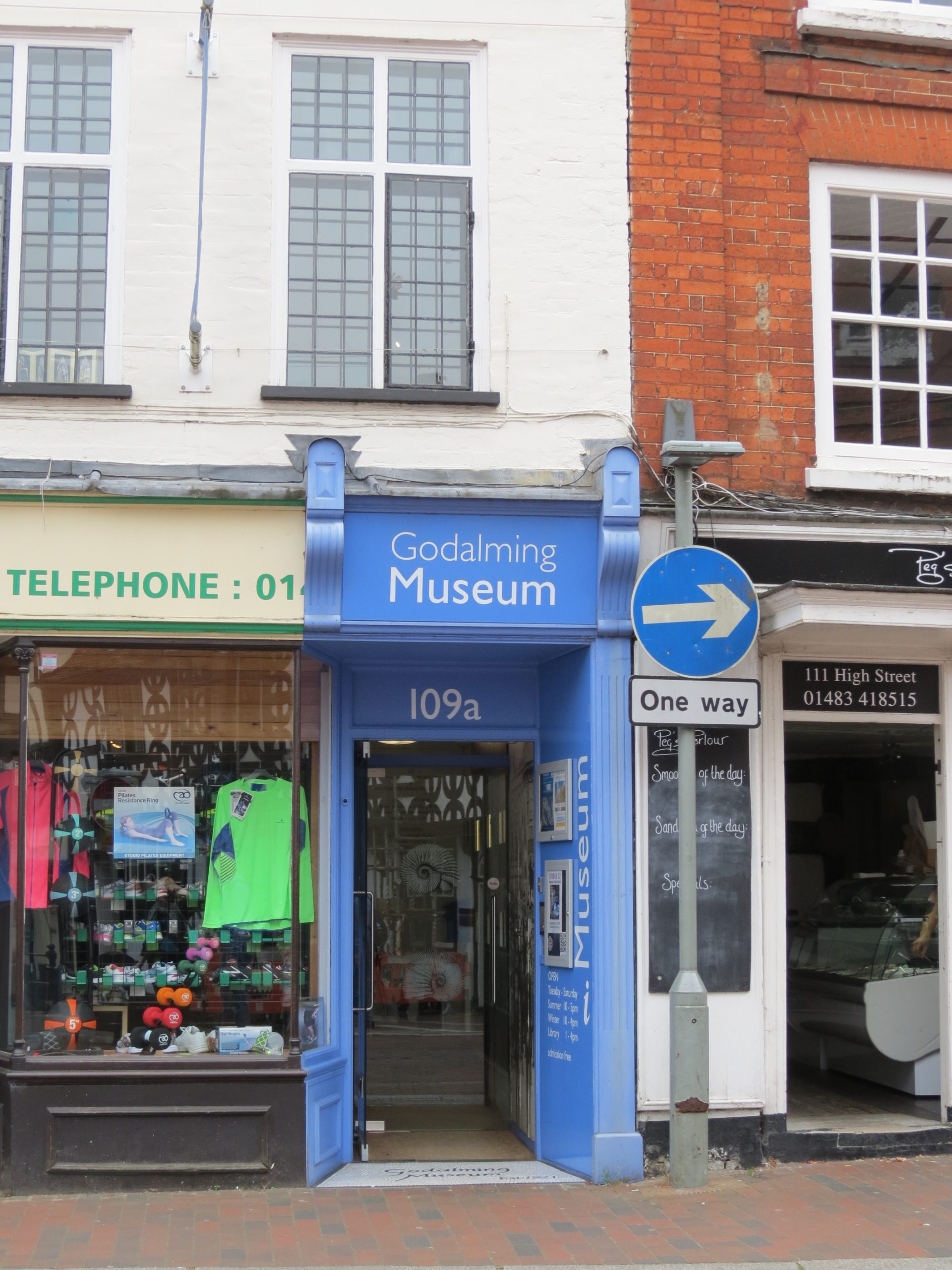
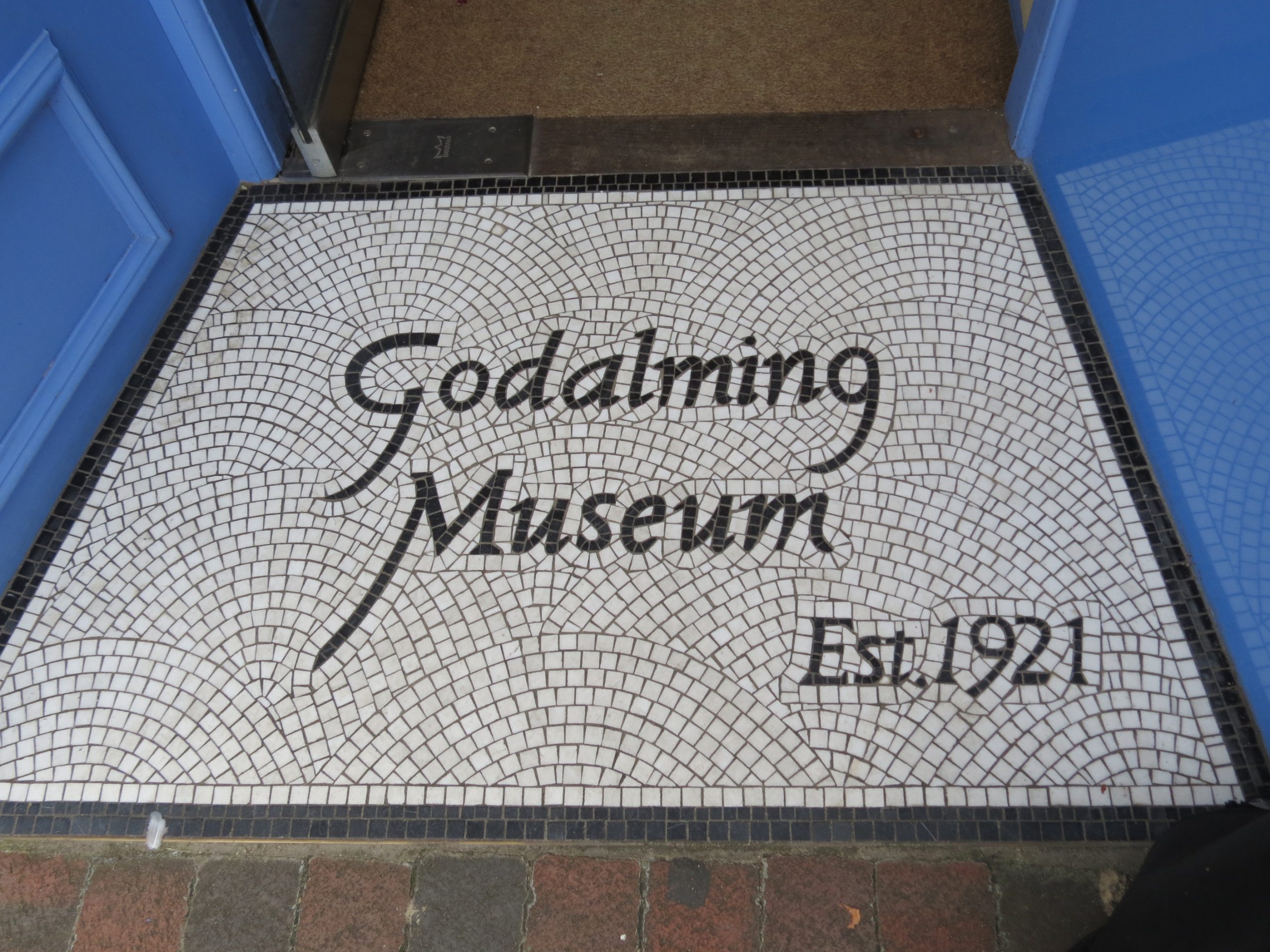
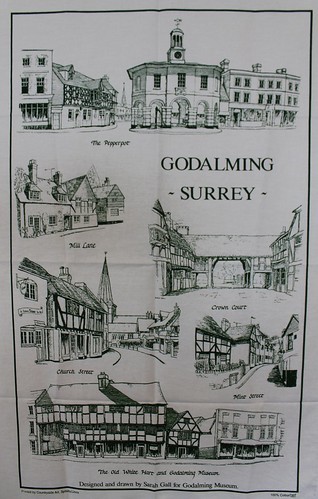
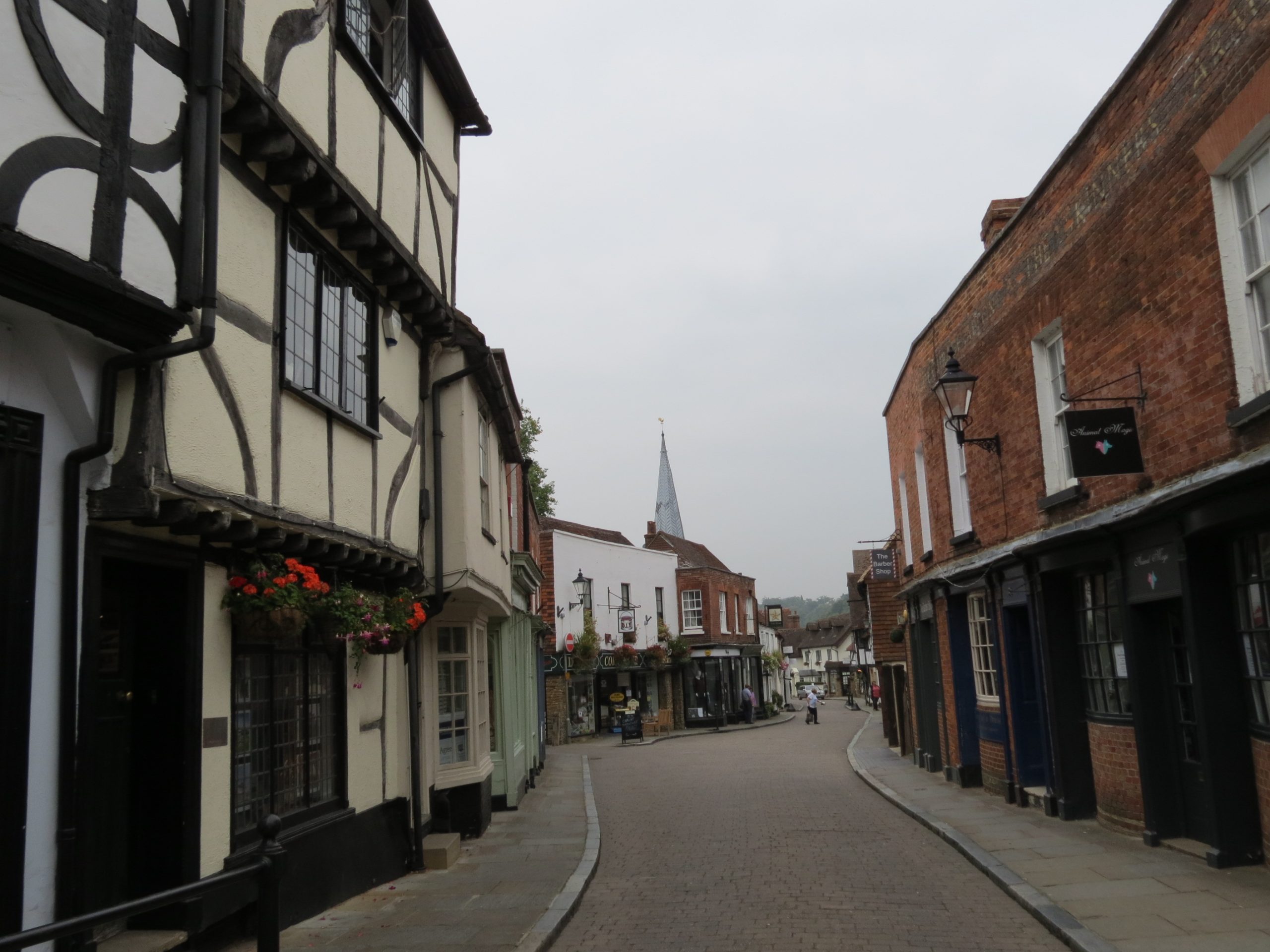
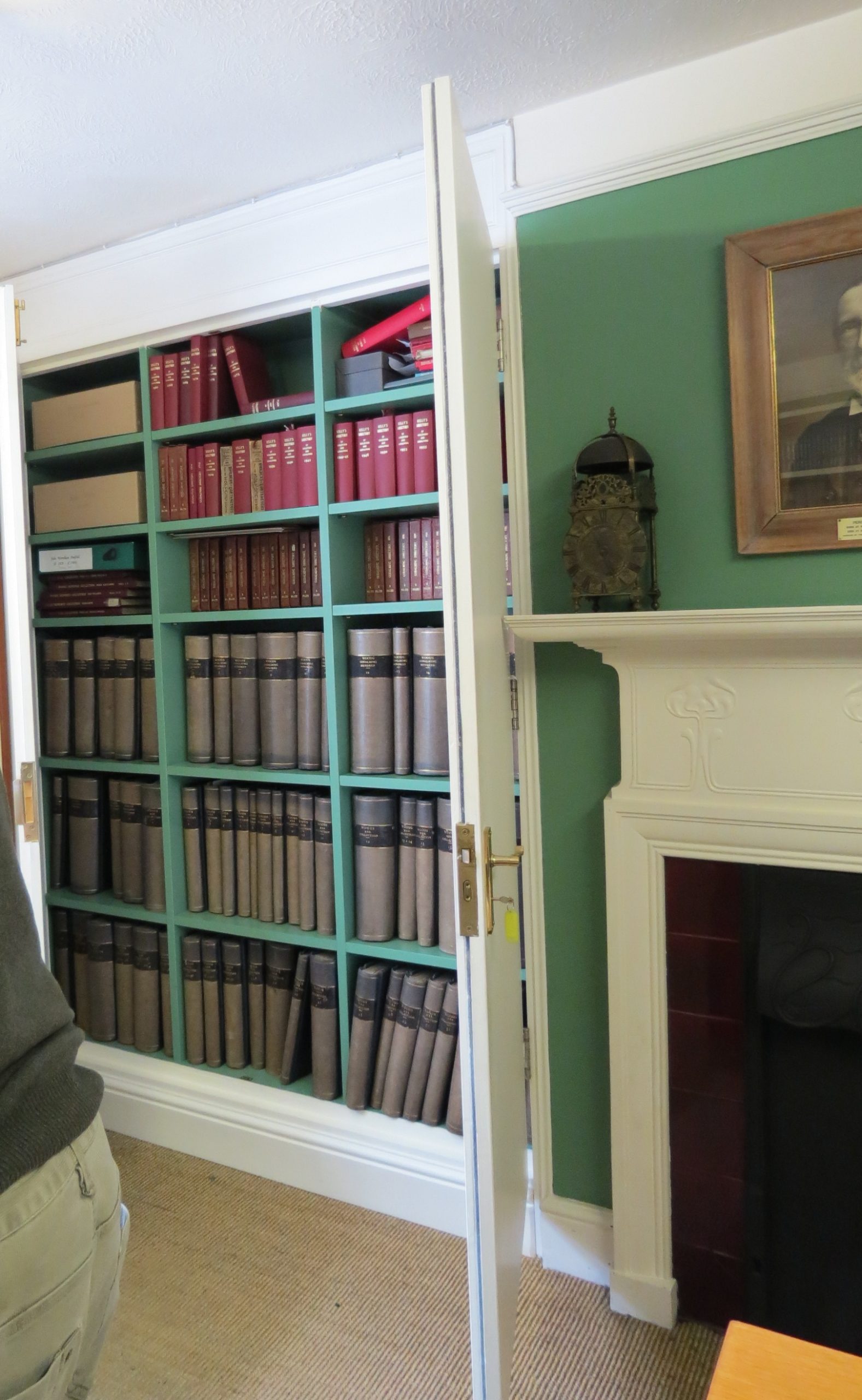
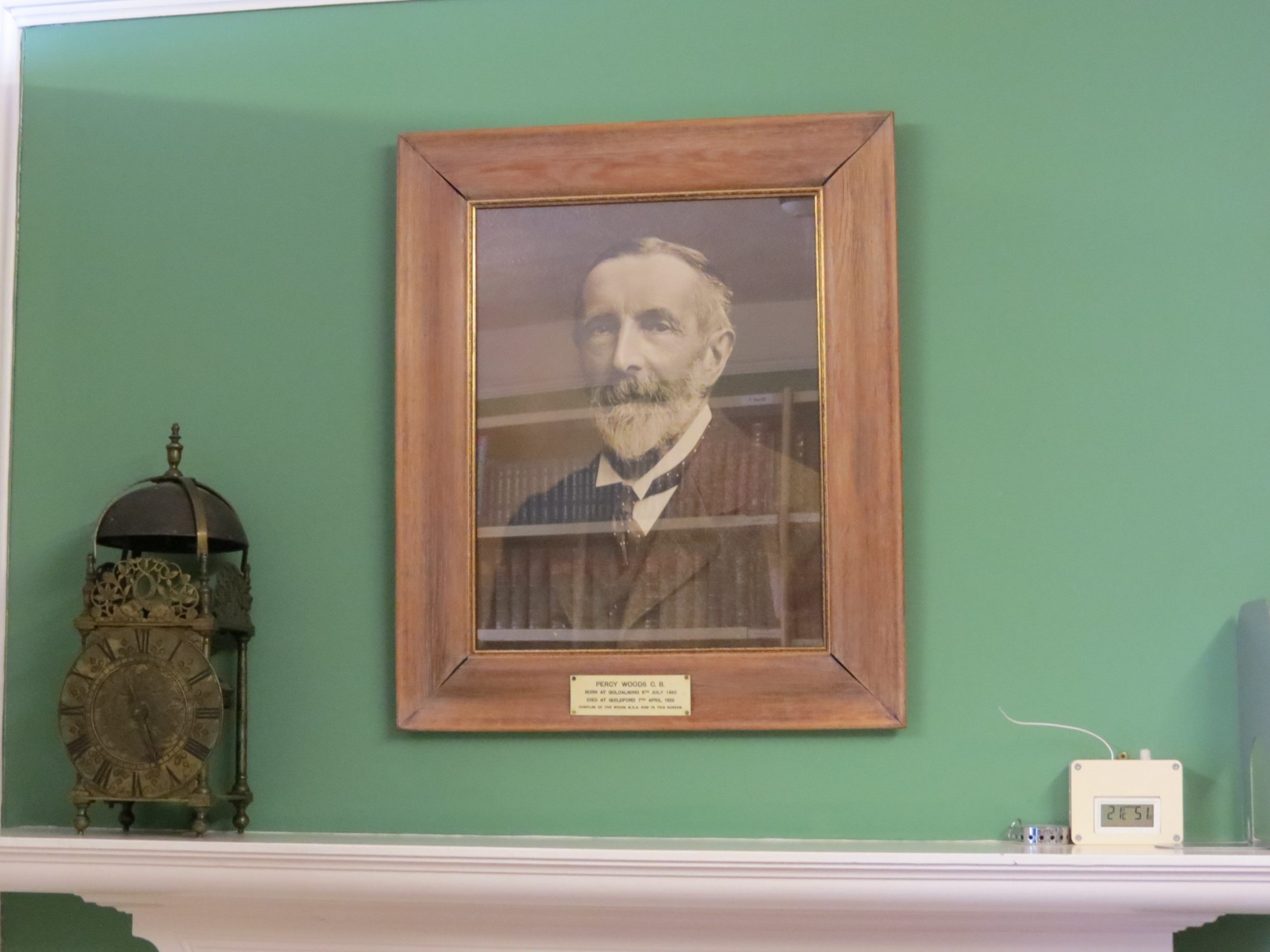
We then visited the Godalming Museum, a small entrance from High Street in the most quaint Dickens-like village I’ve ever seen. Ray had visited previously and said that local historian Percy Woods (1842-1922) donated to the museum his collection of deeds and his meticulous transcripts of documents relating to the Godalming area in 155 volumes. There is a complete index to the collection which is only available through the Museum. The index can be searched by name, place and occupation and is a source of detailed local information from c. 1100-early 1900s. The photo below shows the cabinet where all the records are kept, along with a framed photo of Percy Woods. Bridger family genealogists are indebted to Percy Woods! This is proof that the majority of genealogical records are NOT online. I specifically asked if anyone, including the LDS church has ever microfilmed their collection, and the volunteer there said no, they had never been filmed.
Beyond the narrow blue entrance, the Museum opens out into history and art galleries, a library, shop, coffee shop, garden and Visitor Information Point.
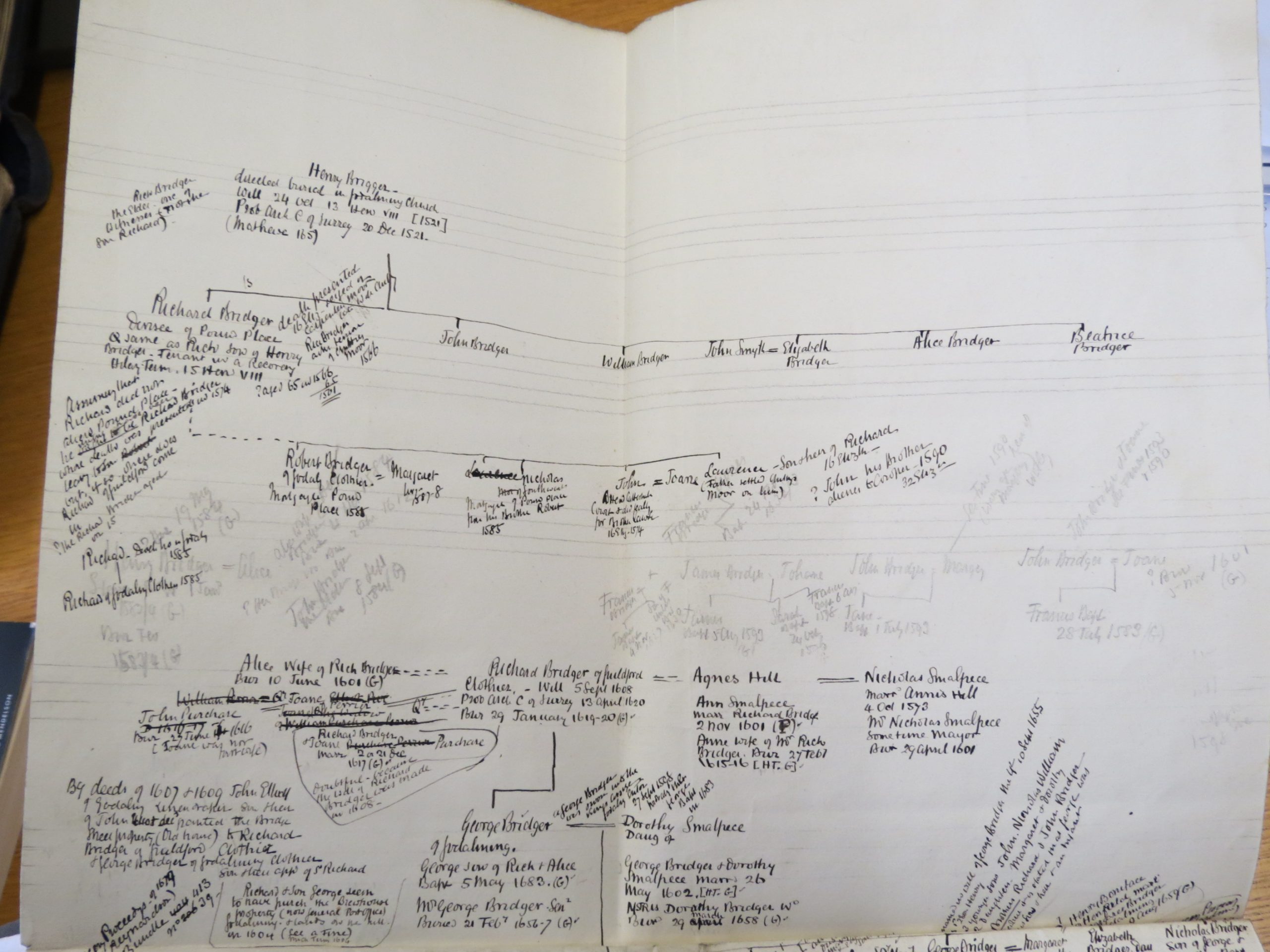
The hand-written chart shown above is a descendant chart showing Henry Bridger (Brygger) with a death date of 1521 and the next line lists Richard Bridger (father of Lawrence) with many notes. There were many more hand-written charts, none of which had been filmed since they were too large. All the files are indexed and on the computer in the museum. The volunteer who worked in the museum told me that both Henry and Richard Bridger owned land on both High Street and Church Street. High Street was the more prestigious of the two streets to own property.