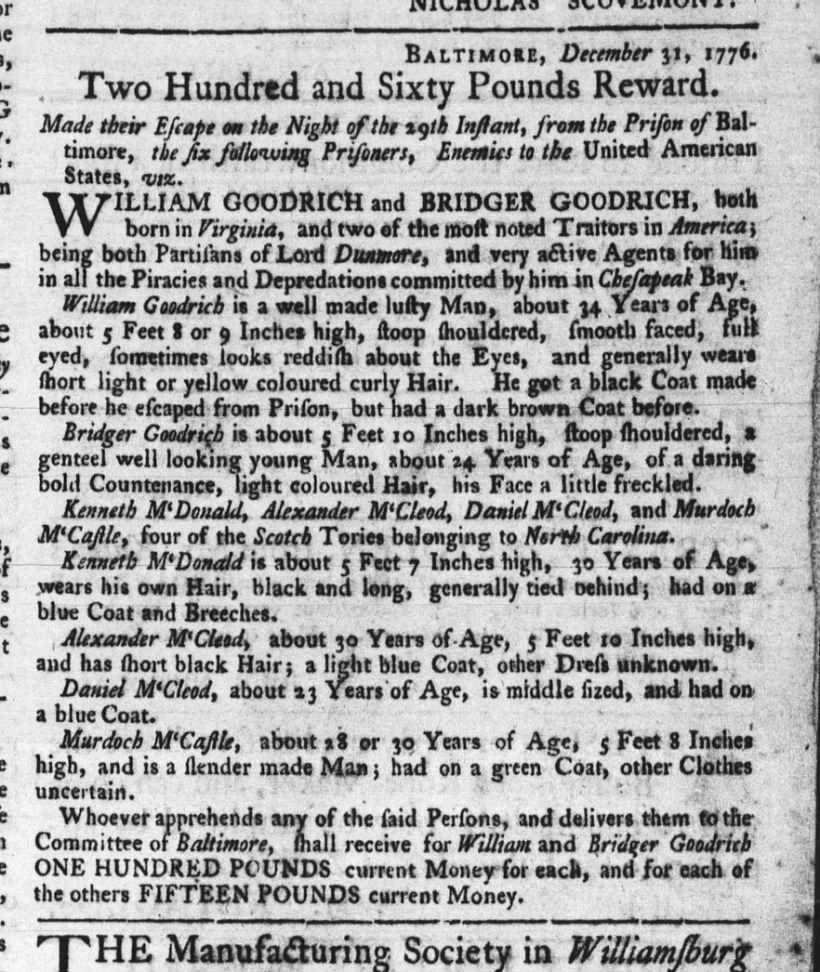
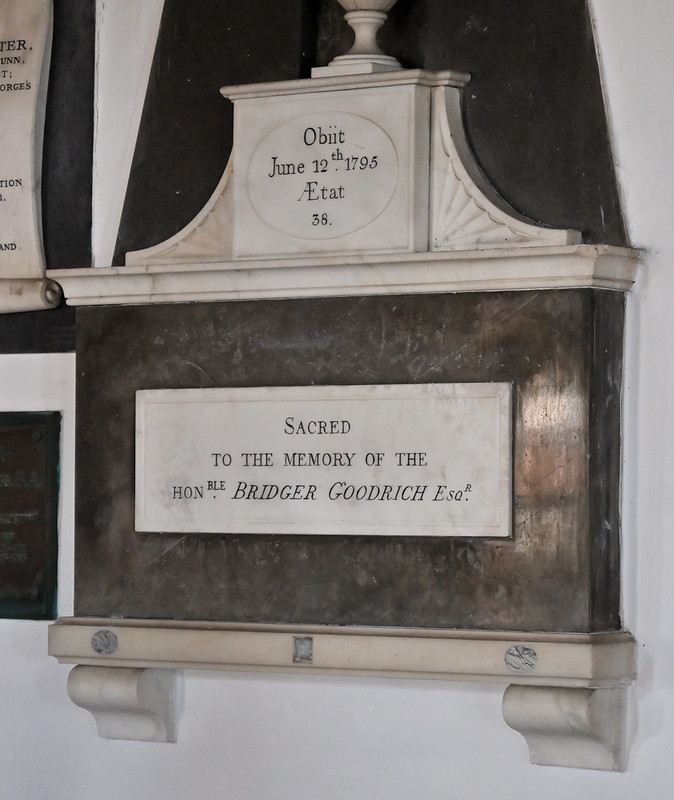
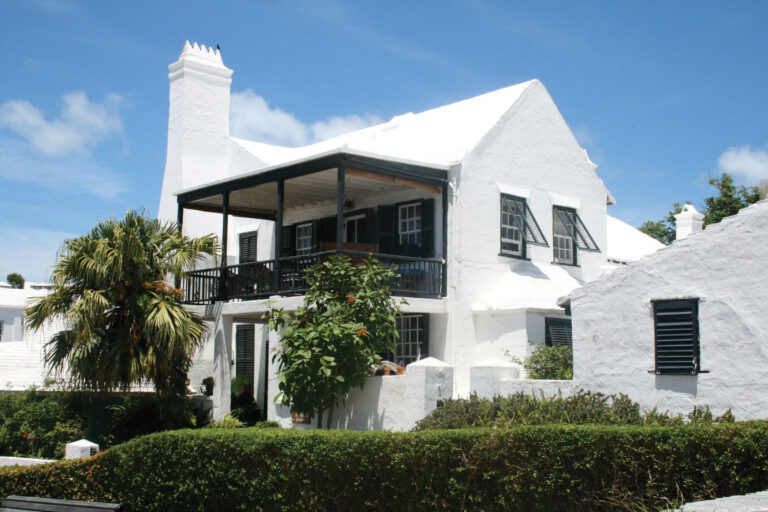
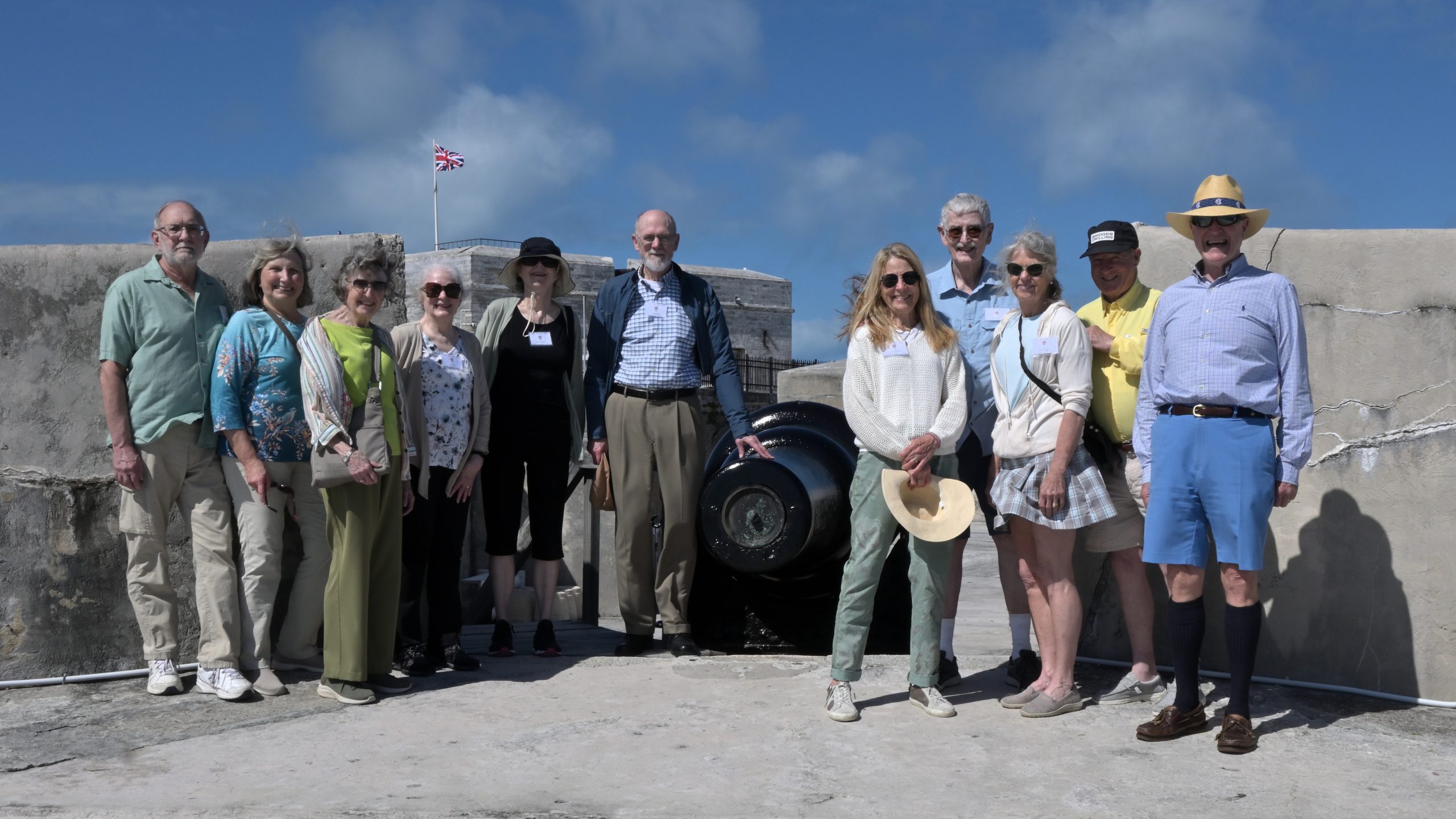
Bridger descendants visited Bermuda from April 7 to 11, 2025, where they stayed at a beach resort and toured historic places on the island. The highlight of the tour was visiting Bridge House in St. George’s, once the home of Bridger Goodrich (1757-1795), a great-great-grandson of Joseph Bridger. The Bermuda National Trust says it is the oldest continually inhabited house in the western hemisphere. The current structure was built in the early 18th century although the original timber-framed structure dates back to the 1600s. His former island home, Goodrich Hall, is now named Orange Grove. The group also visited St. Peter’s Church, built in 1612, where a memorial honors Goodrich.
Bridger Goodrich was the son of John Goodrich, Sr. (1722-1785), whose family had settled in Virginia in 1654, and Margaret Bridger (1732-1810), a great-granddaughter of Joseph Bridger through Joseph Bridger, Jr., and Joseph Bridger III. John Goodrich owned extensive property in Isle of Wight and Nansemond Counties but also conducted a shipping business with wharves, warehouses, and a dozen ships out of Portsmouth, Virginia. The royal governor Lord Dunmore recruited John Goodrich, his ship captain sons, and his son-in-law Robert Shedden to become privateers, raiding the cargoes of merchant ships for the benefit of the crown. Most of the Goodrich family remained loyal to King George III during the American Revolution. (Reference 1)
After the war, John Goodrich and several of his family members left the United States for England and settled on the Energlyn Estate in Caerphilly, South Wales, where they named their home Virginia House. Other family members lived at Saling Hall in Essex and Spring Hill, East Cowes on the Isle of Wight. Some Shedden/Bridger pedigree information is here.
Bridger Goodrich stayed in Bermuda and continued privateering. In a 16 September 1794 letter from Bermuda, Philadelphia merchant Daniel William Coxe (1769-1852) had this to say about Bridger Goodrich:
The privateer owners here are exerting themselves to kindle a War. If they cannot effect this, they confide in the British Government’s refunding for the illegal Captures of American Vessels & property, so that all events they expect to be Gainers. This principle however iniquitous it may appear is really the prevalent one. Bridger Goodrich a Virginian by birth who is considered to have been the cause of a declaration of War against this Island in 1781, was the first that fitted out a privateer this war, and is owner of the two that have been cruizing off the Chessapeak Delaware and Sandy hook some time past. He is a man of a large monied Capital acquired altogether by privateering and a most daring and enterprizing Character, possessed of an Understanding adequate to any Undertaking, having made privateering in its various branches his only study. The Judge of the Admiralty & the Attorney General are his minions and indeed I look upon him as absolute Dictator of the Island. I am anxious to impress you with a just idea of the dangerous Character of this Man, who if countenanced by the British Government and not called to a personal account for his flagitious Conduct will certainly push his Acts of piracy to an alarming length. He has now a Ship ready to launch that will mount 22 nine-pounders, and will probably be the most complete Sailer ever built here. (Reference 2)
Virginia Goodrich (1786-1852), daughter of Bridger Goodrich’s brother Bartlet Goodrich (1753-1825) and a great-great-great-granddaughter of Joseph Bridger, was married to James Arnold, the son of Benedict Arnold. (Reference 3)
References
1. Hartley, Nick. The Prince of Privateers: Bridger Goodrich and his Family in America, Bermuda and Britain 1775-1825 (London, 2012).
2. “Edmund Randolph to George Washington, 17 October 1794,” Founders Online, National Archives. [Original source: The Papers of George Washington, Presidential Series, vol. 17, 1 October 1794–31 March 1795, ed. David R. Hoth and Carol S. Ebel. Charlottesville: University of Virginia Press, 2013, pp. 84–85.]
2. Sabine, Lorenzo. Biographical Sketches of Loyalists of the American Revolution, with an Historical Essay, Volume 1. Boston: Little, Brown and Company. 1864. Page 180. (Note: the reference to “Isle of Wight” is for the actual English place and not Virginia’s Isle of Wight County. Some of the Goodrichs settled in Isle of Wight when they moved to England after the war.)
More To Explore
Loyalist Privateering During the American Revolution
Escape from Baltimore prison (The Virginia Gazette, Williamsburg, Virginia, February 14, 1777, page 3)