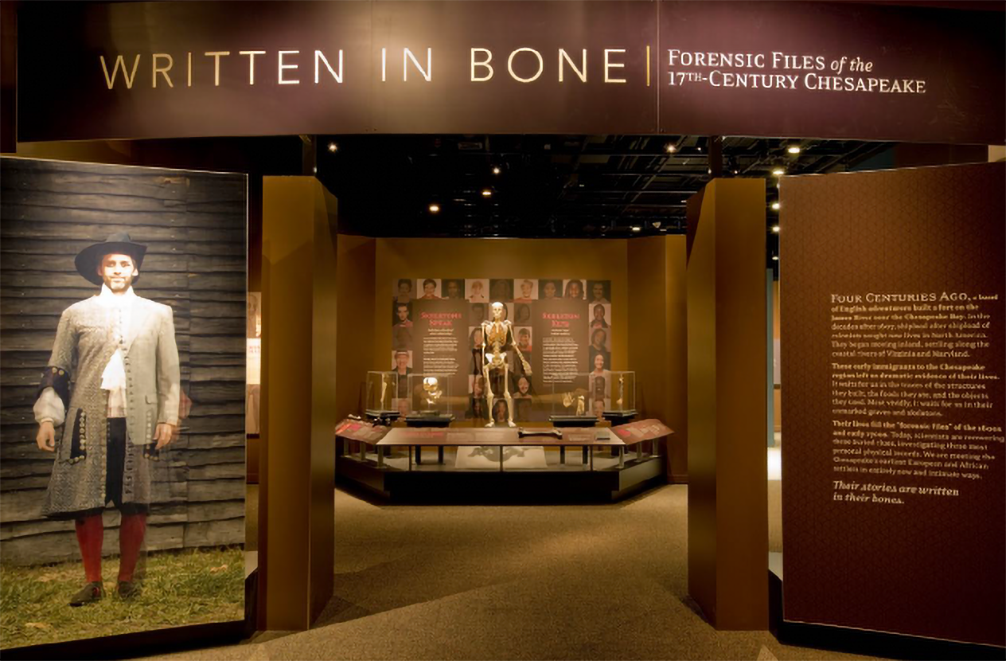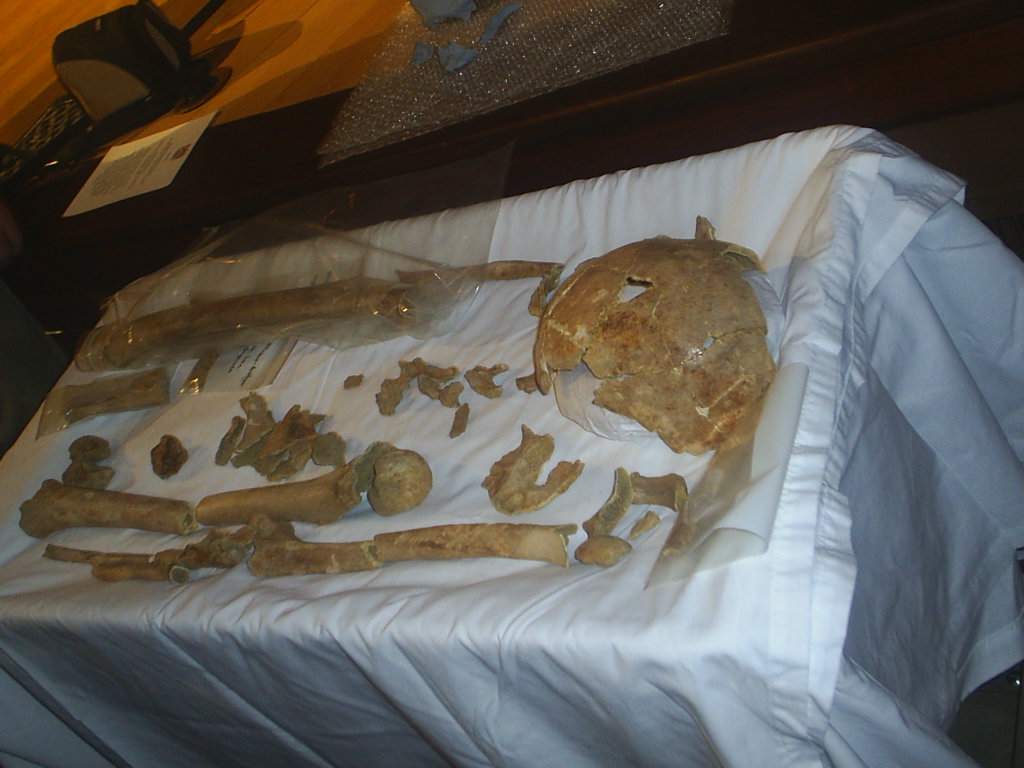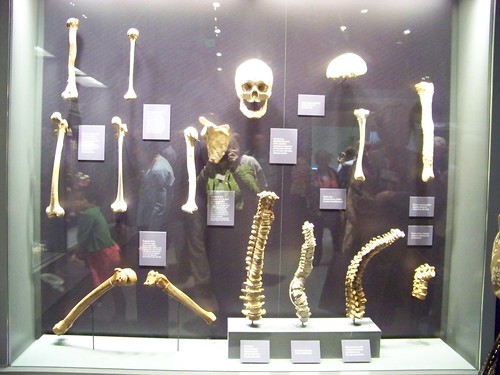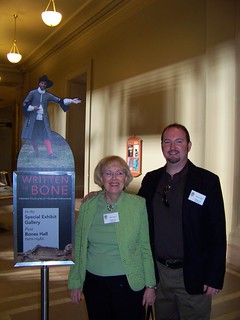
On April 17 and 18, 2009, more than 200 Bridger descendants were in Washington, D.C., to tour the exhibit, Written in Bone — Forensic Files of the 17th Century Chesapeake, at the Smithsonian Institution’s Natural History Museum. The exhibit provided the results of years of study on the bones of colonial settlers in Maryland and Virginia by Dr. Douglas Owsley, curator of biological anthropology, and his staff. We were allowed to enter the museum an hour before it was open to the public. We were all pleased to see our ancestor’s name on a plaque stating:
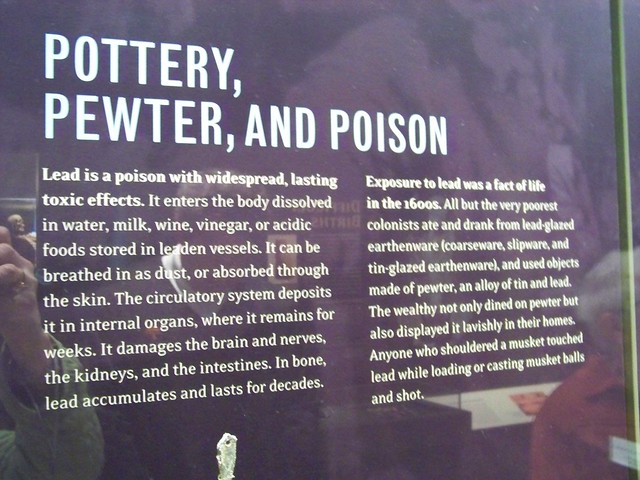
“A MAN OF MEANS – AND COLIC Colonel Joseph Bridger was one of the ten wealthiest Virginians of his time. Between 1657 and his death in 1686, he held many prominent public offices and military commissions. He also probably suffered the effects of lead poisoning, especially the “dry gripes” of abdominal pain often mentioned in historic writings. When his remains were tested in 2007, his bone lead levels were 149 ppm—more than seven times the average level today.”
The exhibit further explained, “Lead intake increased with wealth. A very high lead content in 17th-century bone indicates a person of means….Exposure to lead was a fact of life in the 1600s. All but the very poor drank from lead-glazed earthenware, and used objects made of pewter, an alloy of tin and lead.”
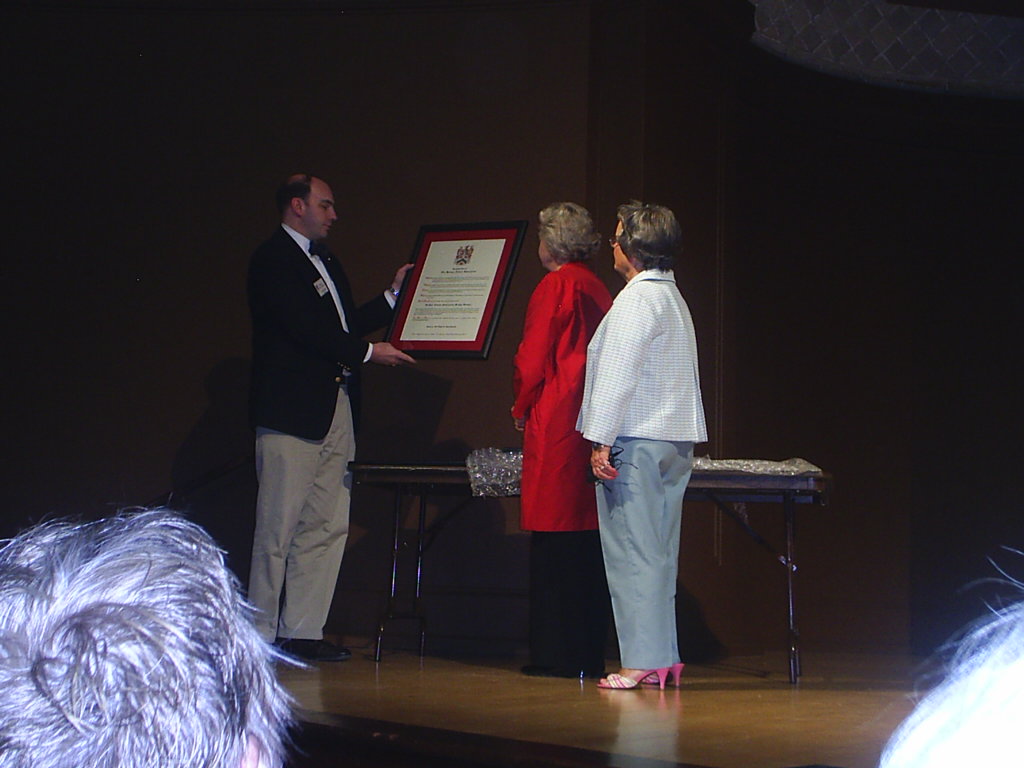
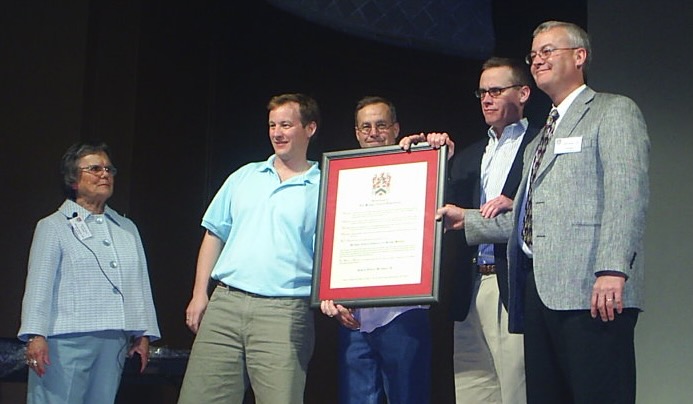
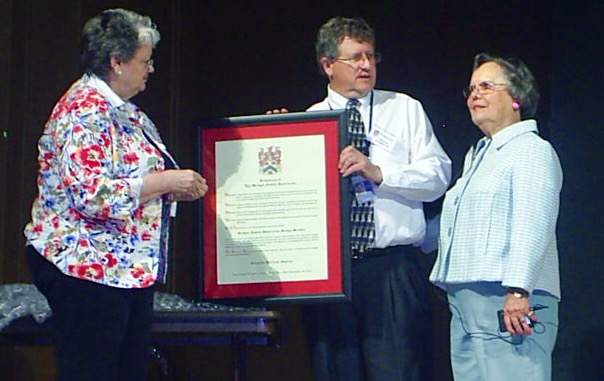
We held our annual meeting in the Smithsonian’s Baird Auditorium, likely the first and only family association to ever do so. Dr. Owsley was welcomed as an Honorary Lifetime Member of the association. Also, the Board of Directors and voting members approved conducting an official archaeological survey at Whitemarsh.